 Johnson
Beyond SPF: The Ultimate Sun Protection Skincare Routine
Why sunscreen is failing you, and the “Swiss Cheese” defense strategy you need for 2025.
You diligently apply SPF 50 every morning. You avoid the beach during peak hours. Yet, you look in the mirror and still see new dark spots, fine lines, and that subtle redness that just won’t fade. If you’ve ever felt betrayed by your sunscreen bottle, you aren’t alone.
For years, the beauty industry has sold us a single solution: “Just wear sunscreen.” But as a skincare specialist who has analyzed the latest dermatological data, I can tell you that this advice is dangerously incomplete. In fact, relying solely on topical sunscreen is like trying to stay dry in a rainstorm using a sieve.
The stakes are higher than ever. According to the American Cancer Society, about 104,960 new melanomas will be diagnosed in the US in 2025. Even more alarming, half of Gen Z adults reported getting sunburned in 2024, with severe blistering occurring in 10% of cases, per data from the American Academy of Dermatology (AAD).
If sunscreen were the silver bullet, these numbers would be dropping. They aren’t. It is time to close the gap. This is your definitive guide to the “Swiss Cheese” model of photoprotection—a multi-layered defense strategy involving diet, clothing, oral supplements, and advanced chemistry to secure your skin’s future.
The “Swiss Cheese” Defense: Why Sunscreen Isn’t Enough
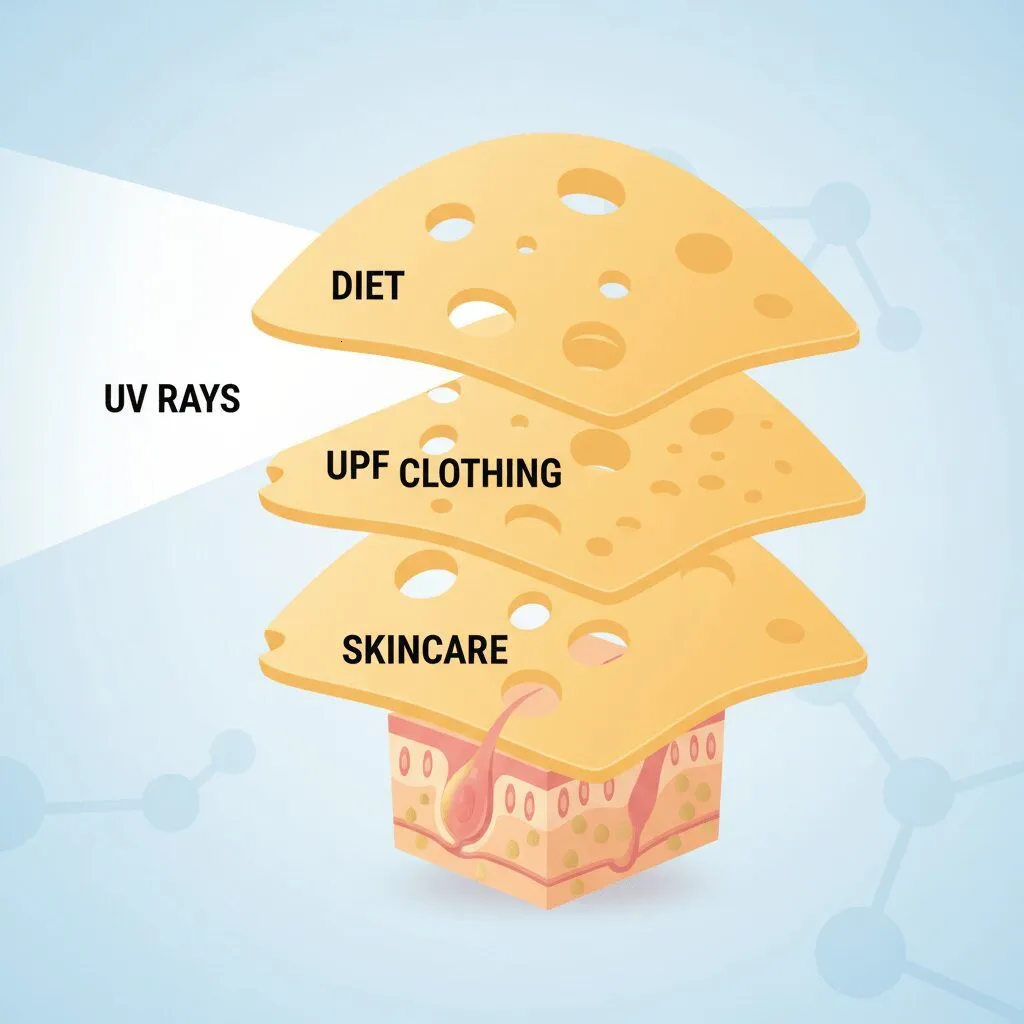
Imagine your sun protection plan is a slice of Swiss cheese. No matter how high the SPF, there are “holes” in the protection. These holes represent user error, sweat, rubbed-off product, and types of light that organic filters miss.
The 2-Hour Rule Reality Check
Let’s be honest with ourselves: almost nobody follows the rules. To get the protection labeled on the bottle, you need to apply a shot glass full of product to your body. However, a 2024 report by Cosmetics Design highlights that people usually apply only a quarter of the amount needed. This effectively turns your SPF 50 into SPF 3.
Furthermore, reapplication is a fantasy for most. Statistics from Market.us (2025) reveal that only 10% of respondents always reapply sunscreen every two hours as recommended. If you apply at 8:00 AM, you are vulnerable by 10:00 AM.
The Gap: Blue Light and Infrared
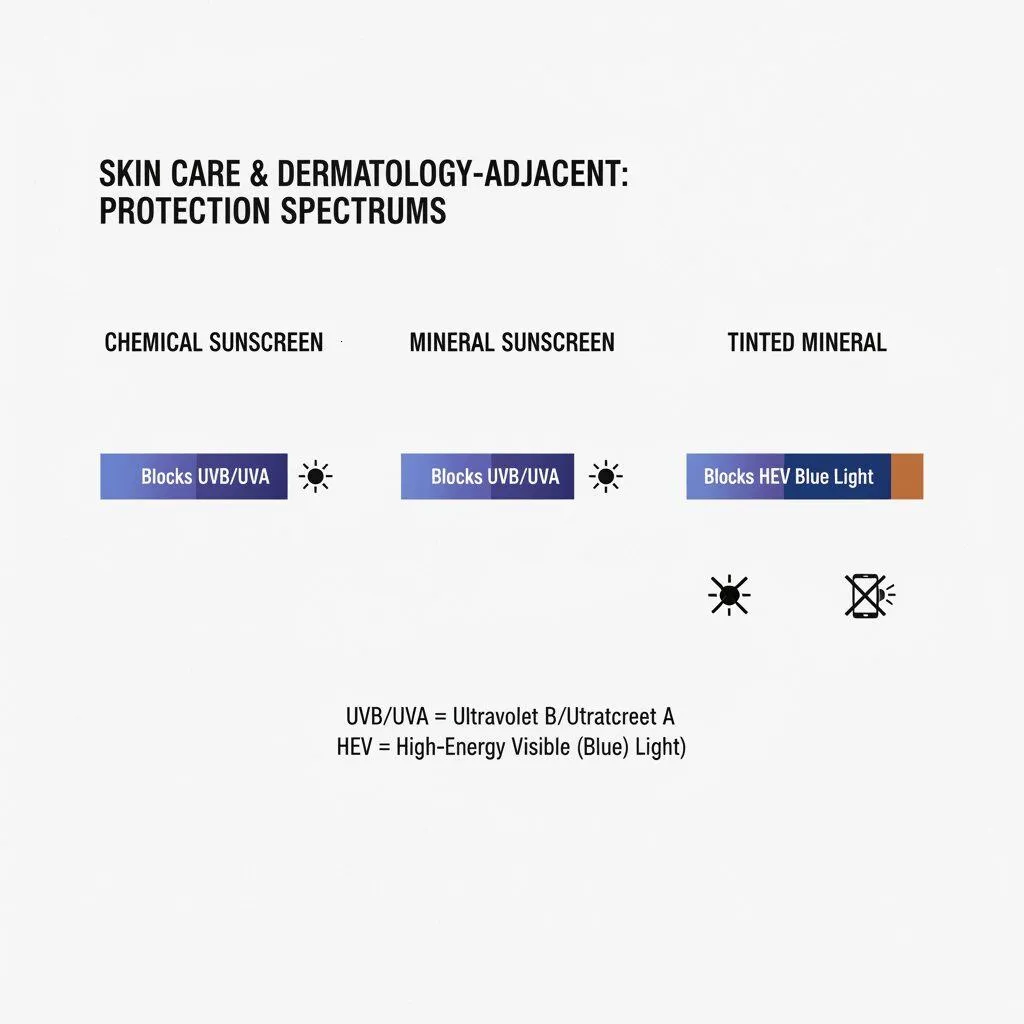
Standard chemical sunscreens are designed primarily for UVB (burning) and UVA (aging) rays. They often ignore High-Energy Visible (HEV) light—blue light—which penetrates deeper into the skin.
The impact of blue light is no longer theoretical. According to a 2025 report by Straits Research, the global blue light skincare market has surged to over USD 432 million, driven by undeniable evidence of damage. As Dr. Sunil Kalia, Associate Professor of Dermatology at UBC, noted in a 2024 interview, “Studies suggest exposure to blue light can stimulate production of melanin… and potentially accelerate the formation of wrinkles.” (IndiaTimes Health).
Layer 1: The “Internal Sunscreen” (Diet & Supplements)
If you can’t trust your topical application 100% of the time, you need a backup generator: systemic photoprotection. This means arming your cells from the inside out.
Oral Photoprotection: The Science of Polypodium Leucotomos
This is the closest thing we have to an “oral sunscreen” pill. Polypodium leucotomos extract (PLE), derived from a Central American fern, has shown remarkable ability to increase the skin’s resistance to sunburn.
I find the clinical data on this particularly compelling for those struggling with melasma. A 2024 review published in JCAD Online detailed a study where melasma patients taking PLE showed a 33% higher improvement in severity scores compared to those using topical sunscreen alone.
“I recommend high-risk skin cancer patients take 500 mg of this supplement [nicotinamide] twice daily… Heliocare [Polypodium leucotomos] can be taken once daily or intermittently with outdoor activities to help prevent overall sun damage.”
— Dr. David Fieleke, Board-Certified Dermatologist, 2024 Update
The “Sun-Proof” Diet
You can also eat your way to better resilience. I’ve seen firsthand how diet impacts skin inflammation post-sun exposure.
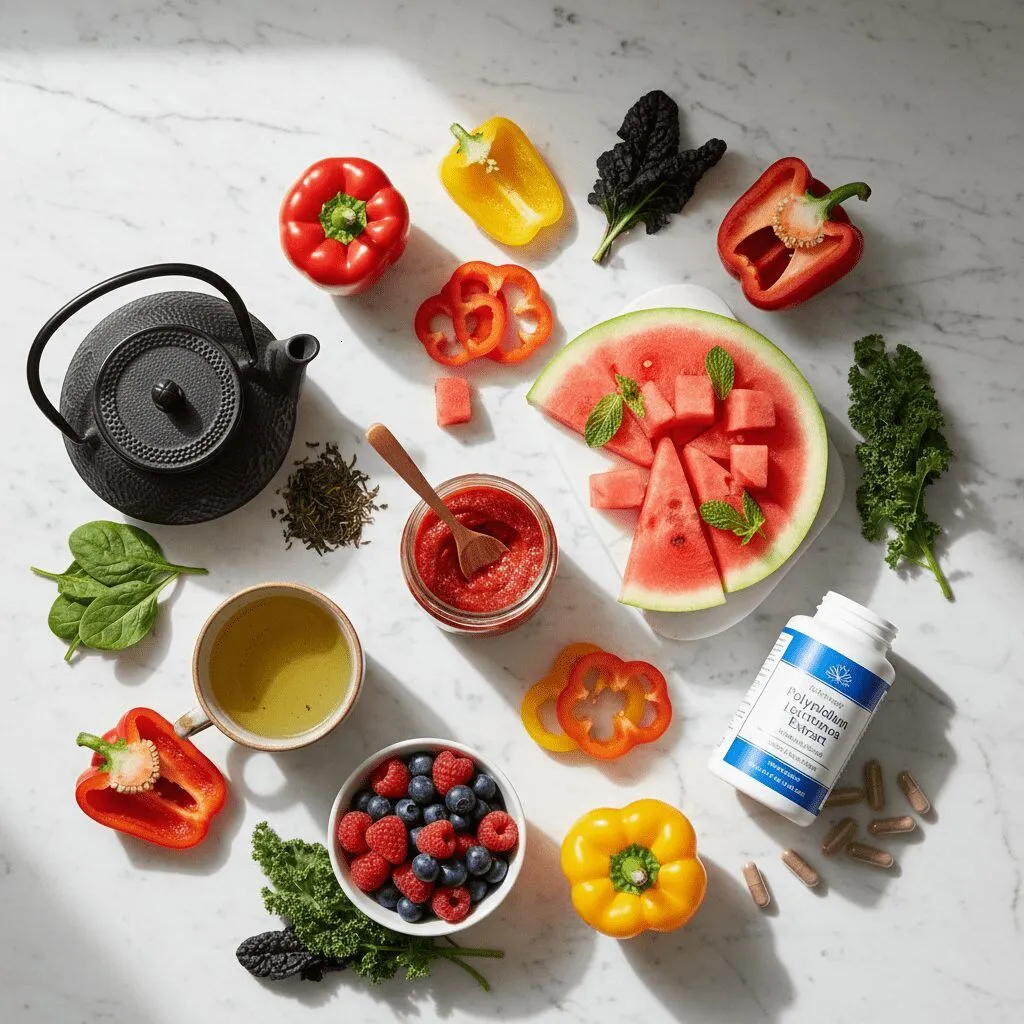
- Lycopene: Found in cooked tomatoes. According to the Consumers Association of Penang (2023), consuming 10-16mg of lycopene daily significantly lowered skin redness from UV light after 10-12 weeks.
- Astaxanthin: A potent antioxidant found in algae and salmon, often cited for its ability to scavenge free radicals created by UV exposure.
Interestingly, when you eat matters as much as what you eat. Dr. Joseph S. Takahashi from UT Southwestern has highlighted that eating late at night impairs the enzyme responsible for repairing sun-damaged skin (EatingWell 2024). To protect your skin, close the kitchen early.
Layer 2: Physical Armor (UPF Clothing & Gear)
Here is a hard truth that might annoy skincare enthusiasts: A cheap long-sleeve shirt often protects you better than a $100 serum. The “user error” with clothing is zero—if you are wearing it, it is working.
UPF 50 vs. Sunscreen: The 2024 Showdown
Recent research has validated what dermatologists have suspected for years. A landmark 2024 study from Oregon Health & Science University (OHSU) pitted UPF fabrics against SPF 30 and 50 sunscreens. The results were staggering.
“UPF fabrics blocked over 99% of UVB rays, while sunscreen offered a lower range of protection between 76% and 94%.” — Kastel Denmark / OHSU
Dr. Elizabeth Berry, a dermatologist involved in the study, put it bluntly: “The big take-home of this study is that UV-protective clothing works so much better than sunscreen. The data really supports it.”
Essential Gear Beyond the “Hiker Look”
The global UPF clothing market is booming, valued at over USD 3.1 billion in 2024 according to Cognitive Market Research. This means you no longer have to look like you’re on a safari. Brands are releasing elegant wraps, cardigans, and wide-brim hats that fit an urban aesthetic.
Don’t forget the hands. Driving gloves are a non-negotiable for me. UVA rays penetrate car windows effortlessly, leading to asymmetric aging on the driver’s side. A simple pair of UPF 50 fingerless gloves can save you thousands in laser treatments later.
Layer 3: Advanced Skincare Chemistry
Now that we have covered diet and clothing, we can optimize the topical layer. This isn’t just about slapping on sunscreen; it’s about synergy.
The Power Couple: Vitamin C + SPF
Think of Vitamin C as the safety net for your sunscreen. When UV rays penetrate your SPF (and they will), they generate free radicals. An antioxidant serum neutralizes these intruders.
The synergy is scientifically proven. A study published in NIH/PubMed in November 2024 found that Ferulic acid (often paired with Vitamin C) increases the in vivo SPF value of sunscreen by 37%. Layering a Vitamin C, E, and Ferulic serum under your sunscreen is the smartest anti-aging move you can make.
Blue Light Blockers: The Iron Oxide Imperative
If you struggle with melasma or hyperpigmentation, chemical filters are not enough. You need protection against visible light. The secret ingredient? Iron Oxides.
These are the pigments found in tinted mineral sunscreens. Unlike clear chemical filters, iron oxides physically block blue light. If your sunscreen is white, it is letting blue light through. If it is tinted, you have a shield.
The Ultimate Morning Routine (Step-by-Step)
Based on the “Swiss Cheese” model, here is the protocol I recommend for maximum protection in 2025.
Step 1: The Clean Slate
Cleanse gently. Do not strip your barrier; a compromised barrier is more susceptible to UV damage.
Step 2: The Antioxidant Shield
Apply a serum containing Vitamin C (L-Ascorbic Acid), Vitamin E, and Ferulic Acid. Let it absorb for 60 seconds.
Step 3: The Moisture Lock (Optional)
If you have dry skin, apply moisturizer. If you are oily, skip this—modern sunscreens are often moisturizing enough. This prevents “pilling,” a common issue where sunscreen balls up.
Step 4: The Hero Layer (Tinted Mineral SPF)
Apply a Tinted Mineral SPF 50+ containing Iron Oxides. Use the “two-finger rule” (two strips of sunscreen on your index and middle finger) for your face and neck.
Step 5: The Internal Defense
Take your oral supplement (e.g., Polypodium leucotomos or Astaxanthin) with breakfast.
Step 6: The Physical Finish
Heading out? Grab your UPF 50+ hat and sunglasses. If driving, pull on those UV gloves.
FAQ: Expert Answers to Common Questions
Can I drink my sunscreen? (Referring to oral supplements)
Absolutely not in the way you might think. Oral supplements like Polypodium leucotomos are effective, but they do not replace topical sunscreen. Think of them as an insurance policy that boosts your baseline protection, not a substitute. As Dr. David Fieleke notes, they are an “adjunct” to sunscreen.
Is UPF 50 clothing really better than a cotton t-shirt?
Yes. A standard white cotton t-shirt offers an UPF of only about 5-7. If it gets wet, that drops to UPF 3. In contrast, UPF 50 clothing blocks 98% of rays. The OHSU 2024 study confirms that specialized fabrics vastly outperform regular clothing and topical sunscreen.
Does blue light from screens really age skin?
The intensity of blue light from the sun is far greater than from your laptop. However, for those with melasma, even low-level exposure can sustain pigmentation. The 2025 Straits Research report confirms the market is shifting to address this because the oxidative stress from screens is cumulative.
What should I do if my sunscreen pills over my skincare?
Pilling usually happens when you mix oil-based and water-based products, or apply them too quickly. Ensure your Vitamin C serum is fully absorbed before applying SPF. Alternatively, look for sunscreens that double as moisturizers to reduce the number of layers.
Conclusion
We are living in an era where the sun is harsher, and our detection methods are better, yet skin cancer rates continue to climb. The definition of “sun protection” must evolve. It is no longer just about a tube of cream in your beach bag.
True protection comes from redundancy. It comes from the tomato paste in your dinner, the antioxidants in your morning serum, the tint in your mineral SPF, and the weave of your jacket. By adopting this “Swiss Cheese” defense strategy, you aren’t just preventing a sunburn today; you are preserving the health and integrity of your skin for decades to come.
Don’t wait for the burn to remind you. Upgrade your defense today.