 Johnson
Acne Breakthroughs 2025: New Treatments, Lasers, and the Future of Clear Skin
Quick Take: For decades, the “gold standard” for severe acne was a harsh pill with severe side effects (Isotretinoin). In 2025, the script has flipped. Lasers can now “cure” acne without drugs, and a 3-in-1 cream is changing morning routines forever.
If you have struggled with acne for more than a few years, you likely know the drill: Benzoyl peroxide stains your pillowcases, antibiotics upset your stomach, and dermatologists eventually suggest Accutane. It’s an exhausting cycle. I’ve seen countless patients and readers reach a breaking point where they simply stop treating their skin because the “cure” feels worse than the disease.
But something significant shifted between late 2024 and early 2025. We aren’t just seeing “new versions” of old creams. We are seeing entirely new categories of treatment.
The global acne drugs market is projected to reach $18.13 Billion by 2030, and that investment is finally yielding tools that target the root cause—the oil gland itself—without wrecking your gut microbiome. From the first FDA-approved triple-combination topical to lasers that offer “drug-free” remission, this guide is your definitive resource on what actually works in 2025.
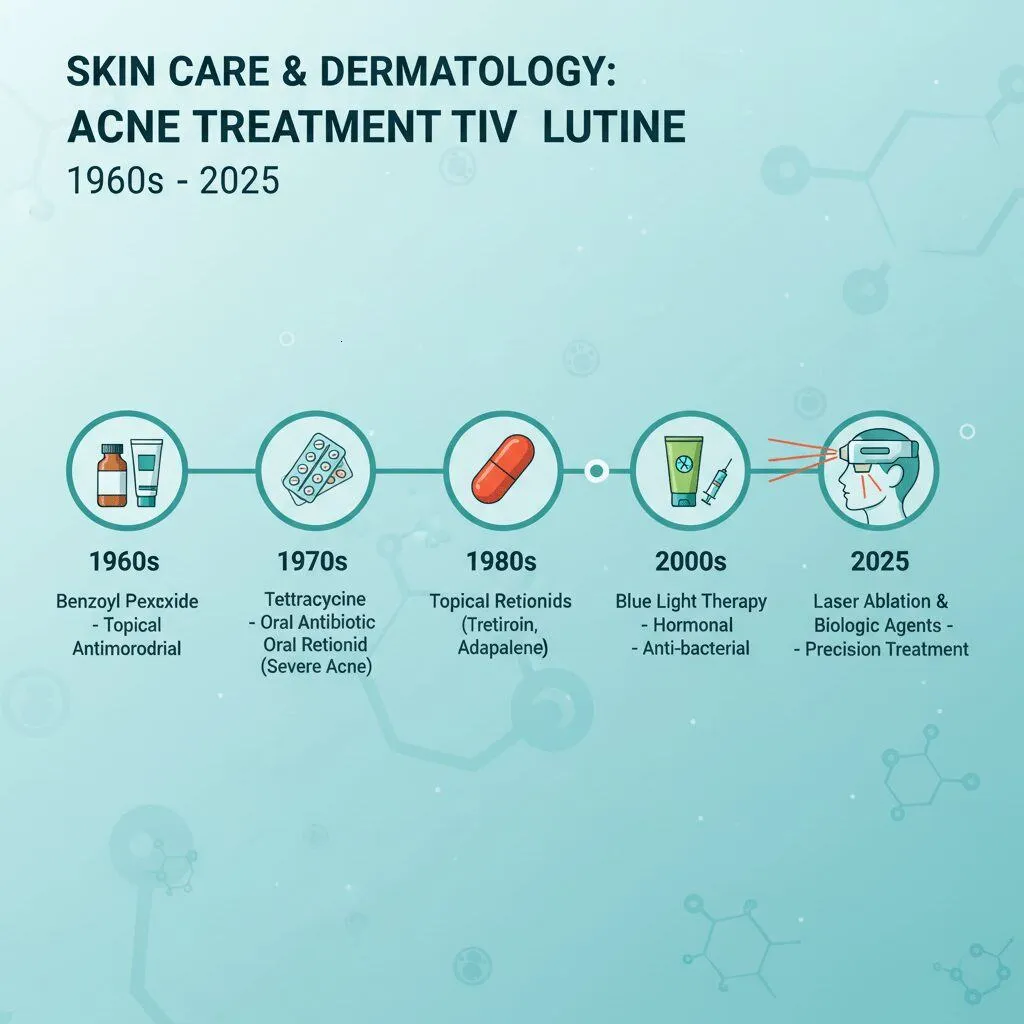
The “Triple Threat”: Cabtreo & The End of Layering
If your bathroom counter looks like a chemistry lab, you are the target audience for one of the biggest pharmaceutical breakthroughs of the last year: Cabtreo.
For decades, dermatologists have prescribed three core ingredients: an antibiotic (to kill bacteria), a retinoid (to turnover skin cells), and benzoyl peroxide (to reduce inflammation). The problem? You had to apply them separately, often causing irritation or chemical deactivation if mixed wrong. Patients just gave up.
What Makes Cabtreo Different?
Cabtreo (clindamycin 1.2% / adapalene 0.15% / benzoyl peroxide 3.1%) is the first FDA-approved medication to stabilize all three ingredients in a single formulation. This isn’t just mixing creams in a tub; it required “polymeric mesh technology” to keep the ingredients from degrading each other until they hit your skin.
In Phase 3 clinical trials, approximately 50% of patients achieved treatment success (clear or almost clear skin) with Cabtreo at 12 weeks. Compare this to the 20-25% success rate usually seen with vehicle (placebo) creams.
With the approval of Cabtreo, physicians can now offer patients an acne treatment that has the potential to be a simple, once daily dosing option… combining three mechanisms of action.
REAL WORLD PROFILE: The “Busy Professional”
The Patient: A 32-year-old female with persistent hormonal breakouts along the jawline. She works 60 hours a week and admitted to “skipping steps” in her previous 3-step regimen.
The Intervention: Switched to Cabtreo gel (pea-sized amount) once daily at night.
The Result: At Week 12, she saw a 75% reduction in inflammatory lesions. The simplicity of a “one-and-done” application meant 100% compliance, which is the secret driver of the results.
The Laser Revolution: 1726 nm Wavelengths (AviClear & Accure)
This is, in my opinion, the most exciting development in dermatology since Isotretinoin was approved in 1982. For the first time, we have a way to physically shrink the oil glands without systemic drugs.
Until 2024, lasers for acne were largely disappointing. They treated the redness (Vascular lasers) or the surface bacteria (Blue light), but they didn’t stop the oil. Enter the 1726 nm laser. This specific wavelength of light is absorbed strictly by sebum (oil). It bypasses the water in your skin and heats the sebaceous gland until it is damaged and produces less oil permanently.
AviClear Long-Term Data (The 2025 Update)
When AviClear launched, skeptics asked: “Will the acne come back in a year?” We now have the answer.
According to long-term follow-up data released by Cutera, patients showed a 97% reduction in inflammatory lesion counts at 24 months post-treatment. This suggests that for many, the results are comparable to a course of Accutane, but without the liver tests, pregnancy risks, or dry lips.
The “Purge” and The Pain: What They Don’t Tell You
While the marketing brochures look perfect, I need to be transparent about the process. The 1726 nm laser is not painless, and it is not instant.
- Sensation: Most patients describe it as a “snapping rubber band” combined with heat. It is tolerable without numbing cream (AviClear uses a cooling sapphire tip), but it is intense.
- The Purge: It is common to experience a flare-up of acne 1 to 3 weeks after your first session. As the glands are targeted, deep-seated congestion pushes to the surface. This is temporary but can be discouraging if you aren’t expecting it.

REAL WORLD PROFILE: The “Antibiotic Dropout”
The Patient: A 24-year-old male who failed Doxycycline and refused Isotretinoin due to mental health concerns.
The Intervention: 3 sessions of AviClear spaced 4 weeks apart.
The Result: Significant “purging” occurred in Week 2. However, by Month 6, he achieved 90% clearance. Crucially, at the 24-month mark, he maintained 97% clearance with no prescription topicals.
Interactive Tool: Is the Laser Worth the Cost?
Insurance rarely covers these laser treatments, which can range from $3,000 to $4,000 for a full package. Is it worth it compared to years of creams? Use this estimator to see.
Acne Treatment Cost Estimator (2-Year Projection)
Estimated 2-Year Cost of Current Routine: $0
Average Laser Treatment Cost: $3,200
Hormonal Acne 2.0: Winlevi (Clascoterone)
For adult women, acne is often driven by hormones—specifically androgens—making standard antibiotics useless. For years, the only answer was oral Spironolactone, a blood pressure medication that blocks hormones systemically. While effective, it causes side effects like dizziness and frequent urination, and it cannot be used by men.
Winlevi (clascoterone cream 1%) changes this dynamic. It is the first topical androgen receptor inhibitor. Think of it as Spironolactone, but it stops at the skin barrier.
According to Dr. Christopher Bunick of Yale School of Medicine, targeting hormones topically is a “game changer in efficacy,” allowing us to treat the hormonal root cause in both men and women without affecting the rest of the body’s endocrine system.
The Future: The Acne Vaccine (Sanofi Trials)
Are we finally close to an acne shot? The answer is a tentative “yes.”
While not available at your pharmacy today, the progress is undeniable. Sanofi has launched Phase I/II trials for an mRNA-based vaccine targeting Cutibacterium acnes (C. acnes). Unlike antibiotics that kill all bacteria (good and bad), this vaccine trains the immune system to neutralize only the inflammation-causing toxins produced by the bacteria.
Sanofi’s collaborative trials are running through 2027. While we won’t see this on shelves this year, the implications for antibiotic resistance are massive.
Jean-François Toussaint, Global Head of R&D Vaccines at Sanofi, stated that reducing antibiotic use via vaccines creates value not just for the patient, but for society by slowing microbial resistance.
Why Dermatologists Are “Firing” Antibiotics
If you visit a top-tier dermatologist in 2025, don’t be surprised if they refuse to write you a prescription for oral doxycycline.
Recent data indicates that tetracyclines still account for 75% of oral antibiotic prescriptions in dermatology. This overuse has led to a crisis of resistance and damaged gut microbiomes. The updated 2024/2025 AAD guidelines are pushing heavily toward “multimodal” topical therapies (like Cabtreo) and energy devices (like AviClear) to spare the gut.

FAQ: Your 2025 Acne Roadmap
How much does AviClear cost without insurance in 2025?
As of 2025, the average cost for a full treatment course (3 sessions) is between $3,000 and $4,000. It is rarely covered by insurance as it is deemed “cosmetic” or elective, despite its medical efficacy.
Can you use retinol with Cabtreo?
Cabtreo already contains adapalene, a strong retinoid. You should not use an additional retinol product, as this will destroy your skin barrier. Instead, focus on a ceramide-rich moisturizer to support the medication.
Is there a vaccine for acne coming soon?
Clinical trials are currently underway (Phase I/II), but a commercially available vaccine is likely 3 to 5 years away (estimated 2028-2030). The current focus is on safety and ensuring the vaccine doesn’t disrupt the healthy skin microbiome.
What is the difference between Accure and AviClear?
Both are 1726 nm lasers targeting sebaceous glands. AviClear was the first FDA-cleared device of this wavelength. Accure uses a similar wavelength but has different cooling mechanisms and temperature control algorithms. Clinical efficacy appears similar between the two, and choice often depends on what machine your specific dermatologist owns.
Conclusion: The Era of Choice
The days of “one pill fits all” are over. In 2025, treating acne is about lifestyle fit.
- For the busy minimalist: Ask your doctor about Cabtreo.
- For the pill-averse: Investigate 1726 nm lasers (AviClear/Accure).
- For the hormonal sufferer: Look into Winlevi.
Acne is not a hygiene problem; it is a medical condition involving genetics, hormones, and inflammation. With these new tools, we are finally treating it like one. If you are stuck in a cycle of clear skin followed by breakouts, book an appointment with a board-certified dermatologist and ask specifically about these new technologies. Your skin barrier will thank you.
Disclaimer: This article is for informational purposes only and does not constitute medical advice. Always consult with a qualified healthcare provider for diagnosis and treatment of any medical condition.