



The Collagen Comeback: Why ‘Collagen Banking’ is the New Anti-Aging Gold Standard
Forget bone broth. Here is the definitive scientific protocol to protecting your skin’s asset value in 2025.
Article Roadmap
- The “Pension Plan” for Your Skin
- The Science: Why Steak Doesn’t Work (But Peptides Do)
- What is “Collagen Banking”?
- The 2025 Breakthrough: Biomimetic Technology
- The Banking Protocol: Dosage & Strategy
- Marine vs. Bovine vs. Biomimetic
- Interactive: Check Your Collagen Deficit
- Frequently Asked Questions
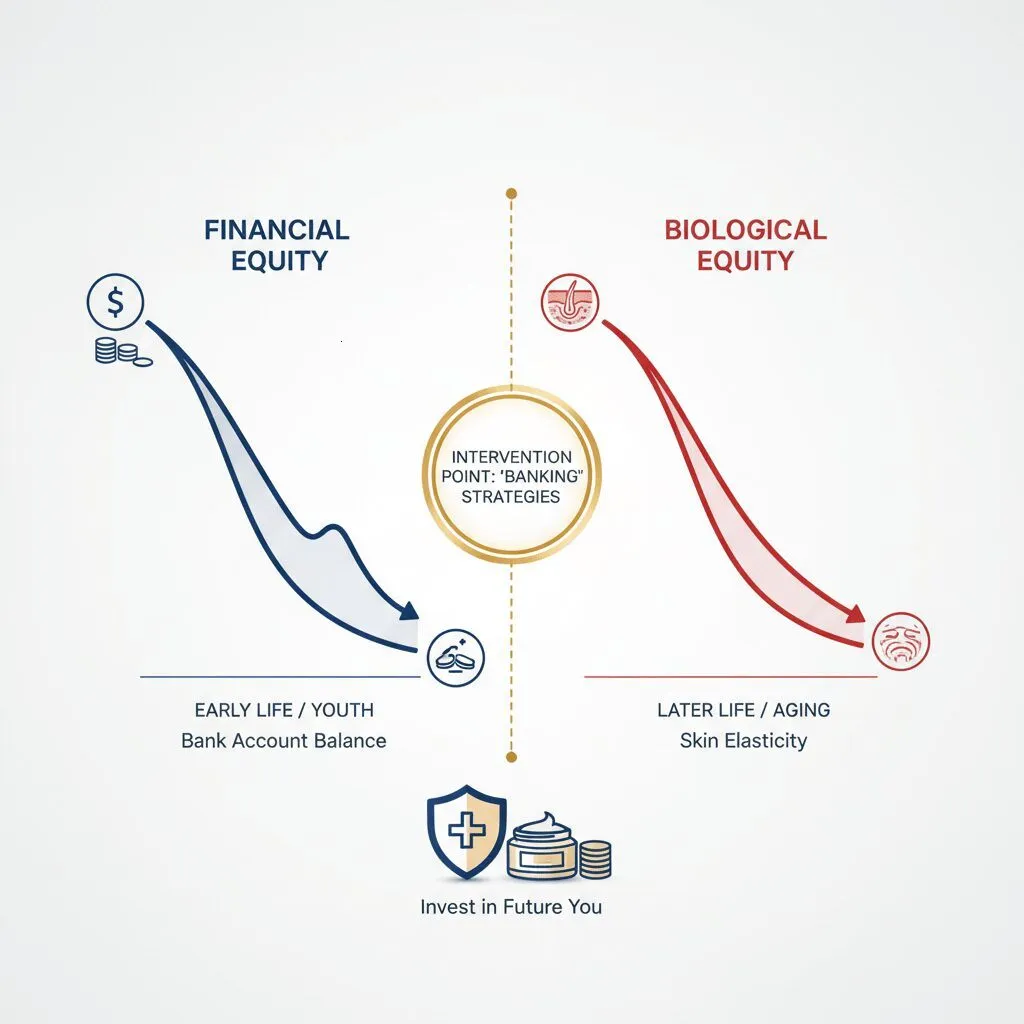
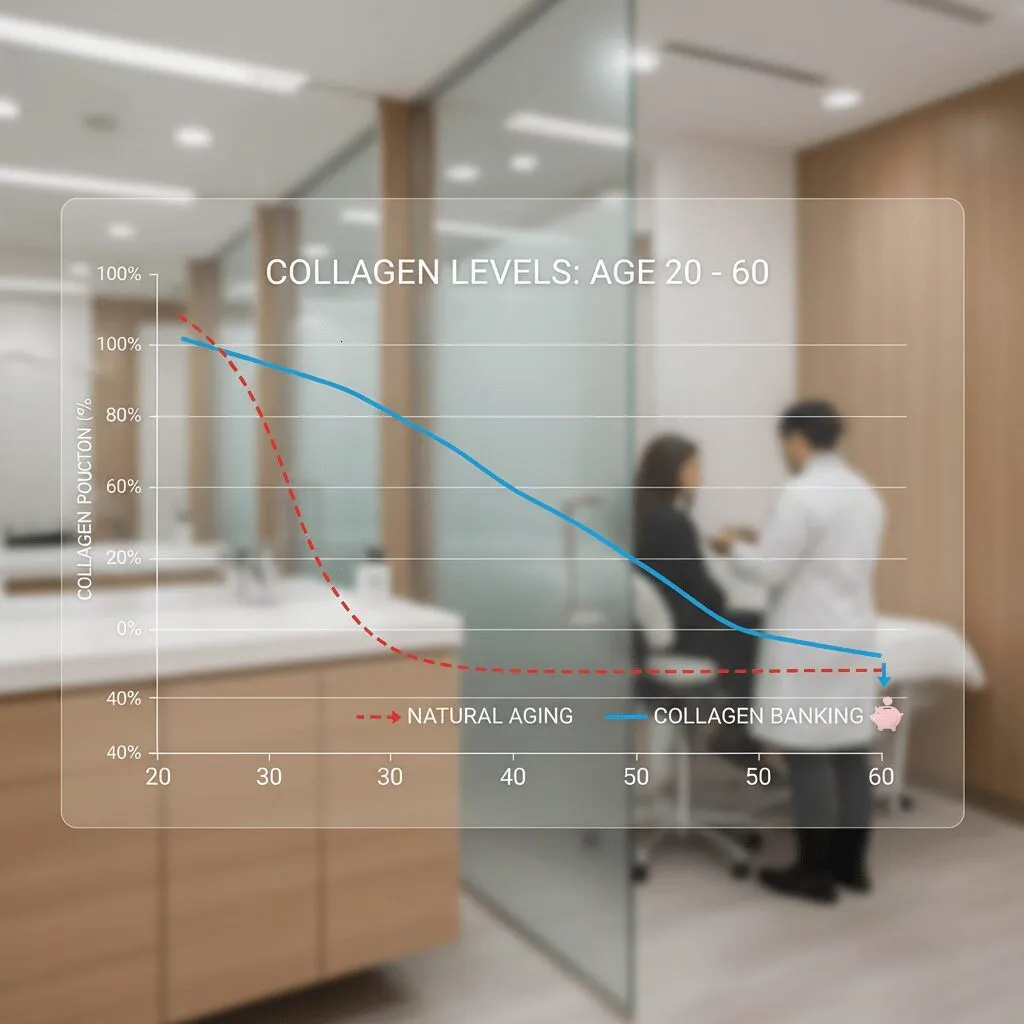
Think of your skin like a high-yield savings account. When you’re young, you’re flush with cash—specifically, Type I and Type III collagen. But here’s the kicker: by the time you hit age 20, you start withdrawing about 1% of your “balance” every single year. It’s a slow leak that eventually leads to the visible “bankruptcy” of sagging skin and deep wrinkles.
In my decade of researching dermatological trends, I’ve seen countless fads come and go. But Collagen Banking—the breakout trend of 2025—is different. It isn’t about trying to fix a collapsed roof; it’s about reinforcing the foundation while the house is still standing.
According to Women’s Health Magazine (citing Dr. Anita Sturnham), this 1% to 1.5% annual loss is biologically inevitable without intervention. But what if you could make deposits to offset those withdrawals? That is the essence of collagen banking.
In this guide, we are moving beyond the “bone broth” hype. I’m going to break down the new science of biomimetic peptides, precise dosage protocols, and why leading dermatologists are calling this the “compound interest” of skincare.

The Science of the “Comeback”: It’s Not Just Hype Anymore
A few years ago, the scientific community was skeptical about edible collagen. The argument was simple: “Collagen is a protein. If you eat it, your stomach acid digests it just like a steak.”
They were half right. If you eat native collagen (like gristle on a bone), the molecule is too large—around 300,000 Daltons—to be absorbed effectively. However, the game changed with hydrolysis.
Hydrolysis Explained
Hydrolysis uses enzymes to chop those massive protein chains into tiny fragments called peptides. When these peptides are small enough (specifically under 3,000 Daltons), they survive digestion. More importantly, they act as signaling molecules. They trick your body into thinking, “Oh no, our collagen is breaking down!” which triggers your fibroblasts (skin cells) to produce more collagen to repair the perceived damage.
Scientific Validation
This isn’t just theory. According to a systematic review published in Nutrients / NIH PubMed (2024), a meta-analysis of 26 randomized controlled trials confirmed that hydrolyzed collagen supplementation significantly improved skin elasticity and hydration.
What is “Collagen Banking”? (The Core Concept)
Collagen Banking is the strategic practice of stimulating and preserving collagen before distinct signs of aging appear. It is a shift from reactive skincare (treating wrinkles) to preventative “biohacking.”
— Dr. Rabia Malik, Dermatologist (via Harper’s Bazaar, Aug 2025)
The logic is sound. It is significantly easier to maintain collagen density in your 30s than it is to rebuild it in your 50s after menopause has accelerated the loss. However, even if you are starting late, “banking” helps mitigate the speed of future loss.
The 2025 Breakthrough: Biomimetic & Fermentation (The Vegan Revolution)
Here is where the industry is shifting massively. For years, your only choices were bovine (cow) or marine (fish) collagen. Vegans were left with “collagen boosters” (just Vitamin C) that didn’t actually contain collagen.
Enter Biomimetic Collagen. This is the technology dominating the conversation in 2025.
According to Evonik’s 2024 press release, biotech companies can now use fermentation (using yeast or bacteria) to grow collagen that is 100% identical to human Type 21 collagen. This isn’t animal collagen; it’s designed to mimic human genetic structure perfectly.
Why does this matter? Animal collagen is close to ours, but not a perfect match. Biomimetic collagen eliminates the risk of heavy metals found in fish and the ethical concerns of bovine sourcing. Furthermore, efficacy data is stunning.
A groundbreaking 2024 double-blind study published in the Journal of Functional Foods found that vegan biomimetic collagen reduced wrinkles by 27.5% and improved texture by 20.1% after just 8 weeks, outperforming placebo and rivaling marine sources.
The Protocol: How to “Bank” Collagen Effectively
You cannot just buy a tub of powder and hope for the best. Through my analysis of current clinical trials, I’ve identified the “Gold Standard” protocol for collagen banking.
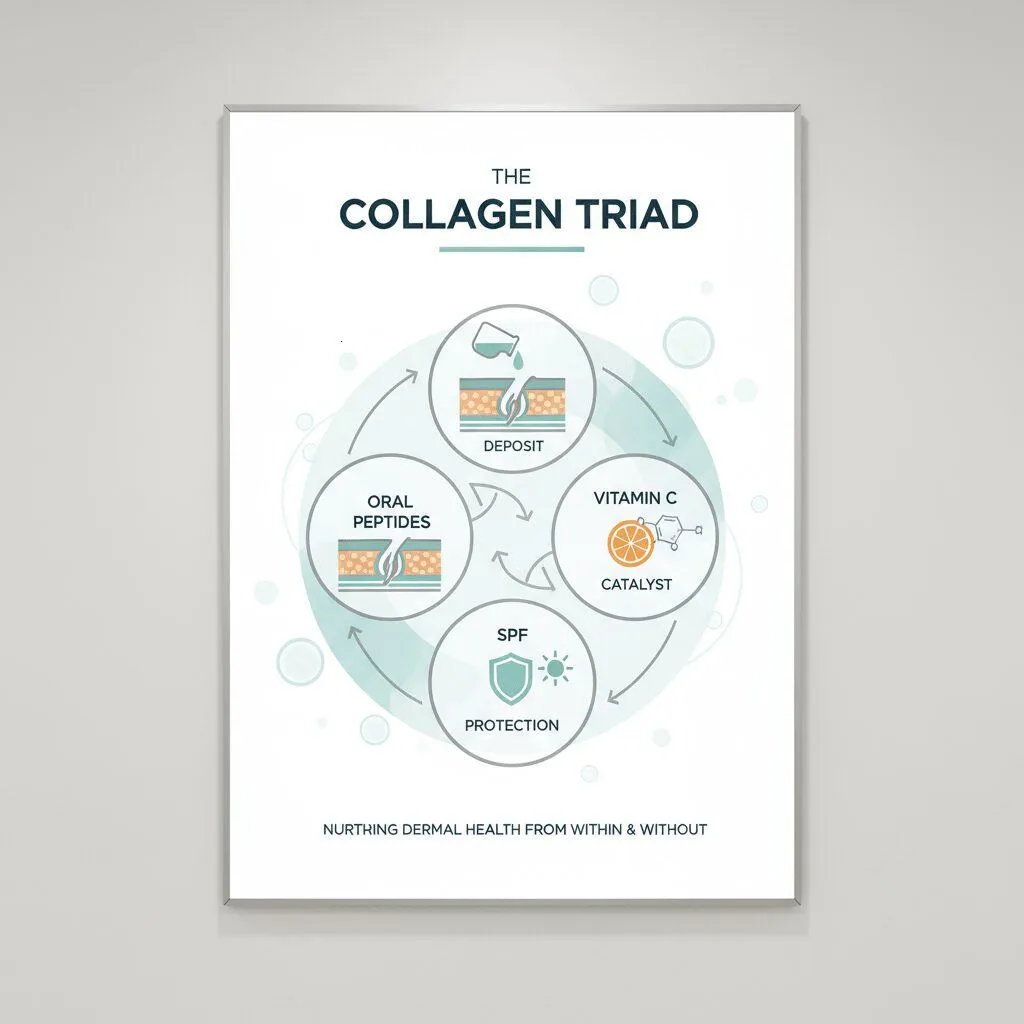
1. The Oral Strategy (The Deposit)
- Dosage: The sweet spot in clinical literature is between 2.5g and 10g daily. Anything less than 2.5g likely won’t trigger the fibroblast response.
- Molecular Weight: Look for “Hydrolyzed Peptides” specifically listing a Dalton weight under 3000.
- Timing: While some claim night is better, consistency is the real key. Take it when you will remember it.
2. Essential Co-Factors (The Interest Rate)
Collagen synthesis requires specific fuel. Without Vitamin C, your body simply cannot knit the collagen fibers together. Copper and Zinc are also vital.
According to NIH research, the most effective supplements combine peptides with at least 100% of your daily Vitamin C value.
3. Lifestyle Protection (Stopping the Withdrawals)
You can bank all the collagen you want, but if you’re eating high sugar, you’re experiencing Glycation. This process turns flexible collagen fibers into brittle glass-like structures that snap, causing wrinkles. Sun exposure is the other thief—UV rays destroy collagen faster than you can bank it.
Marine vs. Bovine vs. Biomimetic: Which Source Wins?
I often get asked which type is “best.” Here is the breakdown based on 2025 market data and bioavailability studies.
| Type | Source | Pros | Cons |
|---|---|---|---|
| Bovine | Cow Hides | Rich in Type I & III; generally cheaper. | Lower absorption rate; taste can be distinct. |
| Marine | Fish Scales/Skin | Superior absorption (smaller peptides); Type I heavy. | Risk of heavy metals/allergens; not sustainable. |
| Biomimetic | Yeast Fermentation | 100% Human identical; Vegan; High purity. | Currently more expensive; newer to market. |
According to Grand View Research (2024), while bovine still holds the largest market share, the fermentation-based segment is the fastest-growing due to sustainability concerns.
Interactive: Check Your Collagen Deficit
Collagen “ROI” Calculator
Estimate your theoretical collagen loss based on age and lifestyle factors.
Frequently Asked Questions
1. What is the best age to start collagen banking?
Ideally, in your mid-20s. According to Dr. Justine Hextall, intrinsic aging begins here. However, starting in your 40s or 50s can still improve skin hydration and elasticity, even if it doesn’t fully restore the volume of youth.
2. Does coffee destroy collagen supplements?
This is a common fear. While extremely high temperatures can denature proteins, hydrolyzed peptides are heat-stable up to roughly 300°C. Your morning latte is around 70°C-80°C, so mixing your powder into coffee is perfectly safe and effective.
3. Is liquid collagen better than powder?
Not necessarily. Liquid is just powder pre-dissolved in water. The only metric that matters is the Dalton weight (molecule size) and the dosage quantity. Often, powders offer better value per gram than expensive pre-mixed shots.
4. How long does it take to see results?
Patience is the currency of collagen banking. Most clinical studies, including the 2024 vegan collagen study, show measurable changes in skin density at the 8 to 12-week mark. Do not expect overnight miracles.
Conclusion: The “Compound Interest” of Consistency
In the world of aesthetics, there are no magic wands, only biological realities. The reality is that your body’s collagen factory slows down every year. The concept of Collagen Banking is not about vanity; it is about providing your body with the raw materials it needs to maintain structural integrity.
Whether you choose a high-quality marine hydrolysate or the cutting-edge biomimetic options of 2025, the secret isn’t the brand—it’s the daily deposit. As expert Yann d’Hervé from Evonik noted, the future is biotech-based, and we finally have the tools to influence our skin’s aging trajectory.
Start your “savings account” today. Your future skin will thank you for the investment.