


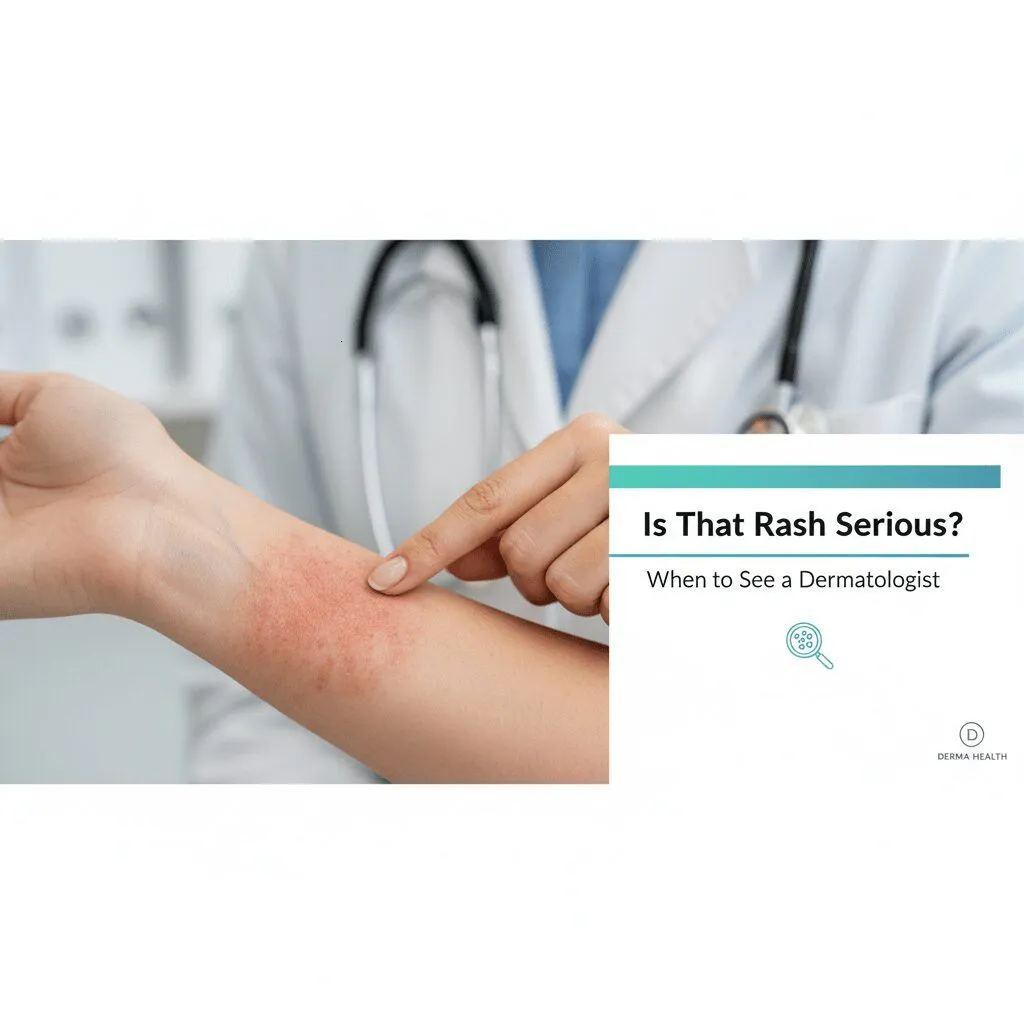
Is That Rash Serious? A Dermatologist-Approved Triage Guide (2025 Update)
I’ve been there—standing in the bathroom at 2 AM, staring at a patch of angry red skin, spiraling down a Google image search rabbit hole. Is it eczema? Did I touch a poisonous plant? Or is it something much worse?
Your skin is your body’s dashboard. Most of the time, a warning light just means you need a little maintenance—some moisturizer or hydrocortisone. But occasionally, that “Check Engine” light is screaming that something critical is failing under the hood.
In the digital age, we are overloaded with information but starved for context. You don’t need an alphabetized list of 500 diseases; you need a triage nurse. You need to know: Do I need the ER, an appointment, or a pharmacy run?
This guide cuts through the noise. Backed by the latest 2024-2025 data from the American Cancer Society and the CDC, we’ve structured this article as a 3-Tier Triage System to help you make the right call, right now.

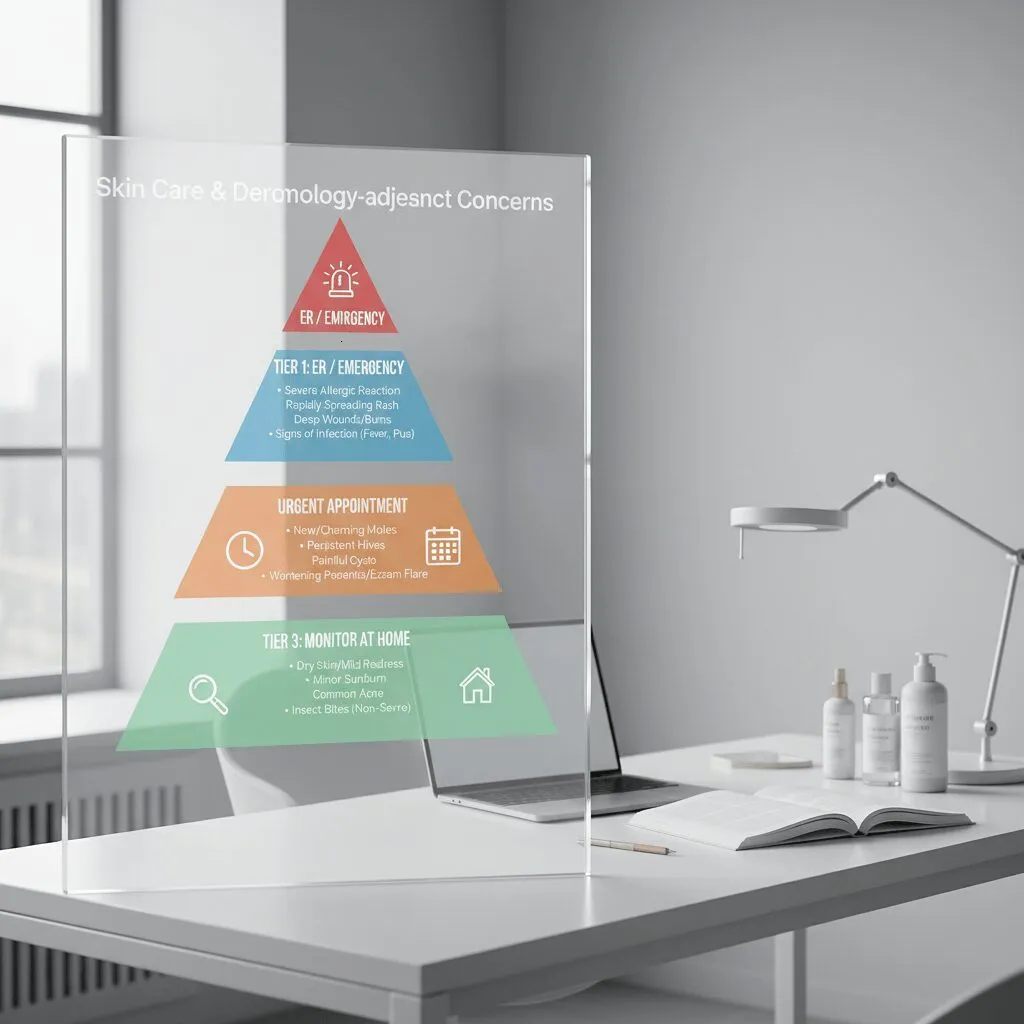
Tier 1: The “Red Flags” – When to Go to the ER Immediately
Let’s start with the scary stuff. Why? Because if you have these symptoms, I want you to stop reading this article and call 911 or go to the nearest emergency room. In my years covering medical health, I’ve learned that “wait and see” is the wrong approach for these specific signs.
According to guidelines from The Emergency Center and AAD (2024), you must seek immediate help if a rash appears suddenly and spreads rapidly from one part of the body to another.
1. The Non-Blanching Rash (Meningitis Risk)
Most rashes fade white (blanch) when you press on them. If you press a glass against your rash and the red or purple spots do not fade, this is a medical emergency. It could indicate meningococcal septicaemia (blood poisoning).
According to Meningitis Now (2024), “If the rash does not fade, it could be a sign of meningococcal septicaemia.” This condition can be fatal within hours.
THE GLASS TEST: How to Perform It
- Grab a clear glass tumbler from your kitchen.
- Press the side of the glass firmly against the rash.
- Look through the glass. Does the rash disappear or turn white under pressure?
- RESULT: If the spots remain clearly visible (red, purple, or brown) under pressure, seek emergency help immediately.
2. Rapid Spread with Difficulty Breathing (Anaphylaxis)
If you have a sudden itchy rash all over your body—often hives or welts—accompanied by swelling of the lips, tongue, or throat, you are likely experiencing anaphylaxis. This is an allergic reaction that can close your airway.
Look for:
- Wheezing or trouble breathing.
- A feeling of “doom” or panic.
- Sudden drop in blood pressure (feeling faint).
3. The “Purple Bruise” Rash (Purpura/Vasculitis)
Sometimes a rash doesn’t look like bumps; it looks like large purple bruises or tiny red dots (petechiae) that aren’t related to an injury. This can signal vasculitis (inflammation of blood vessels) or a platelet disorder. If you see spontaneous bruising or purple spots that aren’t fading, this requires immediate blood work.
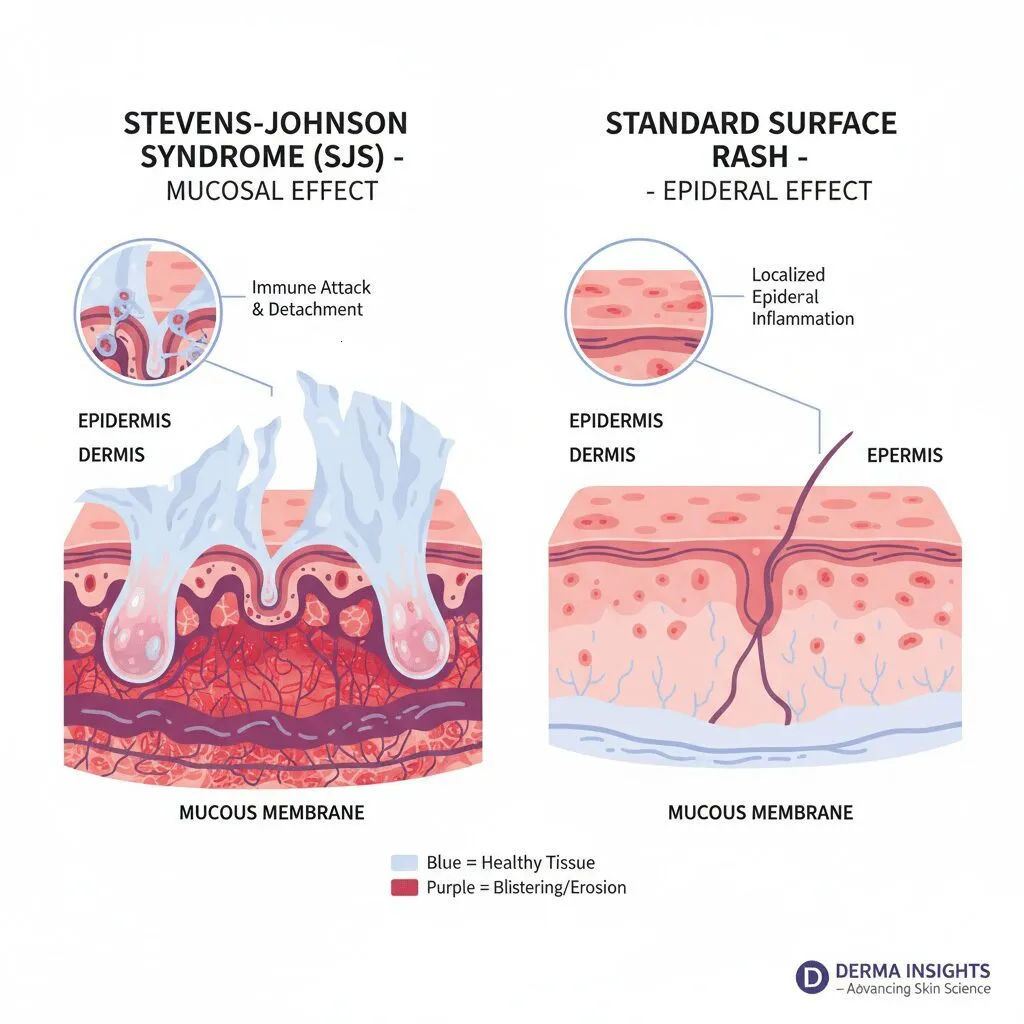
4. Blistering of the Eyes, Mouth, or Genitals (SJS/TEN)
This is one of the most terrifying conditions in dermatology. Stevens-Johnson Syndrome (SJS) often starts with flu-like symptoms and is followed by a painful red or purplish rash that spreads and blisters. The top layer of skin may peel off.
It is frequently caused by a reaction to medication (like new antibiotics started 2-6 weeks prior). A 2023 study published in the NIH/PMC database (verified current in 2024) indicates that mortality rates for SJS are around 5.4%, but escalate to 15.3% for Toxic Epidermal Necrolysis (TEN). Do not sleep on this symptoms set.
Tier 2: Urgent Care – Book a Dermatologist (24-48 Hours)
If you’ve ruled out the life-threatening emergencies above, you aren’t out of the woods yet. Tier 2 rashes require professional medical treatment quickly—usually within a day or two—to prevent long-term damage or severe pain.
1. The “Pain Before the Rash” (Shingles)
Did you feel a burning, shooting pain on one side of your body a few days before bumps appeared? That is the classic signature of Shingles (Herpes Zoster).
According to a Public Health Jersey Immunisation Report (Oct 2025), 1 in 3 people will develop shingles in their lifetime. The key here is timing: antiviral medications work best if started within 72 hours of the rash appearing. Missing this window increases your risk of permanent nerve pain (postherpetic neuralgia).
2. Tick Bites and the “Hidden” Bullseye (Lyme Disease)
We often look for the classic “bullseye” rash (Erythema Migrans). However, the reality is more complex, especially regarding inclusivity in diagnosis.
According to Centers for Disease Control and Prevention data (Mar 2025), approximately 476,000 people are diagnosed and treated for Lyme disease annually. Crucially, up to 30% of patients never develop the rash.
3. Widespread Viral Rashes (Measles 2024 Outbreaks)
You might think Measles is a thing of the past, but 2024 proved otherwise. CDC data from May 2024 reported 128 cases across 20 jurisdictions. The rash typically appears 3 to 5 days after symptoms like high fever, cough, and runny nose.
If you or your child has a fever followed by a rash starting at the hairline and moving downward, isolation is key. Call your doctor before going in so you don’t infect the waiting room.
Tier 3: The “Silent” Alarm – Chronic Conditions & Cancer
These rashes might not send you to the ER tonight, but they are playing the long game. Ignoring them can lead to chronic suffering or life-threatening metastasis.
1. The Changing Mole (Melanoma)
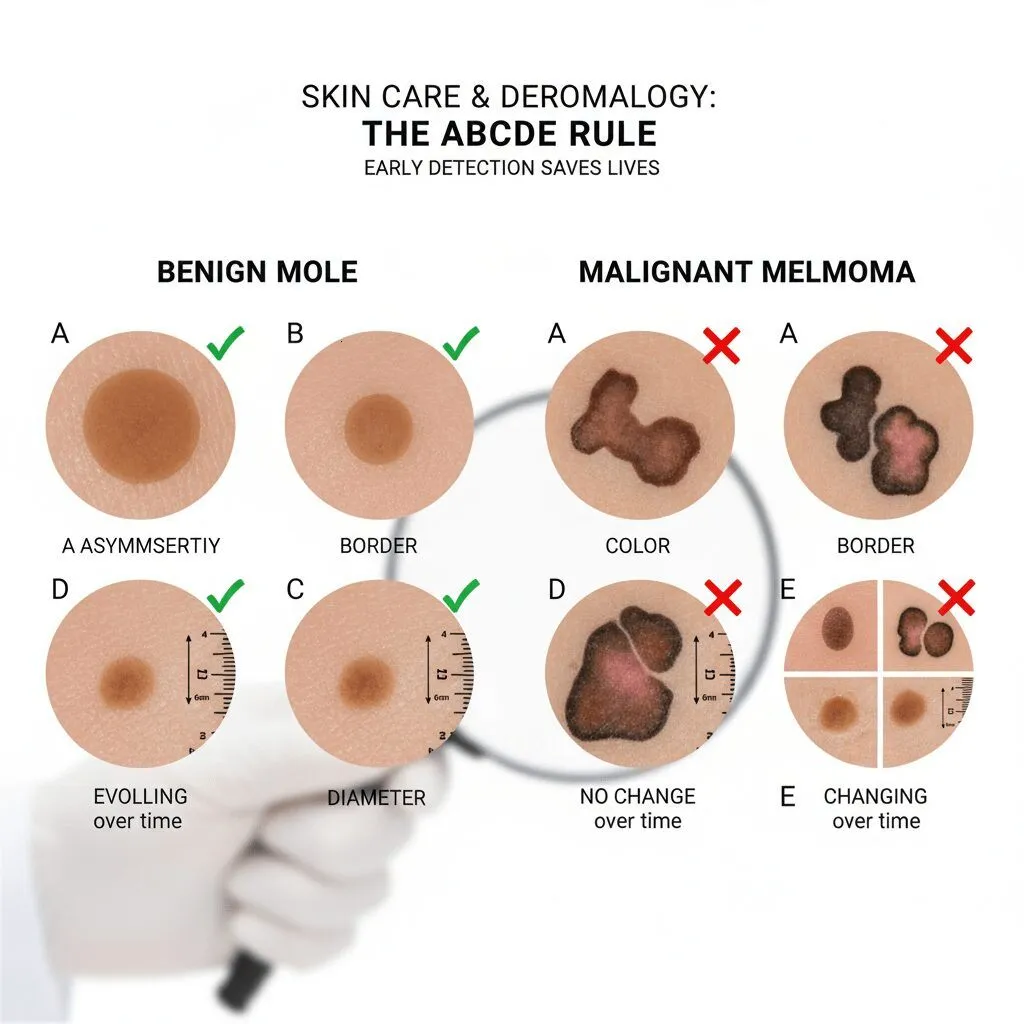
Skin cancer is the silent killer. It doesn’t usually hurt. It doesn’t itch. It just changes. With the American Cancer Society projecting over 100,000 new invasive melanoma cases in 2025, knowing your ABCDEs is non-negotiable.
- Asymmetry: One half doesn’t match the other.
- Border: Irregular, scalloped, or poorly defined.
- Color: Varied shades of tan, brown, black, or even white/red.
- Diameter: Larger than a pencil eraser (6mm) – though they can be smaller.
- Evolving: Any mole that changes size, shape, or color.
Dr. Seemal R. Desai, President of the AAD, stated in September 2024: “It is critically important for the public to understand that unprotected exposure to UV rays is a major risk factor for skin cancer… One in five Americans will get skin cancer.”
2. The “Itch That Won’t Quit” (Eczema & Psoriasis)
It’s “just” dry skin, right? Wrong. Chronic inflammatory conditions like Atopic Dermatitis (Eczema) and Psoriasis are systemic issues.
Data from the National Eczema Association (2024) shows that 31.6 million Americans suffer from some form of eczema. Furthermore, a study in the Journal of Drugs in Dermatology (July 2024) found that patients with moderate-to-severe psoriasis were 2.68 times more likely to miss work than those with mild disease.
If a rash is affecting your sleep, your work, or your mental health, it counts as “serious.” You don’t have to live in discomfort.
The New Generation of Risk: Gen Z and Sun Damage
In my research, I found a disturbing trend among younger adults. There is a misconception that skin cancer is an “old person’s problem.”
However, an American Academy of Dermatology Survey released on May 20, 2025, revealed that half of Gen Z adults reported being sunburned in 2024, with 10% suffering burns bad enough to cause blisters.
Dr. Veena Vanchinathan, MD, FAAD, emphasized this in the AAD press release: “Unlike previous generations who have seen firsthand the effects of sun damage, younger adults may not fully grasp these dangers… Your skin never forgets a sunburn.”
If you are in your 20s and notice a new spot that looks like a pink pearly bump or a scaly patch that bleeds, do not brush it off as acne. Basal Cell Carcinoma is rising in younger demographics.
Diagnosis & Treatment: What to Expect
So, you’ve decided to book the appointment. What actually happens?
1. Visual Exam & Dermoscopy:
Your dermatologist will use a dermatoscope—a specialized lighted magnifier—to look deep into the skin’s structures. This non-invasive tool can spot melanoma patterns invisible to the naked eye.
2. The Biopsy:
If something looks suspicious, we do a “shave” or “punch” biopsy. It sounds scary, but it takes 30 seconds. A little numbing shot (the only part that pinches), and a small sample is sent to the lab. It is the only way to be 100% sure if a rash is cancer or psoriasis.
3. Telehealth vs. In-Person:
Telehealth is fantastic for acne or refilling eczema prescriptions. However, for a changing mole or a full-body rash, photos can be deceptive. Lighting and camera quality can hide the subtle “violaceous” hue of Lichen Planus or the textural changes of melanoma.
FAQ: Common Rash Questions Answered
How long should you wait to see a doctor for a rash?
If there is no fever and no pain, the general rule is 7 days. If a rash persists despite OTC hydrocortisone and moisturizers for a week, it requires a diagnosis. If there is fever, pain, or blistering, the wait time is zero.
Does a meningitis rash itch?
Generally, no. The meningitis rash (petechiae or purpura) is bleeding under the skin, not an allergic reaction. It usually does not itch, which can be deceiving. Remember the Glass Test!
What does a stress rash look like?
Stress rashes often appear as acute hives (urticaria)—raised, red, itchy welts that can appear anywhere. They often flare up during high-anxiety periods and resolve within 24 hours, only to move to a different spot.
Can a rash be a sign of cancer?
Yes. Aside from Melanoma, conditions like Mycosis Fungoides (a type of T-cell lymphoma) can present as a scaly, itchy rash often mistaken for eczema on the buttocks or hips. If “eczema” treatment doesn’t work after months, get a second opinion.
Conclusion: Don’t Guess With Your Health
Your skin is incredibly resilient, but it is also communicative. It tells you when you are stressed, when you are allergic, and when you are in danger.
To summarize the 2025 Triage Protocol:
- ER NOW: Non-blanching rash (Glass Test), trouble breathing, or blistering eyes/mouth.
- DERM SOON (24-48hrs): Painful blisters (Shingles), tick bites, or fever-associated rashes.
- CHECK-UP: Changing moles, persistent itch, or sores that won’t heal.
The difference between a minor scar and a major tragedy is often just timing. If your gut tells you something is wrong, listen to it. In the world of dermatology, we would always rather tell you “it’s nothing” than tell you “you should have come in sooner.”
Take a moment today to check your skin. It might be the most important five minutes of your year.