 Johnson
Morning vs. Evening Cleansing: The Ultimate Dermatologist-Backed Guide for 2025
Your skin operates on a biological clock, and it’s far more precise than the alarm on your phone. At 8:00 AM, your skin is gearing up for battle against UV rays and pollution. By 8:00 PM, it shifts gears entirely, entering a critical recovery mode. Washing your face isn’t just about hygiene anymore; it’s about synchronizing your routine with your body’s circadian rhythms.
I’ve spent years analyzing skincare trends, and frankly, the confusion is understandable. Should you wash twice a day? Is splashing water enough? In my experience, most people treat their morning and evening routines as identical twins, when in reality, they should be distant cousins.
With “skinimalism” replacing the exhausting 10-step routines of the past decade, 2025 is the year we focus on efficiency over excess. But there is one step you cannot compromise on. This guide breaks down the clinical divide between AM protection and PM repair, supported by the latest data.

The Biological Divide: Protection vs. Repair
Before we even talk about products, we have to look at what your skin is doing. Your skin doesn’t just sit there; it cycles through biological processes based on the time of day. This is why using the same cleanser for both AM and PM might be the bottleneck in your skincare goals.
Why the Morning is for “Defensive” Cleansing
Morning cleansing is controversial in the dermatology world, but the consensus is shifting toward customization. The primary goal of a morning cleanse is to prepare the “canvas” for protection. You are removing nocturnal sebum, dust mites (unpleasant, but true), and the remnants of your night cream to ensure your SPF sticks.
According to Dr. Kseniya Kobets, FAAD, washing in the morning is essential to remove the built-up layer of products you applied at bedtime—including hair products that may have migrated to your face while you slept. If you don’t remove this film, your expensive Vitamin C serum and sunscreen can’t penetrate effectively.
The Evening “Detox”: Removing the Environmental Load
If the morning is about prep, the evening is about survival. Throughout the day, your skin accumulates a layer of oxidized sebum, sunscreen filters, and particulate matter from pollution. Leaving this cocktail on your face overnight is a recipe for inflammation.
Research confirms that your skin barrier is most permeable at night. A study from the National Institutes of Health (2024) confirms that transepidermal water loss (TEWL) peaks at night. This means while your skin is trying to repair itself, it’s also losing moisture rapidly. If you haven’t cleansed properly to allow your moisturizers to work, you’re waking up with a compromised barrier.
The Science of the “Water-Only” Morning Wash
One of the most frequent questions I get is: “Can I just use water in the morning?” The answer isn’t a simple yes or no—it depends entirely on your lipid production.
If you have dry or sensitive skin, a full cleanse in the morning might strip the few natural oils you produced overnight. According to Dr. Kathryn Anderson at the Cleveland Clinic (Feb 2025), if your skin is dry, washing with water only in the morning is often sufficient to refresh the skin without compromising the barrier. However, she notes that for oily or acne-prone skin, washing twice a day remains vital to control sebum.
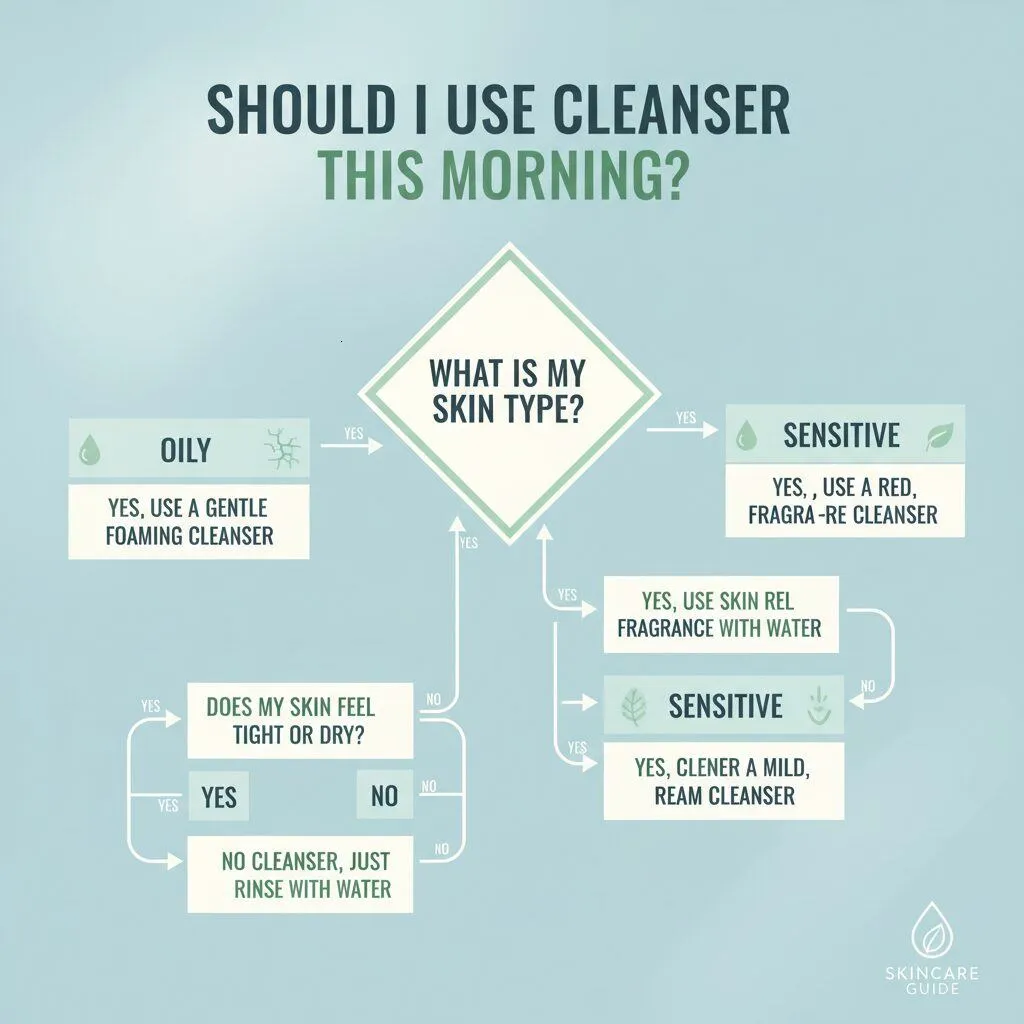
Here is the reality check: If you slathered on a heavy occlusive (like Vaseline or a thick sleeping mask) the night before, water won’t cut it. Oil and water don’t mix. You’ll need a gentle surfactant to break down that barrier so your morning actives can work.
Mastering the Nighttime Double Cleanse
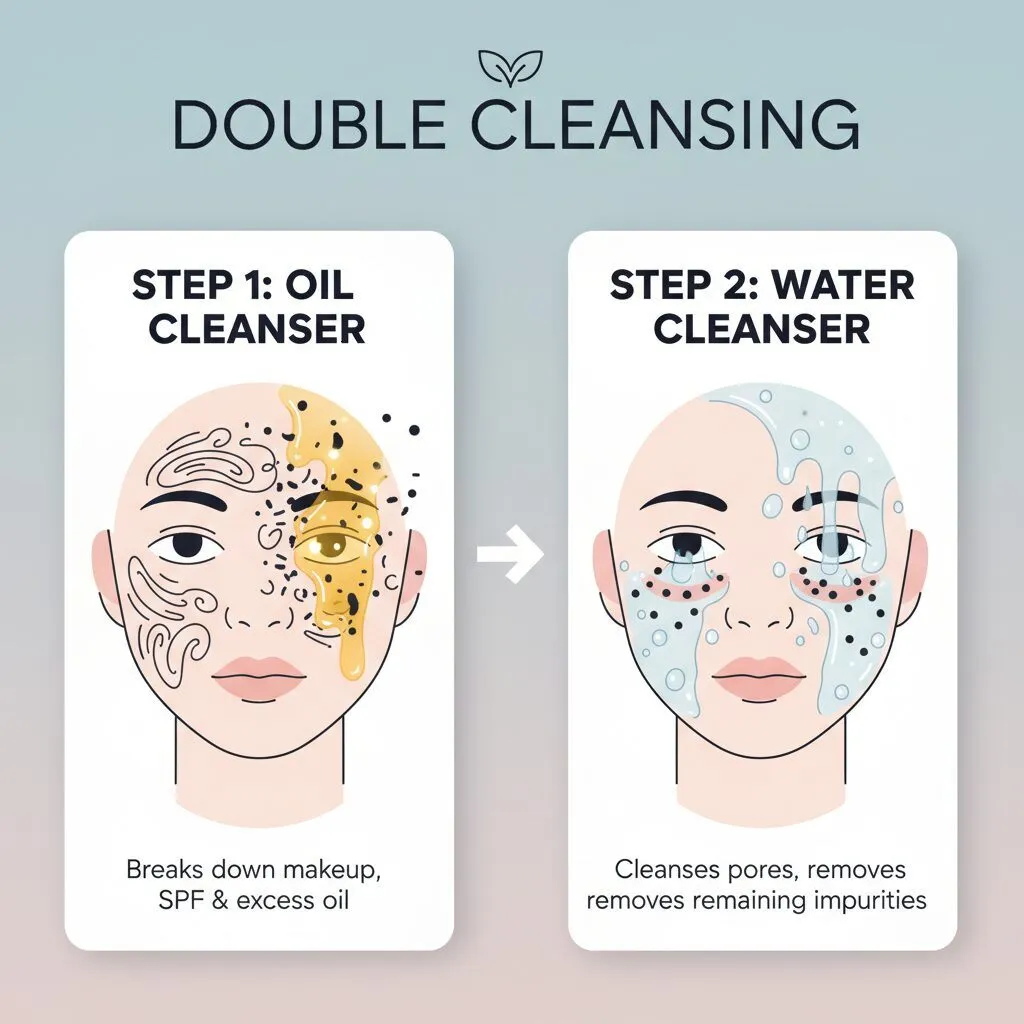
Double cleansing isn’t just a trend; it’s basic chemistry. Sunscreen and makeup are oil-soluble. Sweat and dirt are water-soluble. A single water-based cleanser often fails to remove the oil-based debris, leading to clogged pores.
The Cost of Skipping the PM Routine
According to NIH PubMed (Dec 2024), a clinical trial of women using a consistent twice-daily cleansing regimen showed a 14% increase in beneficial microbial diversity after just 4 weeks. Skipping your evening wash doesn’t just leave dirt; it disrupts your microbiome’s ecosystem.
Step 1: Lipid Solubilization (Oil/Balm)
The first step involves using a cleansing oil or balm on dry skin. This follows the principle of “like dissolves like.” The oil in the cleanser binds to the sebum and sunscreen on your face. When you add water, it emulsifies (turns milky) and rinses away the bulk of the debris.
Step 2: The Deep Pore Refresh (Water-based)
Once the surface barrier is removed, your second cleanser can actually clean your skin. This is where you treat your specific concern—salicylic acid for acne, milky cleansers for hydration, or foam for a deep clean. This two-step process ensures you aren’t just moving dirt around your face, but actually removing it.
2025 Trends: Skinimalism and Circadian Rhythms
We are seeing a massive shift in how consumers approach their routines. It’s no longer about having the most products; it’s about having the right products.
According to the Mintel Market Report (Dec 2024), facial cleansers remain the most used skincare product globally, with 72% of consumers using them regularly. However, the trend is moving toward “Skinimalism”—using fewer, higher-quality products that respect the skin’s pH.
This aligns with the biological reality of our skin. A 2024 study referenced by the NIH showed that twice-daily cleansing significantly reduced inflammatory lesions in acne patients compared to once-daily washing. The data is clear: minimalist doesn’t mean negligent. It means efficient.
| Feature | Morning Routine | Evening Routine |
|---|---|---|
| Primary Goal | Protection & Prep | Repair & Deep Cleanse |
| Cleanser Type | Gentle, Gel, or Water-only | Double Cleanse (Oil + Water) |
| Key Ingredients | Antioxidants (Vit C), SPF | Retinol, Peptides, Ceramides |
| Time Investment | ~10.7 Minutes | ~13.8 Minutes |
Time investment data source: Drive Research (2024)
Common Pitfalls: What I See Most Often
In my observation of skincare communities, the biggest mistake isn’t the product—it’s the technique. People spend 10 seconds scrubbing their face and expect miracles. The “60-second rule” suggests massaging your cleanser for a full minute allows the ingredients to actually penetrate and break down debris. If you’re washing off your cleanser in 15 seconds, you’re essentially just rinsing your face with expensive soap.
Another issue is temperature. Hot water strips natural oils, exacerbating the TEWL (water loss) we discussed earlier. Lukewarm water is the non-negotiable standard for both AM and PM routines.
Frequently Asked Questions
If you have extremely dry or eczema-prone skin, yes. However, for the majority of people, a morning cleanse is recommended to remove sweat and pillow bacteria. According to Cleveland Clinic experts, skipping the morning wash is generally safer for dry types than oily types.
Always wash after. Sweat contains salts that can dehydrate the skin and bacteria that thrives in moist environments. If you wear makeup to the gym, remove it beforehand, but the “real” cleanse should happen post-workout to clear the pores.
Water-based cleansers struggle with waterproof formulas. You must use an oil-based cleanser or balm first. The oil binds to the silicones in the sunscreen, lifting them off the skin so they can be rinsed away.
Yes. Your circadian rhythm dictates that cellular turnover and DNA repair mechanisms peak during sleep. This is why having a clean face at night is critical—you don’t want environmental pollutants interfering with this natural recovery process.
Final Thoughts: Listening to Your Skin’s Clock
The debate between morning and evening cleansing isn’t about which is “better”—it’s about understanding that they serve two fundamentally different purposes. Your morning routine is your shield; your evening routine is your rehab.
According to YouGov’s 2025 report, nearly half of young Americans have dedicated AM and PM routines, signaling a shift toward more educated skincare consumption. Join them. Don’t let the fatigue of the day convince you to skip the evening wash, and don’t let the rush of the morning make you neglect your barrier.
Listen to your skin. If it feels tight in the morning, switch to water. If it feels congested at night, double cleanse. Your skin is a living organ with a daily rhythm—treat it like one.