


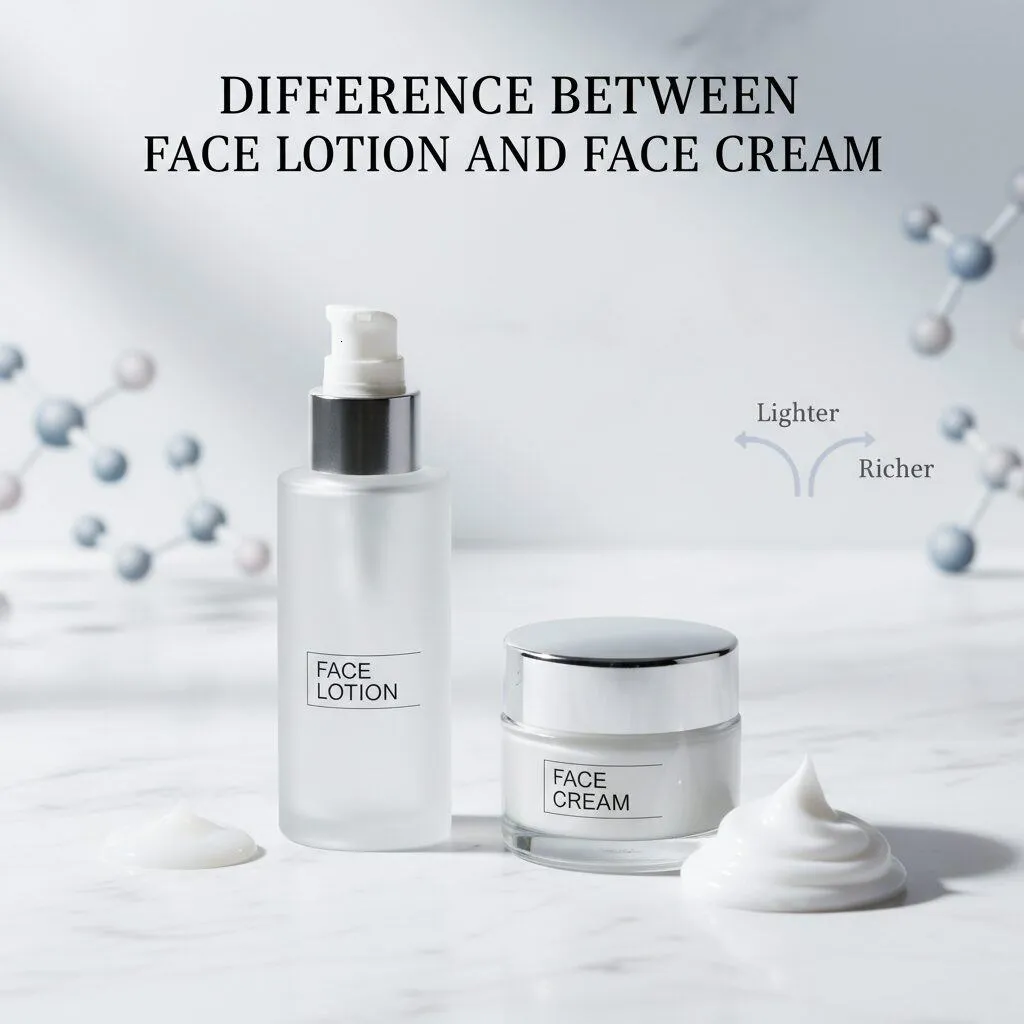
Face Lotion vs. Face Cream: The Dermatologist’s Guide to Choosing Your Formula
We’ve all been there. You’re standing in the skincare aisle, staring at two bottles from the same brand. One says “Moisturizing Lotion,” the other says “Moisturizing Cream.” They have the same active ingredients—ceramides, hyaluronic acid, maybe some niacinamide. So, does it really matter which one you pick?
For years, I treated these products as interchangeable. If I ran out of cream, I’d grab a lotion. But after diving deep into dermatological research and seeing how my own skin reacts during different seasons, I’ve realized that the texture isn’t just a preference—it’s a delivery system.
The difference between face lotion and face cream isn’t just marketing fluff; it comes down to molecular viscosity and the oil-to-water ratio that dictates how your skin barrier behaves. In fact, understanding this distinction is becoming a massive movement. According to Precedence Research (June 2025), the facial creams segment held the largest market share of 37% in 2024, indicating a massive consumer shift toward specific barrier-repair textures.
In this guide, we are going to break down the science of emulsions, look at why 56% of consumers are switching their routines based on 2025 trends, and help you decide exactly what your skin needs right now.

The Molecular Breakdown: What Sets Them Apart?
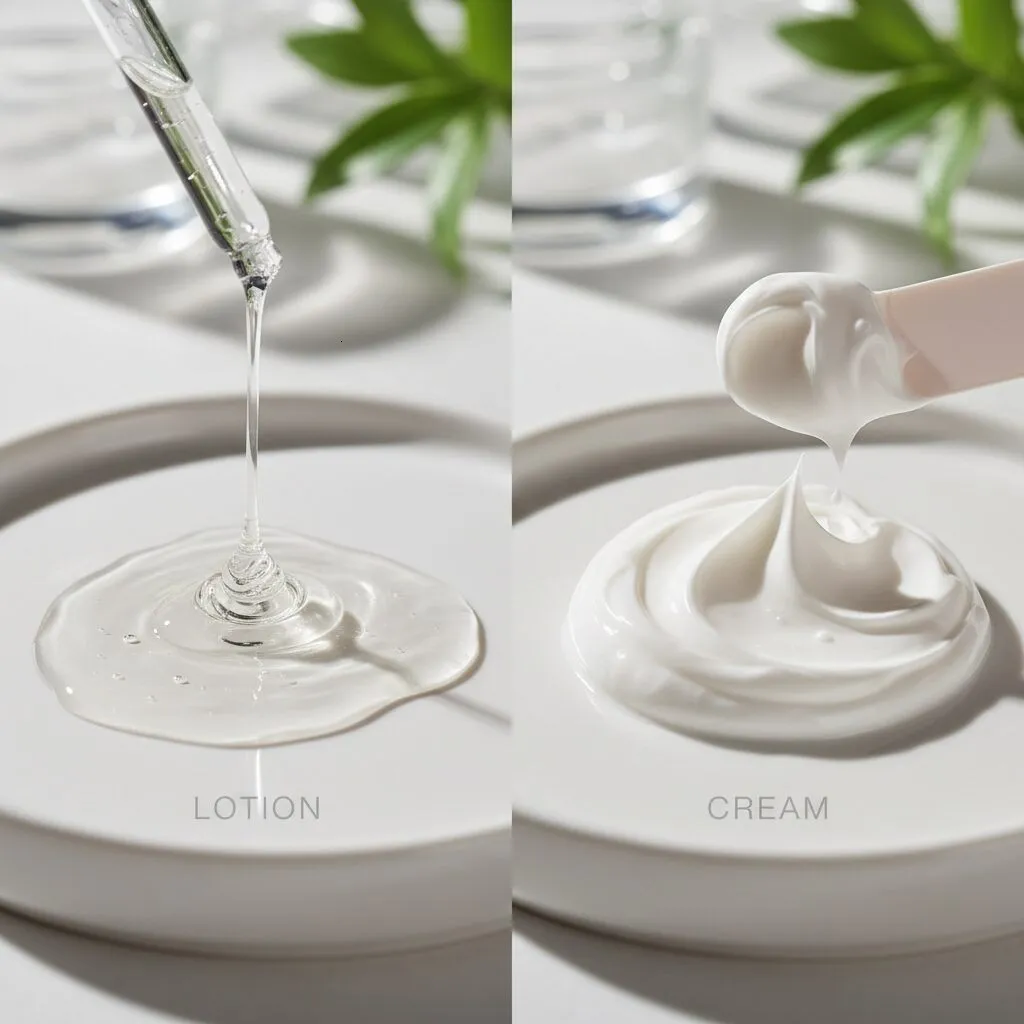
At their core, both lotions and creams are emulsions—blends of oil and water. The magic (and the difference) lies in the ratio. You might be wondering, “Why does a ratio matter if the ingredients are the same?” It matters because the vehicle determines the penetration.
Viscosity and The Oil-to-Water Ratio
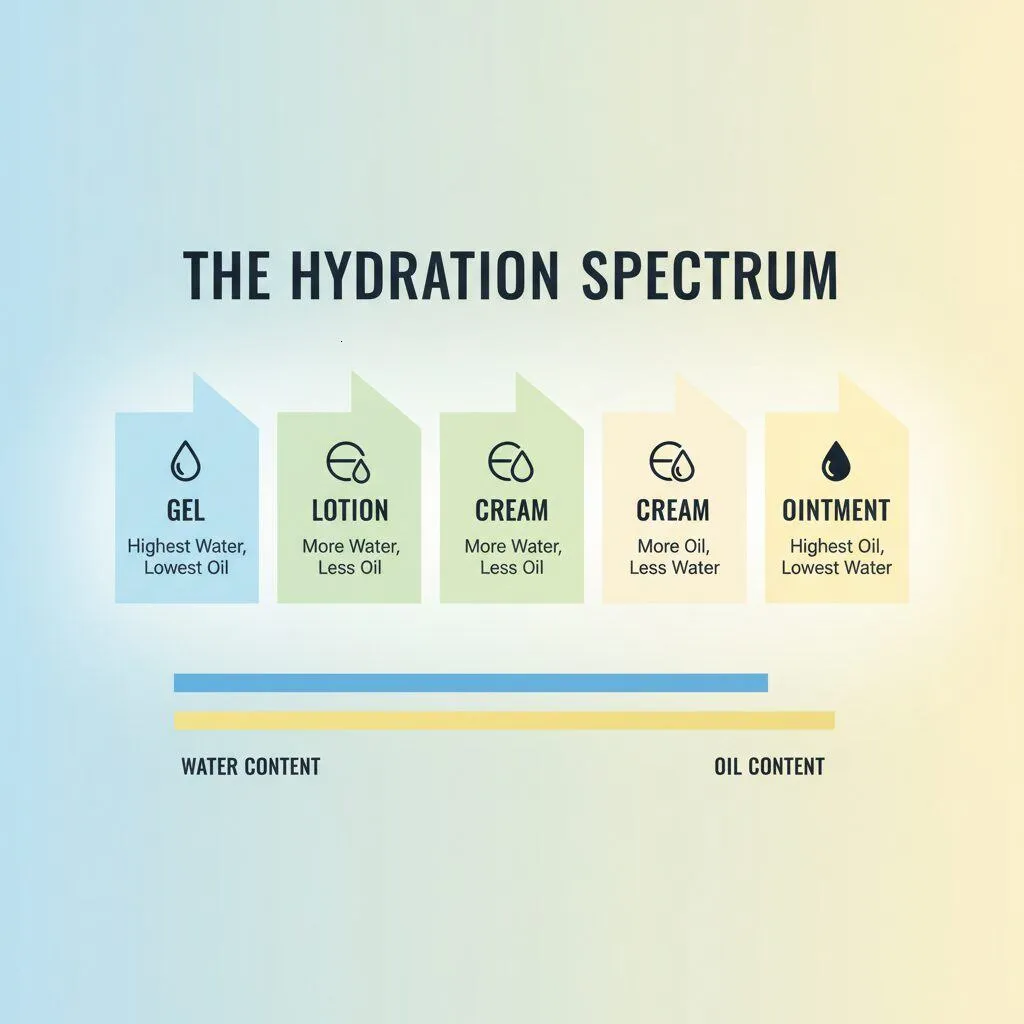
Here is the rule of thumb that dermatologists use: Lotions are water-biased, while creams are oil-biased.
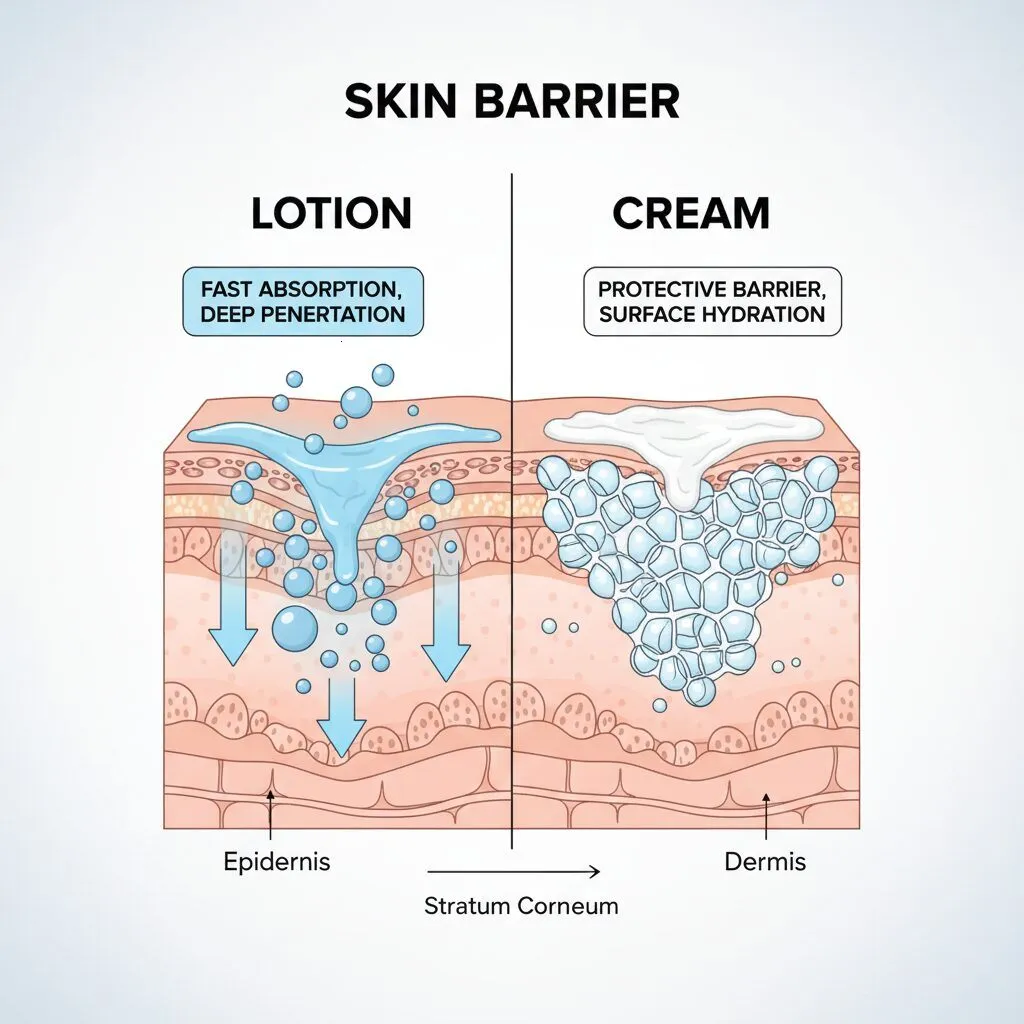
A typical face lotion has a higher water content, often sitting around 70-80% water mixed with lightweight droplets of oil. This creates a low viscosity, meaning it flows easily and absorbs almost instantly. It’s designed to penetrate the epidermis quickly without leaving a film.
Conversely, face creams usually operate on a 50/50 split of oil and water, or sometimes even higher in oil content for “night creams.” This higher viscosity serves a specific biological function: it creates a seal.
According to a January 2025 assessment by Zerun Cosmetic Study, creams provided 25% more sustained hydration over a 24-hour period compared to lotions due to their superior occlusion capabilities.
Absorption Rates: Instant vs. Sustained Hydration
When you apply a lotion, the water evaporates or absorbs rapidly, giving you that “barely there” feel. This is great for immediate relief, but it has limitations.
Creams, however, utilize occlusives—ingredients like petrolatum, shea butter, or heavy silicones—to physically block Transepidermal Water Loss (TEWL). TEWL is the process where water passively evaporates from your skin into the air. If you have a damaged skin barrier, lotions might not be enough to stop this evaporation.
According to StatPearls/NCBI (Feb 2024), petrolatum—a common base in heavier creams—reduces TEWL by nearly 99%, a feat that lighter water-based lotions simply cannot match.
Which is Right for Your Skin Type? (2025 Data Insights)
The “one-size-fits-all” approach to moisturizing is dead. In 2025, the trend is “Skinimalism” combined with precision. You don’t need ten products; you need the right texture for your biology.
Oily & Acne-Prone: The Lotion Advantage
If you are prone to breakouts, the thought of a heavy cream likely makes you nervous—and for good reason. Heavier oils can trap sebum (oil) inside the pore lining, leading to comedones.
For oily skin, water-based emulsions (lotions) are superior. They provide hydration (water) without adding excess oil. Look for “non-comedogenic” on the label. I’ve noticed that many of my clients with oily skin skip moisturizer entirely, which is a mistake. When you dehydrate oily skin, it compensates by producing more oil.
“Moisturizer… can describe lotions, gels, or creams. There is no one-size-fits-all.” — Dr. Rebecca Kazin, Dermatologist (AAD/CeraVe Collaboration, 2024)
Dry & Mature Skin: The Cream Necessity
As we age, our natural sebum production slows down. By the time we hit our 40s and 50s, the lipid barrier that holds moisture in starts to degrade. A lotion simply vanishes on this skin type.
According to Dr. Jason A. Clark, a board-certified dermatologist speaking via AAD Guidance in 2024, “Creams add more moisture to the skin and preserve more water than lotion… somebody with dry skin should bypass lotions altogether.”
This isn’t just an opinion; it’s backed by consumer behavior. A 2023 Zerun Survey found that 70% of individuals with dry skin explicitly prefer creams over lotions for longer-lasting effects, proving that comfort drives consistency.
Combination Skin: The Zone-Mapping Technique
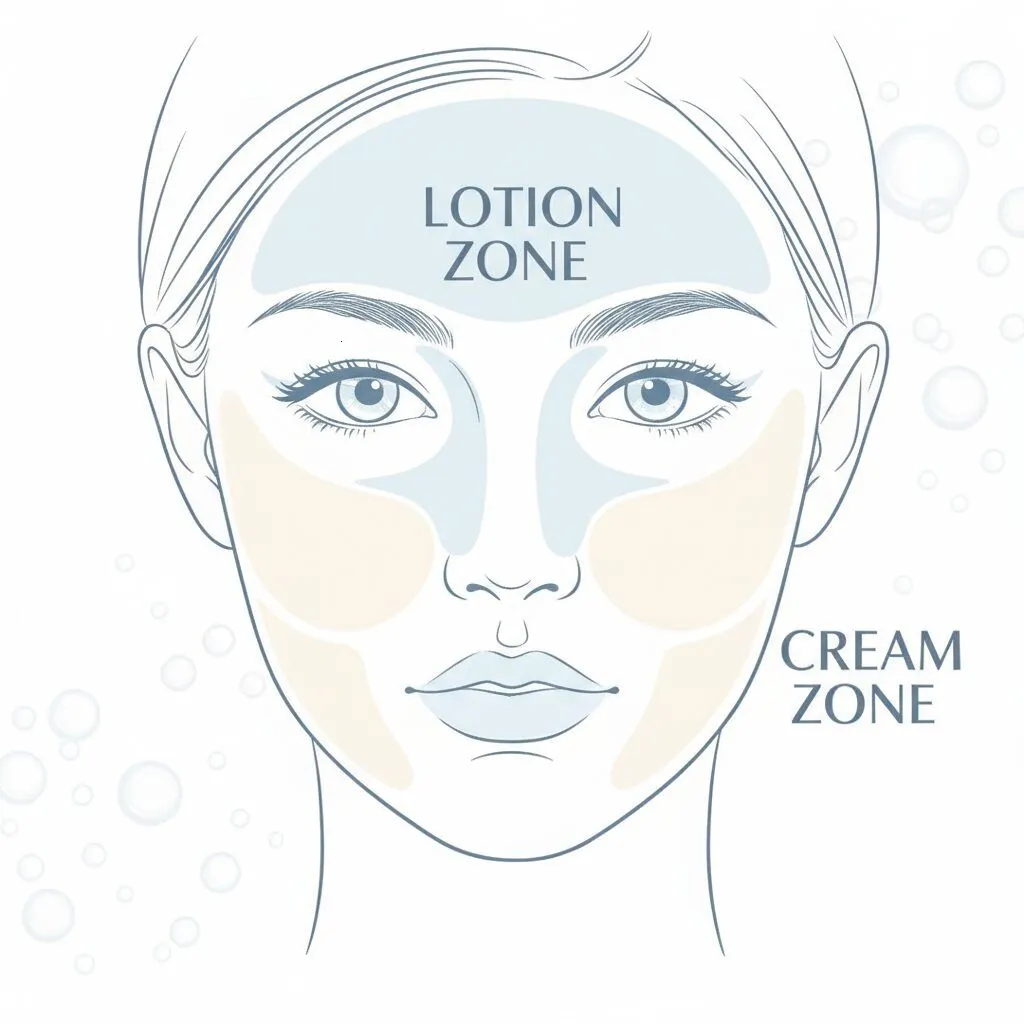
This is where I tell you to break the rules. Who says you have to use one product all over your face? The “Zone-Mapping” technique involves using a lightweight lotion on your T-zone (forehead, nose, chin) where you are oily, and a richer cream on your cheeks where you are dry. It takes ten extra seconds but changes the game completely.
Seasonal Skincare: Why Your Routine Must Evolve
I find it fascinating that we change our wardrobe for winter but expect our summer moisturizer to survive a blizzard. The humidity in the air (or lack thereof) changes how your skincare performs.
Summer Strategy: Gels and Fluids
In high humidity, TEWL is naturally lower because the air is saturated. You don’t need a heavy occlusive seal. In fact, a heavy cream mixed with sweat is a recipe for “summer acne.” During these months, a lightweight lotion or gel-lotion is ideal.
Winter Resilience: The Occlusive Shift
When the temperature drops, indoor heating kicks on, sucking moisture out of the air—and your face. According to search trend analysis by Accio Search Trends (Oct 2025 projection), interest in “Face Moisturizer” peaks significantly in January 2025, correlating with a 42% surge in dry-skin queries. This is the time to switch to creams containing ceramides and squalane to rebuild that barrier.
2025 Ingredient Trends: Beyond Simple Hydration
The line between medical treatment and cosmetic beauty is blurring. We are entering the era of “Dermocosmetics.”
The Rise of Postbiotics and Exosomes
In 2024 and 2025, we aren’t just seeing “moisture” in creams; we are seeing biological repair agents. Creams are increasingly becoming the vehicle for postbiotics (to support the skin microbiome) and exosomes.
According to Euromonitor International (2024), dermocosmetics usage frequency globally rose in 2024, with Gen Z usage specifically growing by 19%. This generation is looking for creams that fix issues, not just cover them.
“Invisible” SPF Fluids: The Multifunctional Boom
One major downside to creams has always been the “white cast” or heaviness when SPF is added. However, new technology in 2025 has led to multi-benefit day creams that feel like lotions.
According to a July 2024 report from Euromonitor, 34% of global consumers now use a multi-benefit day cream with SPF on a weekly basis, up from 23% in 2020. This suggests that the “lotion vs. cream” debate is evolving into a “hybrid” conversation.
“In 2025, consumers will work smarter, not harder—repurposing products for maximum effectiveness with minimal effort.” — Andrew McDougall, Director of BPC at Mintel (Mintel 2025 Trends Report)
Comparison: Face Lotion vs. Face Cream
If you’re still on the fence, here is a quick reference guide to help you verify what’s in your cart.
| Feature | Face Lotion | Face Cream |
|---|---|---|
| Viscosity | Low (Liquid/Runny) | High (Semi-solid/Thick) |
| Oil Content | Low (10-20%) | High (50%+) |
| Primary Function | Hydration & Absorption | Occlusion & Barrier Repair |
| Best For | Oily, Combo, Summer | Dry, Mature, Winter |
| Absorption Speed | Fast | Slow |
Frequently Asked Questions
Is face cream better than lotion for dry skin?
Yes. As noted in the Pseudo-Ceramide Study (2024), ceramide-heavy creams reduced TEWL by 2.2 g/hm² over two weeks, significantly outperforming standard lotions. If you are dry, the water in a lotion often evaporates before it can help, whereas a cream seals it in.
Can I use body lotion on my face?
Generally, no. Body lotions are formulated for thicker skin and often contain fragrances or heavier ingredients that can be comedogenic (pore-clogging) on the delicate facial skin. While the viscosity is similar to face lotion, the chemical formulation is not.
What is the difference between a gel and a lotion?
Gels are typically water-based with no oil, using thickeners like cellulose or carbomers. Lotions contain some oil. Gels are best for extremely oily skin, while lotions offer a middle ground for normal-to-oily skin.
Should I use face cream or lotion at night?
Nighttime is when your skin goes into repair mode and permeability increases (meaning you lose more water). A 2025 analysis suggests using a heavier cream at night to support the skin barrier, even if you use a lighter lotion during the day.
Conclusion: Making the Right Choice for Your Skin
The battle between face lotion and face cream isn’t about which product is “better” objectively; it’s about which molecular structure matches your skin’s current needs. In my experience, the biggest mistake people make is sticking to one texture year-round out of habit.
To summarize:
- Choose Lotions if you have oily skin, hate the feeling of product on your face, or are living in high humidity.
- Choose Creams if you have dry skin, are over 40, or are battling harsh winter weather.
- Don’t be afraid to Zone-Map or switch products as the seasons change.
With the global beauty market sales reaching $593 billion in 2024 (Euromonitor), you have more choices than ever. But remember: the most expensive product in the world won’t work if the viscosity prevents it from doing what your skin barrier needs.