



Should You Use an Oil Cleanser Every Single Night? Dermatologists Settle the Debate for 2025
We’ve all been there. You’re standing in the skincare aisle, holding a bottle of golden liquid that promises to melt away your waterproof mascara, but a nagging voice in your head asks: “If I rub oil on my face every night, am I just asking for a breakout?”
It’s a valid concern. For years, we were taught that oil was the enemy. Yet, in my experience working with clients struggling with barrier repair, the shift toward oil cleansing has been nothing short of revolutionary. But does that mean you should do it every single night?
The landscape of skincare is changing rapidly. According to a 2025 report by Global Growth Insights, 47% of face cleanser users in the U.S. have now adopted cleansing oils into their routines. However, adoption doesn’t always equal correct usage. Misusing these potent cleansers can lead to congestion, while using them correctly can be the holy grail for glass skin.
This article isn’t just another generic list of products. We are diving deep into the biochemistry of your lipid barrier, the latest 2025 clinical studies on acne and eczema, and the specific frequency that works for your unique skin microbiome.


The Science of “Like Dissolves Like”
To understand the frequency, we first have to understand the mechanism. The core principle of oil cleansing is basic chemistry: like dissolves like. Water and oil don’t mix, which is why splashing water on your face doesn’t remove sebum (your skin’s natural oil) or oil-based makeup.
Dr. Stephanie S. Gardner, MD, explains the biological interaction clearly. According to her review on WebMD (Aug 8, 2025), “Oil cleansing works because the oil you use bonds to the oils and dirt on your skin. It also acts as a barrier to protect your skin, keeping it soft and moisturized.”
Here is what makes this critical for 2025: Modern sunscreens have evolved. The UV filters used today are often formulated with advanced film-forming polymers to make them sweat-resistant. A standard water-based foam cleanser often fails to break down these persistent films.

Nightly Oil Cleansing: Recommended Frequency by Skin Type
The biggest mistake I see people make is assuming that “oil cleansing” is a one-size-fits-all prescription. Your skin’s tolerance for daily oil massage depends entirely on your lipid barrier function and sebum production levels.
1. Oily & Acne-Prone Skin: The Daily Directive
This is where it gets counter-intuitive. If you have oily skin, you might be terrified of adding more oil. However, the research suggests that daily oil cleansing is actually most beneficial for this skin type.
According to Christina Korouchtsidi, a Skincare Specialist (Nov 12, 2025), “Many people assume oil will clog pores, but non-comedogenic oils actually help regulate sebum production.” When you strip oily skin with harsh foams, it overcompensates by producing more oil. Oil cleansing breaks this cycle.
Furthermore, a groundbreaking 2025 study provides clinical backing for this. A 12-week study published in the Journal of Drugs in Dermatology (June 1, 2025) analyzed a polymeric cleansing technology on 35 subjects. The results showed significant reductions in acne lesions by week 4 without disrupting the lipid barrier. This confirms that consistent, nightly removal of excess sebum via oil-based agents prevents the blockage of the pilosebaceous unit.
Verdict: Yes, use it every night. Focus on oils high in linoleic acid (like sunflower or grapeseed) which are often lacking in acne-prone skin.
2. Dry & Sensitive Skin: The “Sweet Spot”
For my friends with dry or reactive skin, the rules change slightly. While oil cleansers are nourishing, the act of “double cleansing” (following with a second water-based wash) can sometimes be too stripping if done aggressively every single night.
We need to look at barrier function data here. A study reported by Typology (Feb 25, 2025) involving 35 women with atopic dermatitis (eczema) found that using makeup-removing oil for four weeks significantly increased moisture retention. Specifically, 86% of participants saw improved or stable symptoms, and transepidermal water loss (TEWL) decreased.
However, the key is the formulation. Fragrance-free, lipid-rich balms are superior here. If you don’t wear heavy makeup daily, you might skip the second cleanse or oil cleanse only 3-5 times a week.
Verdict: 3-5 times a week, or nightly if using a specialized barrier-supporting balm.

3. Mature Skin: Replenishing the Tank
As we age, our natural oil production plummets. According to the Global Cleansing Oil Market Report 2034, over 66% of the market demand in 2024 was for natural oils, driven heavily by consumers looking to combat dryness.
Mature skin benefits from nightly oil cleansing because it cleans without stripping. It helps maintain the acid mantle. Alexis Pfropper, a noted esthetician, stated in a Healthline interview (March 18, 2024) that “Double cleansing helps maintain skin hydration by preventing the stripping of natural oil… resulting in a clearer, more radiant complexion.”
Verdict: Every night. It is essential for preventing dehydration lines.
The 4-2-4 Rule: The “Spa Secret” for Deep Pore Cleansing
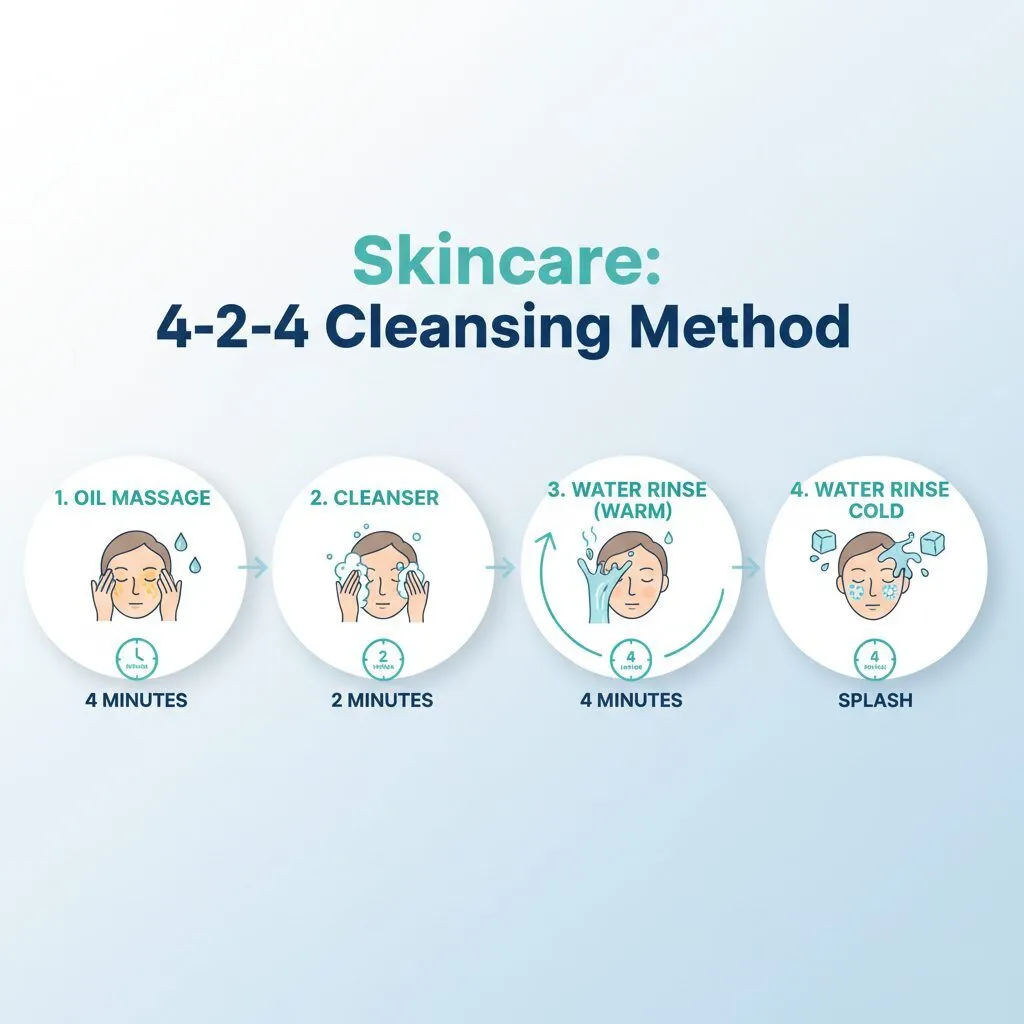
If you have decided to commit to nightly oil cleansing, the method matters as much as the frequency. Lately, the “4-2-4 Method” has been trending, and for good reason. It turns a mundane chore into a lymphatic drainage ritual.
I tried this method for two weeks straight, and while my arms were tired, the clarity in my congestion-prone areas (like the nose and chin) was undeniable. Here is how it works:
- 4 Minutes: Massage the oil cleanser into dry skin. This long duration helps dislodge “sebaceous filaments”—those pesky grey dots on your nose. It also warms the skin, increasing microcirculation.
- 2 Minutes: Layer your foam cleanser over the oil (or after rinsing, depending on the modification) and massage. This ensures the oil residue is fully emulsified and removed.
- 4 Minutes: Rinse. Start with 2 minutes of warm water to melt everything away, followed by 2 minutes of cold water to tighten the pores and refresh the skin.
Is this necessary every night? Probably not. But doing this once or twice a week can replace the need for harsh clay masks or physical scrubs.
Common Pitfalls: Why Your Nightly Routine Might Be Failing
I often hear, “I tried oil cleansing, and it broke me out!” In 90% of cases, the product isn’t the problem—the technique is.
The Emulsification Error
Modern cleansing oils contain surfactants. When you add water, they are designed to turn milky white (emulsify) and rinse clean away. If you skip this step—if you just try to wipe the oil off with a towel or rinse it quickly—you are leaving a film of dirty oil on your pores.
The Fix: Apply oil to dry skin. Massage. Then, wet your hands and massage your face again until the oil turns white. Then rinse.
The Comedogenic Risk
Not all oils are created equal. In 2025, consumers are smarter. A report by Global Growth Insights (2025) notes that “58% of American consumers prioritize products free from parabens, sulfates, and artificial fragrances.” But you also need to look for comedogenic ratings.
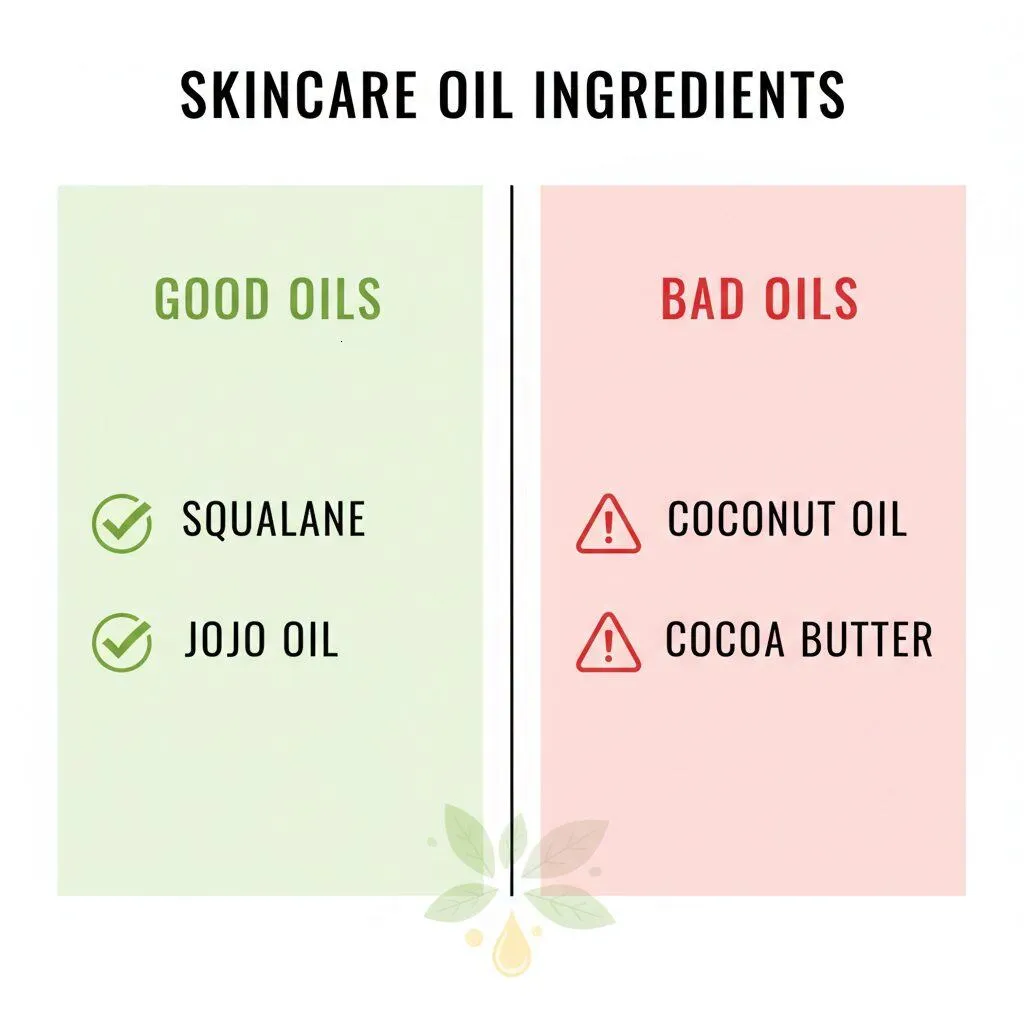
- Safe for Nightly Use (Low Comedogenic Rating): Argan Oil, Squalane, Jojoba Oil, Sunflower Seed Oil.
- Risky for Acne Prone Skin (High Comedogenic Rating): Coconut Oil, Wheat Germ Oil, Cocoa Butter.
FAQ: Expert Answers to Your Burning Questions
1. Can I just oil cleanse and skip the second wash?
If you have very dry skin, yes, but be careful. If you are acne-prone, absolutely not. The oil dissolves the dirt, but the water-based cleanser washes it down the drain. Skipping the second step is a primary cause of congestion.
2. Should I oil cleanse in the morning?
Generally, no. You don’t have sunscreen or heavy makeup to remove in the morning. Over-cleansing can disrupt your microbiome. A simple water rinse or gentle milky cleanser is sufficient for the AM.
3. Does oil cleansing remove waterproof mascara?
Yes, and it’s better for your lashes than scrubbing with a cotton pad. The oil breaks down the polymers in waterproof formulas, allowing them to slide off without tugging at the delicate eye area.
4. Is it okay to use pure kitchen oils (like Olive Oil)?
I strongly advise against this. Culinary oils lack the surfactants (emulsifiers) found in formulated cleansing oils. This means they won’t rinse off with water, leaving a heavy, pore-clogging residue that requires scrubbing to remove, which damages the skin barrier.
Conclusion: The Final Verdict
So, should you use an oil cleanser every single night? For the vast majority of us living in a world of long-wear foundation and high-SPF sunscreens, the answer is a resounding yes.
The research from 2024 and 2025 is clear: maintaining a healthy lipid barrier while effectively removing environmental pollutants is key to long-term skin health. Whether you are battling acne (as shown in the SA-PCT study) or managing eczema, oil cleansing is a versatile tool.
Your Nightly Checklist:
- Oily Skin: Every night. Follow with a foaming cleanser.
- Dry Skin: Every night (or every other night). Follow with a hydrating milk cleanser.
- Technique: Always apply to dry skin, always emulsify with water.
Skincare is a journey, not a race. Listen to your skin. If it feels tight, back off. If it feels congested, increase the massage time. But don’t fear the oil—embrace it.