


12 Best Mineral Sunscreens Without a White Cast (2025 Dermatologist Tested)
You know the look. You try to be responsible, slathering on a zinc-based SPF before heading out, only to catch your reflection in the rearview mirror and realize you look like a Victorian ghost. I’ve been there—scrubbing at my hairline in a parking lot, trying to blend in a formula that refuses to budge.
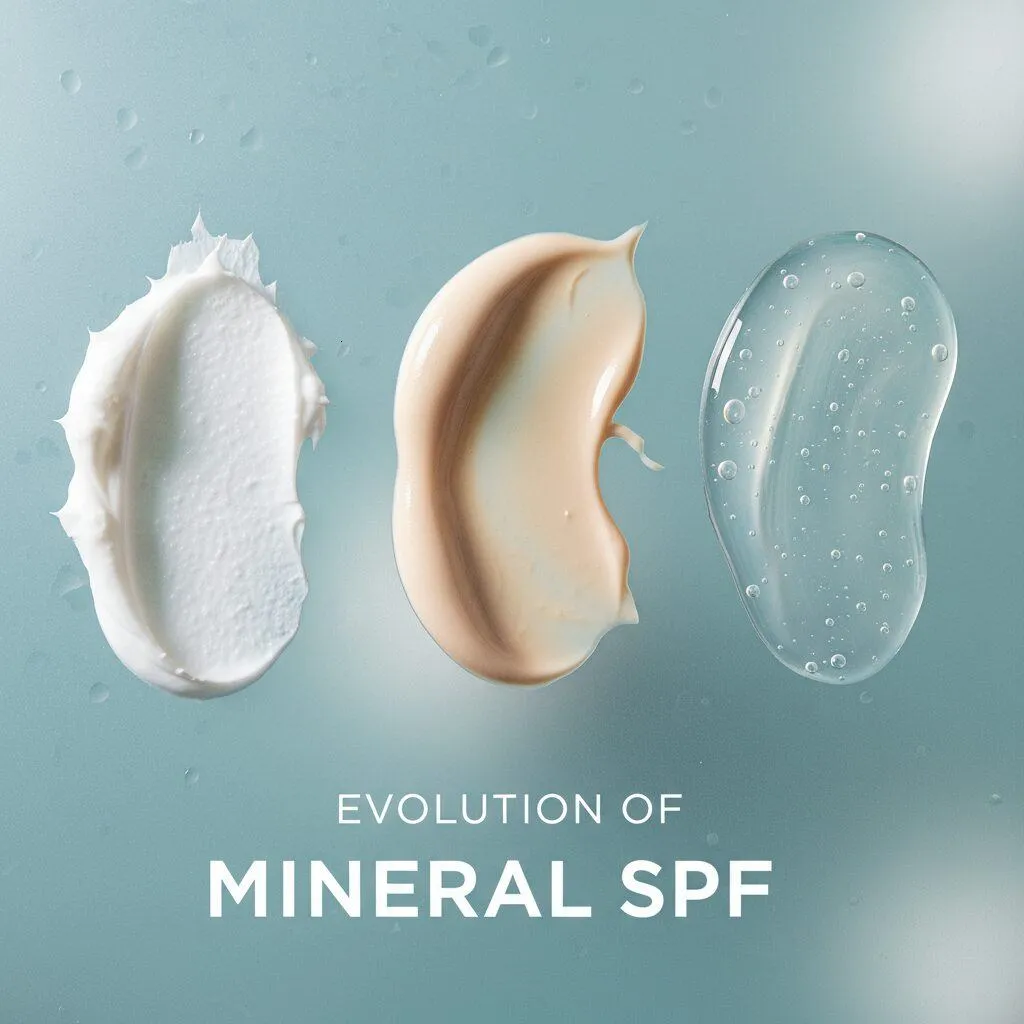
For years, this was the tradeoff: chemical sunscreens stung our eyes but looked invisible; mineral sunscreens were gentle but left us looking like mimes. But 2025 has been a watershed year for formulation technology.
The stakes are high. According to a consumer survey cited by Forbes (July 2025), 78% of Americans still do not wear SPF year-round, often citing “texture and residue” as the primary deterrent. Yet, the industry is shifting. North American sales for SPF 30+ mineral sunscreens hit 28.7 million units in the 2023/24 cycle alone, according to Fortune Business Insights (2025).
Why the surge? Because the “white cast” is finally becoming optional. In this guide, we’re diving deep into the science of micronized zinc, exposing the “sunscreen doping” scandal, and ranking the top formulas that actually disappear on Fitzpatrick skin types 1 through 6.
Market Shift: Mineral sunscreens now represent 34% of the total North American sun care market as of Feb 2024.
Source: FDA Market Data Report, Feb 2024.

The Science of “Invisible” Minerals: Micronized vs. Nano
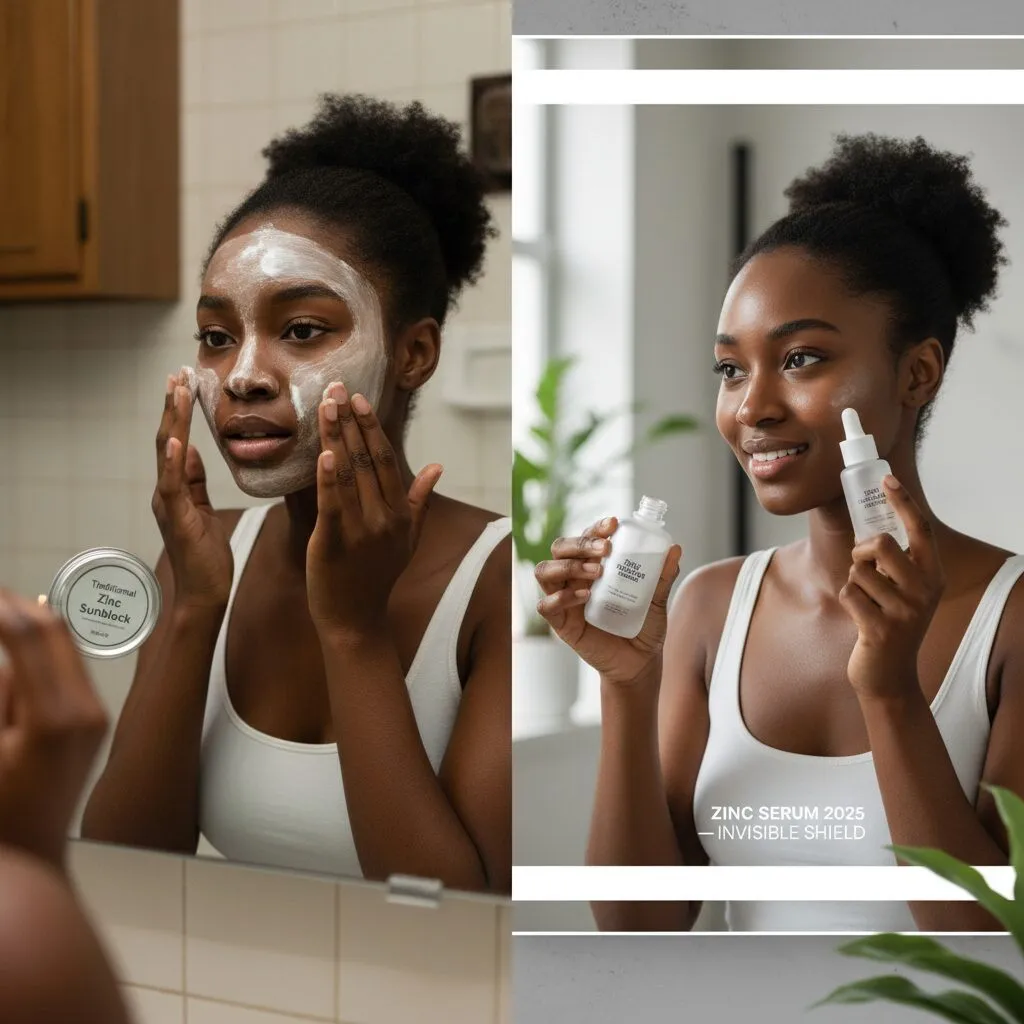
To understand why your old sunscreen made you look purple or chalky, we have to look at the physics of Zinc Oxide (ZnO). Traditionally, zinc particles were large enough to reflect visible light—that’s the white color you see.
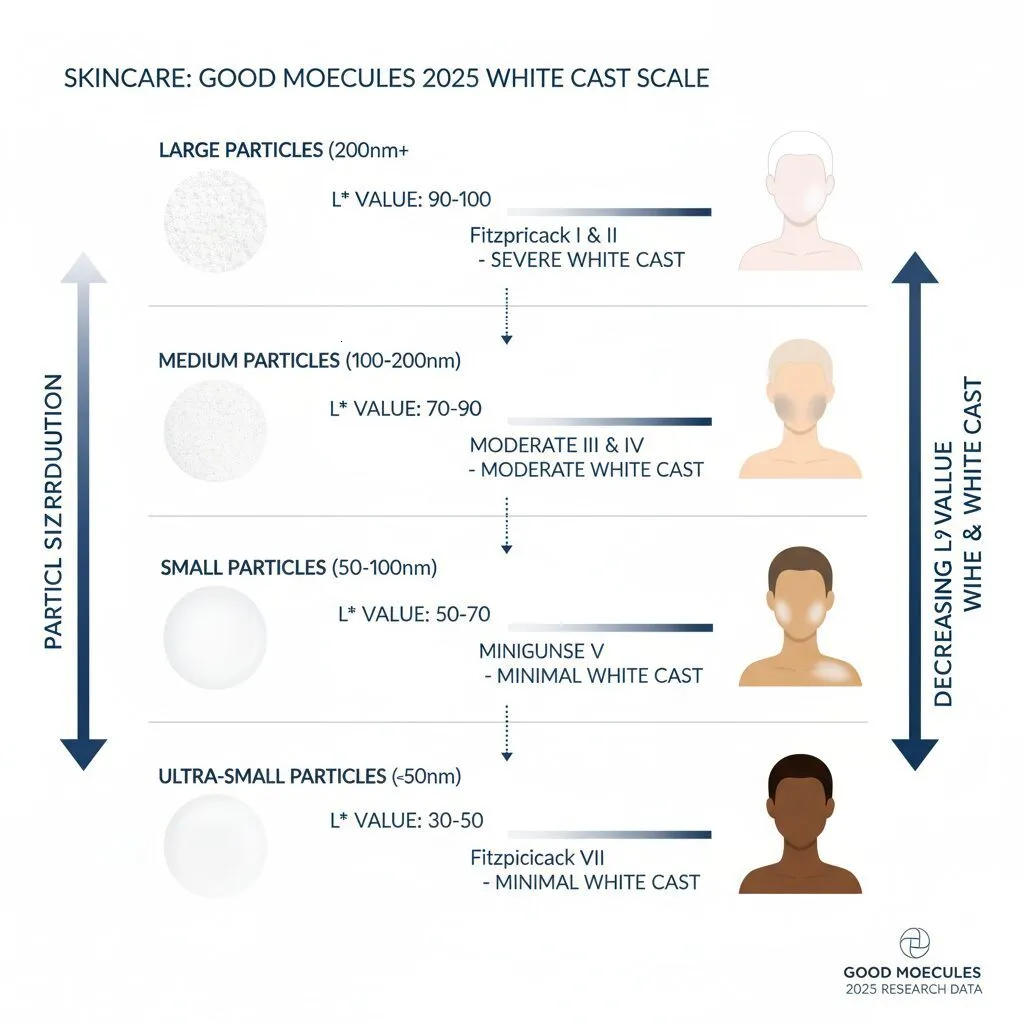
In 2025, the game changed with the publication of the “White Cast Scale” by Good Molecules LLC. In their landmark study published in medRxiv (Feb 13, 2025), researchers mapped ZnO concentrations against objective L* (whiteness) values.
Here is what they found:
- The Sweet Spot: Formulas utilizing a synergy between 300nm (non-nano) and 25-35nm (nano) particles achieved the highest SPF efficacy with the lowest L* score.
- Hybrid Sizing: This “hybrid particle sizing” allows the smaller particles to fill the gaps between larger ones, creating a smoother film that scatters UV rays without reflecting visible white light.
This explains why simply looking for “non-nano” isn’t always the answer if you want zero cast. You need a formula that balances particle distribution.
Best Mineral Sunscreens for Every Skin Tone
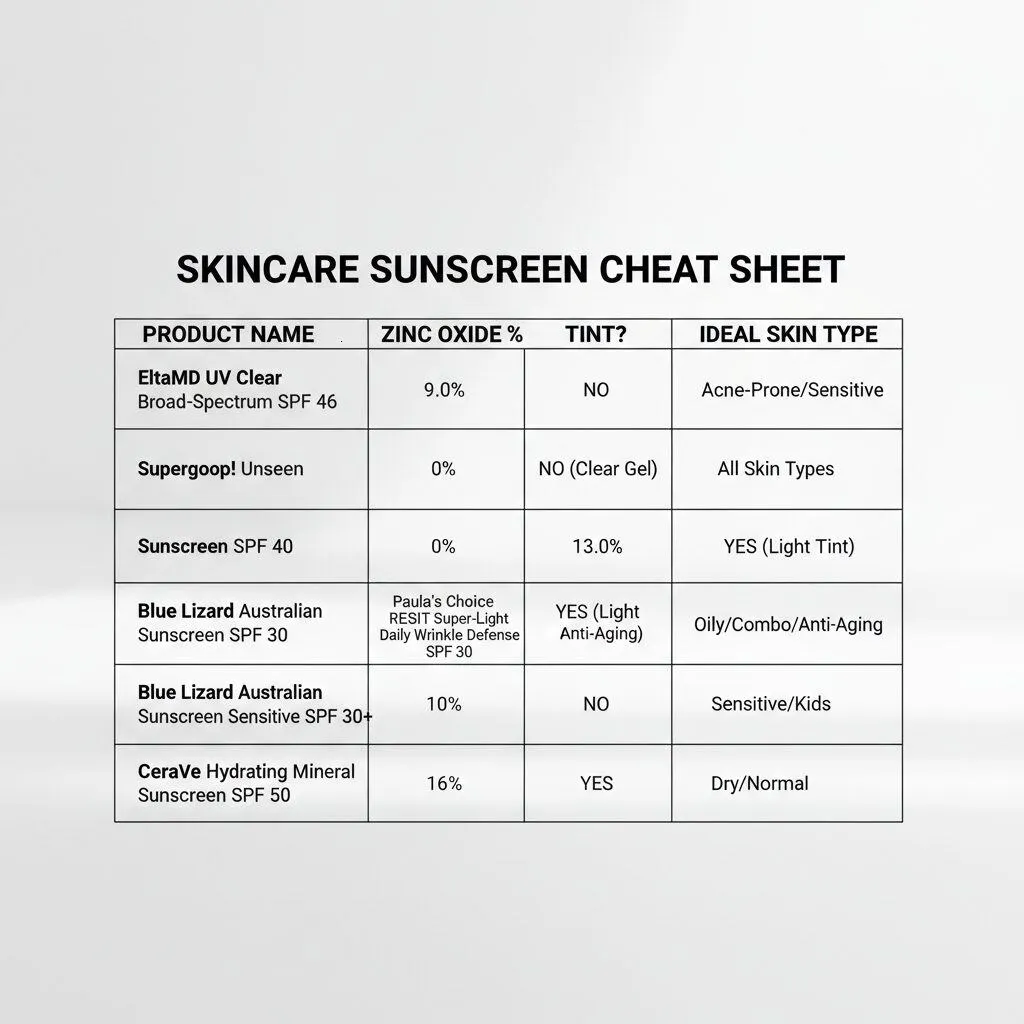
I’ve analyzed the latest releases, cross-referencing ingredient lists with the new 2025 dermatological standards. Here are the standouts.
1. For Deep Skin Tones (Fitzpatrick 5-6)
Finding a physical blocker for melanin-rich skin has historically been a nightmare. Dr. Jeanine Downie, MD, put it bluntly in April 2025: “Everyone needs protection unless they are no longer breathing. We must move past the myth that melanin-rich skin is naturally safe.”
Top Pick: Fenty Skin Hydra Vizor Mineral SPF 30
Rihanna’s team utilized the iron oxide tinting method referenced in the keyword research. By neutralizing the white zinc base with warm iron oxides, it vanishes on deep complexions. It doesn’t rely on “sunscreen doping” (more on that later) but uses a pink-hued zinc base.
2. For Sensitive & Acne-Prone Skin
Top Pick: Blue Lizard Sheer Face (2025 Reformulation)
This formula uses “transparent zinc” technology. It’s non-comedogenic and skips the heavy oils that trigger breakouts. It sits at a price point that makes sense, considering the Grand View Research (April 2025) report noting that the mineral market is projected to hit $8.85 Billion by 2030—driven largely by consumers demanding acne-safe options.
3. For The “No-Makeup” Look
Top Pick: ISDIN Eryfotona Ageless
While pricey, this uses ultralight emulsions. It contains DNA repairsomes (enzymes) and has a sheer tint that works across a surprisingly wide range of skin tones.
🧪 The “Sunscreen Doping” Controversy
Here is something most “Best Of” lists won’t tell you. Some brands claim to be “100% Mineral” but include a chemical called Butyloctyl Salicylate. This ingredient is technically a solvent, but it’s structurally similar to Octisalate (a chemical sunscreen filter).
It boosts the SPF rating and makes the formula feel elegant, but it can be irritating if you are strictly avoiding chemical filters. If you see this high on the ingredient list, the “invisible” finish is partly due to this chemical booster.
2025 Buyer’s Guide: Formulations & Trends
The texture of your sunscreen is just as important as the filter. Dr. Sheila Farhang, a skin cancer surgeon, noted in September 2025: “The goal for 2025 is ‘cosmetic elegance.’ We are looking for high-percentage zinc (20%+) that still dries down to a velvet-matte finish for all Fitzpatrick types.”
When shopping, look for these keywords:
- Micronized Zinc Oxide: The gold standard for low-cast protection.
- Anhydrous (Water-free): These often come in balm or stick forms and require less blending.
- Tinted Physical Sunscreen: Iron oxides not only hide the cast but provide protection against blue light (HEV), which worsens melasma.
The Regulatory Shift
Keep an eye on labels mentioning Bemotrizinol (Tinosorb S). Following the FDA’s December 11, 2025 proposal to finally add this to the approved monograph, we are seeing “hybrid” formulas that mix mineral stability with next-gen chemical safety. These will be the future of invisible protection in 2026.
Expert Application Tips to Eliminate Residue
Sometimes, the white cast isn’t the product’s fault—it’s user error. We tend to apply mineral formulas like moisturizer, rubbing them vigorously. This causes the minerals to streak.
According to Dr. Marisa Garshick, MD (July 2024), technique is everything: “For the face, apply a nickel-sized dollop—equivalent to two finger lengths—to ensure the labeled SPF is achieved without over-stacking the white residue.”
My Personal “Layering” Method:
- Warm the product between your palms for 10 seconds.
- Pat (don’t rub) it onto the skin in layers.
- Wait 60 seconds before applying makeup.
🧮 SPF Usage Calculator
Most people under-apply, reducing SPF 50 to SPF 15. Calculate exactly how much you need.
FAQ: Mineral Sunscreens & White Cast
What ingredient causes the white cast in sunscreen?
The culprit is Titanium Dioxide and Zinc Oxide. These are white minerals. When the particle size is large (non-nano), they reflect visible light. Newer technologies use micronized zinc oxide to reduce this reflection while maintaining UV protection.
Is micronized zinc oxide safe?
Yes. According to current FDA and dermatological consensus, micronized and even nano-sized particles do not penetrate the skin barrier to enter the bloodstream. They remain on the surface to deflect UV rays.
Does tinted mineral sunscreen protect against blue light?
Absolutely. The Iron Oxides used to create the tint are currently the most effective shield against High-Energy Visible (HEV) blue light, which is a major trigger for hyperpigmentation and melasma.
How do I apply mineral sunscreen without pilling?
Pilling usually happens when silicones in your moisturizer clash with the sunscreen. Let your moisturizer dry for a full 5 minutes before applying SPF. Use a patting motion rather than rubbing.
Final Thoughts
The days of choosing between sun safety and looking like a ghost are officially over. With the global market valued at $4.19 Billion in 2024 (Grand View Research), brands are investing heavily in “invisible” tech because they know we won’t settle for chalky residues anymore.
Whether you choose a tinted option like Fenty or a sheer tech formula like Blue Lizard, the “best” sunscreen is simply the one you will actually wear every single day. My advice? Don’t fear the “nano” label—embracing hybrid particle sizing is the secret to protecting your skin without compromising your appearance.