


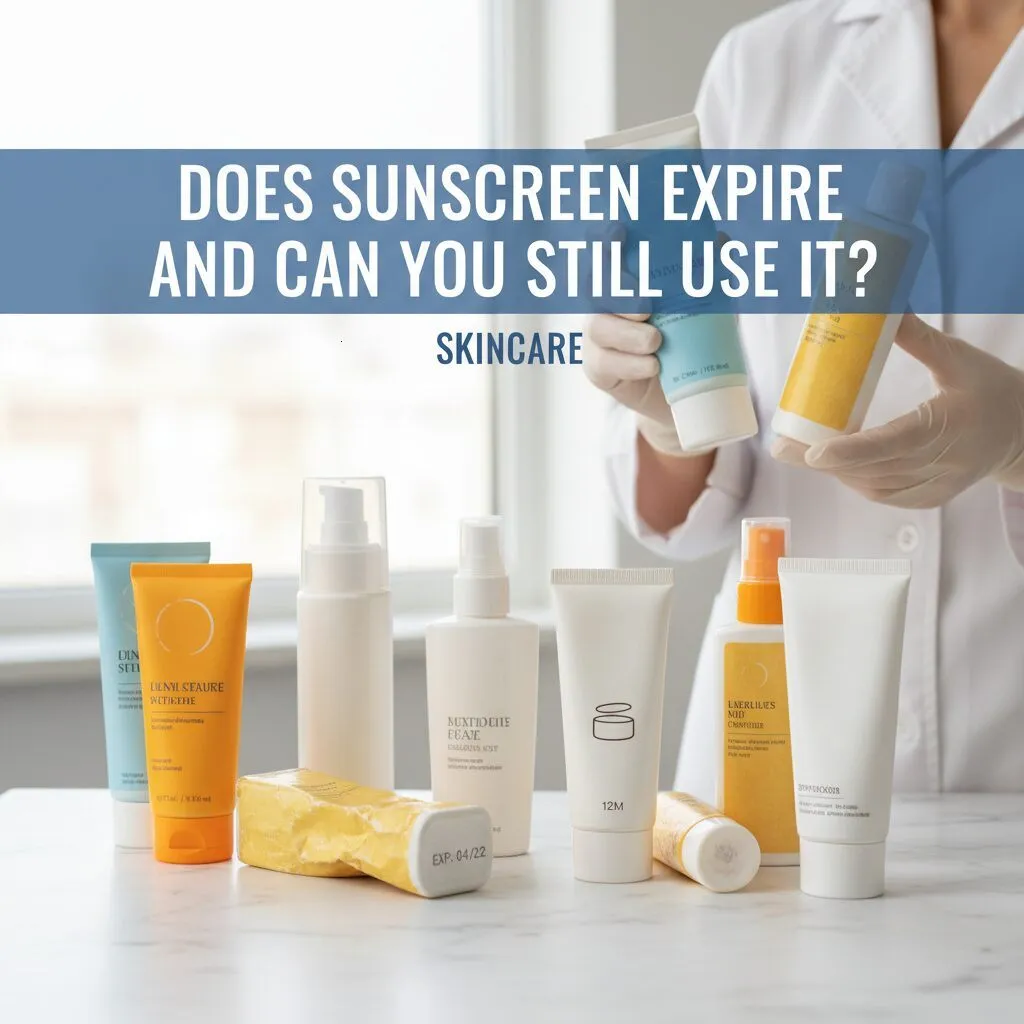
Does Sunscreen Expire? Why Your SPF Protection Has a Strict Use-By Date
It’s a scenario we’ve all faced. The first truly hot day of the year arrives, the beach bag comes out of storage, and at the very bottom, covered in a fine layer of sand, sits a half-empty bottle of sunscreen from… well, was it last summer? Or the one before that?
You’re caught in a moment of hesitation. You don’t want to waste money, but you also don’t want to look like a lobster by 2 PM. This common dilemma contributes to what industry experts call “sunxiety”—a growing unease about sun safety. In fact, a Veylinx Sunscreen Study from August 2024 revealed that 38% of Americans never feel fully relaxed when exposed to the sun, driving a massive surge in searches for skin safety verification.
So, does sunscreen expire? The short answer is yes. But the long answer involves FDA regulations, chemical degradation, and a tiny symbol on the back of the bottle you’ve probably been ignoring.
In this guide, we aren’t just looking at the “best by” date. We’re diving into the 2025 regulatory landscape, the science of how UV filters break down, and the sensory tests you can perform right now to see if your SPF is a shield or just a bottle of useless lotion.

The 3-Year Rule: How the FDA Regulates Sunscreen Longevity
Unlike that carton of milk in your fridge, sunscreen expiration isn’t always marked with a bold date. However, sunscreens are classified as non-prescription drugs, which places them under the strict purview of the Food and Drug Administration (FDA).
Understanding the “Stable for 3 Years” Mandate
If you flip your bottle over and can’t find an expiration date, don’t panic—but do be cautious. According to FDA regulations updated for 2025, manufacturers are required to print an expiration date unless their stability testing proves the product remains effective for at least three years.
This means if there is no date, the industry standard assumes a three-year shelf life from the time of manufacture. However, this rule has a massive loophole: storage conditions. That three-year promise assumes the bottle has been sitting in a temperature-controlled environment, not baking in your glove compartment.
The “PAO” Symbol: The Clock You Didn’t Know Was Ticking
Here is the critical detail most people miss. Even if a product is shelf-stable for three years, that timeline changes the moment you break the seal. Oxygen and bacteria enter the equation immediately.
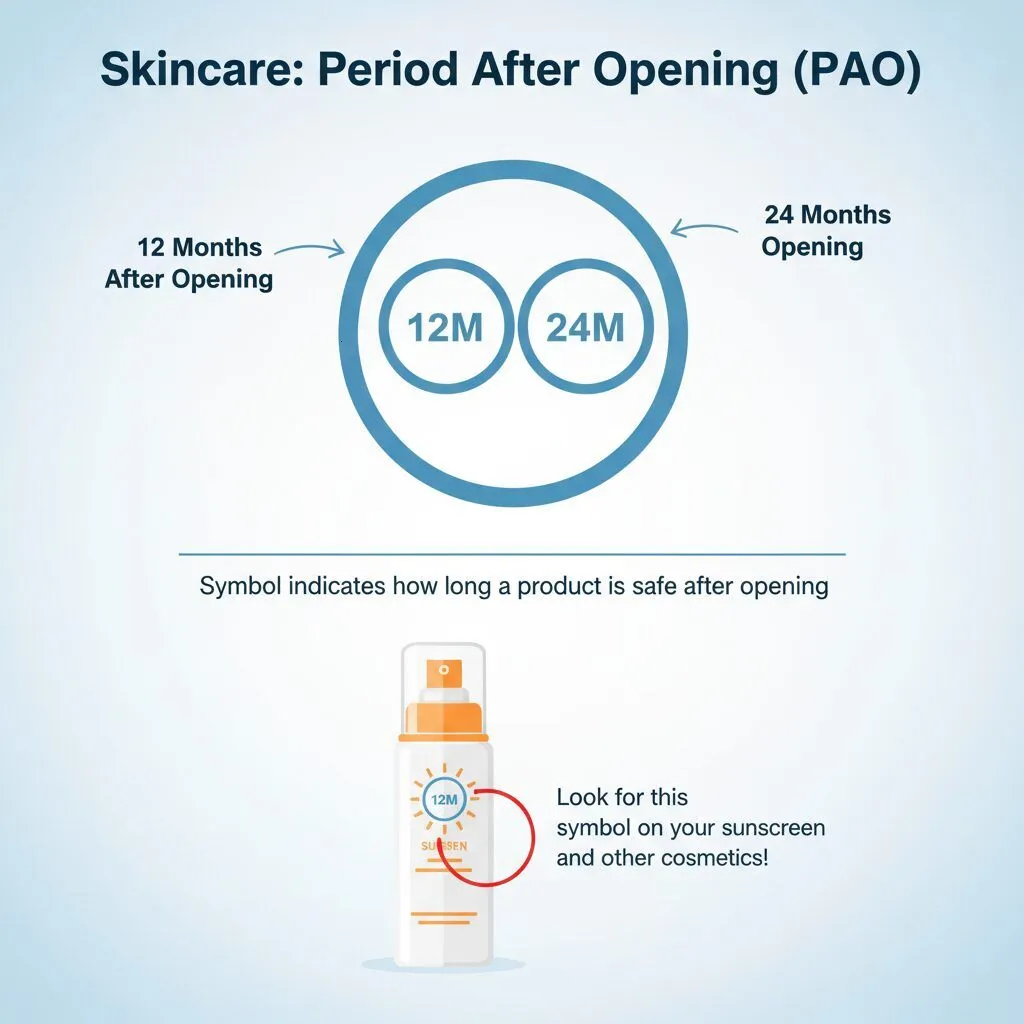
Look for the Period After Opening (PAO) symbol. It looks like a small open jar with a number and the letter “M” inside (e.g., 12M). This indicates that once opened, the product is guaranteed effective for 12 months. If you opened that bottle last June, and it’s now July of the following year, the PAO guidelines suggest it’s time to toss it, regardless of the printed expiration date.
Chemical vs. Mineral: Which One Expires Faster?
Not all sunscreens die the same death. The degradation process depends heavily on whether your sunscreen uses chemical filters (like avobenzone or oxybenzone) or mineral blockers (like zinc oxide or titanium dioxide).
Chemical UV Filters: The Invisible Breakdown
Chemical sunscreens work like a sponge; they absorb UV rays and convert them into heat. Over time, the organic molecules in ingredients like Avobenzone act like a stretched rubber band that eventually snaps. This is known as oxidation.
The scary part? You can’t always see this happening. However, the efficacy drops properly fast once instability sets in. A pivotal study highlights the severity of this issue: University of Oregon/Leeds research (updated 2024 context) showed that when certain filters become unstable (often through mixing incompatible ingredients), UVA protection can be reduced by 84.3% to 91.8% after just two hours of sun exposure.
Mineral Blockers: The “Swiss Cheese” Effect
Mineral sunscreens don’t “expire” in the chemical sense—zinc oxide is a rock; it doesn’t rot. However, the formulation around the zinc breaks down.
Over time, the heavy mineral particles sink to the bottom or clump together. Even if you shake the bottle, you may get what I call “patchy protection.” You’re spreading the lotion, but the microscopic protective particles are clumped, leaving invisible gaps on your skin where UV rays can penetrate. It creates a “Swiss cheese” layer of protection that leaves you vulnerable to burns.
3 Sensory Signs Your Sunscreen Has Gone Bad
If you can’t remember when you bought it, you need to rely on your senses. In my experience testing skincare products, your nose and eyes are often better detectors than a printed date code.
1. The Texture Test
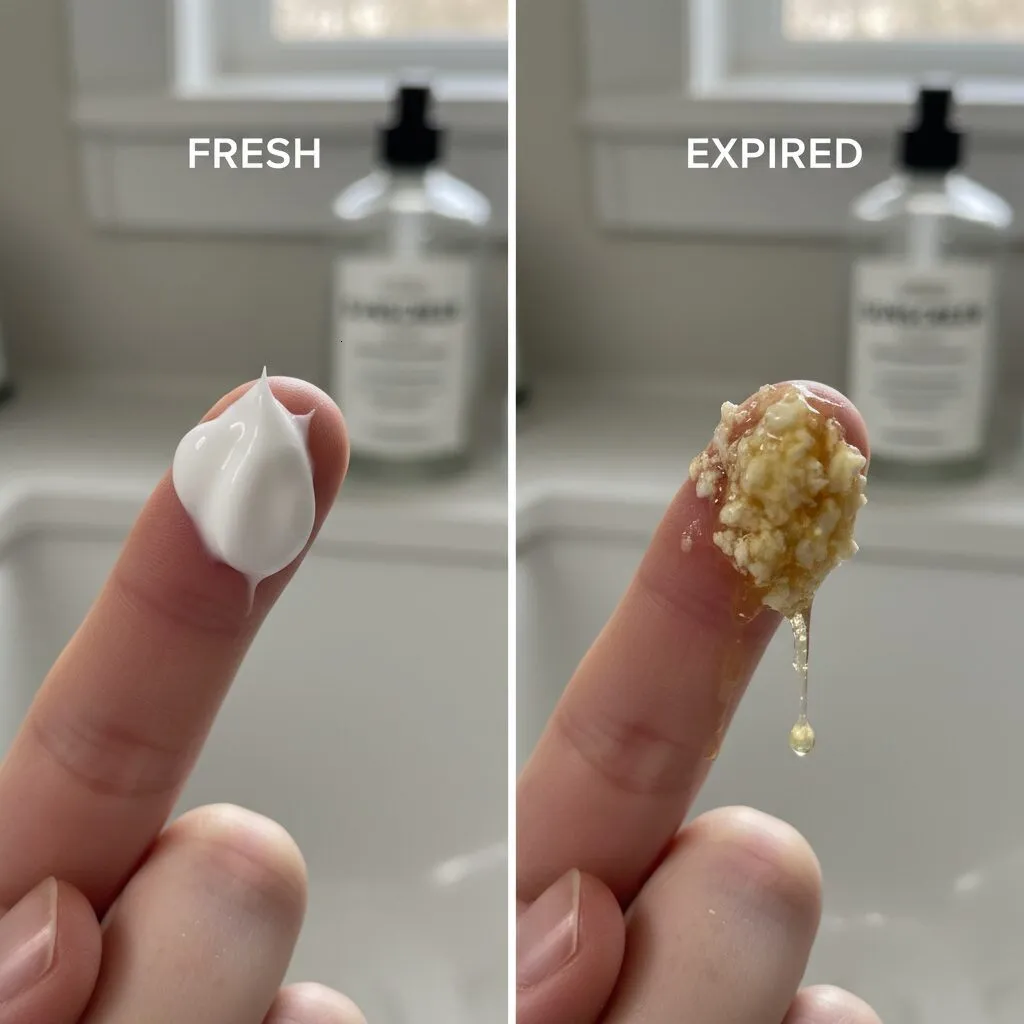
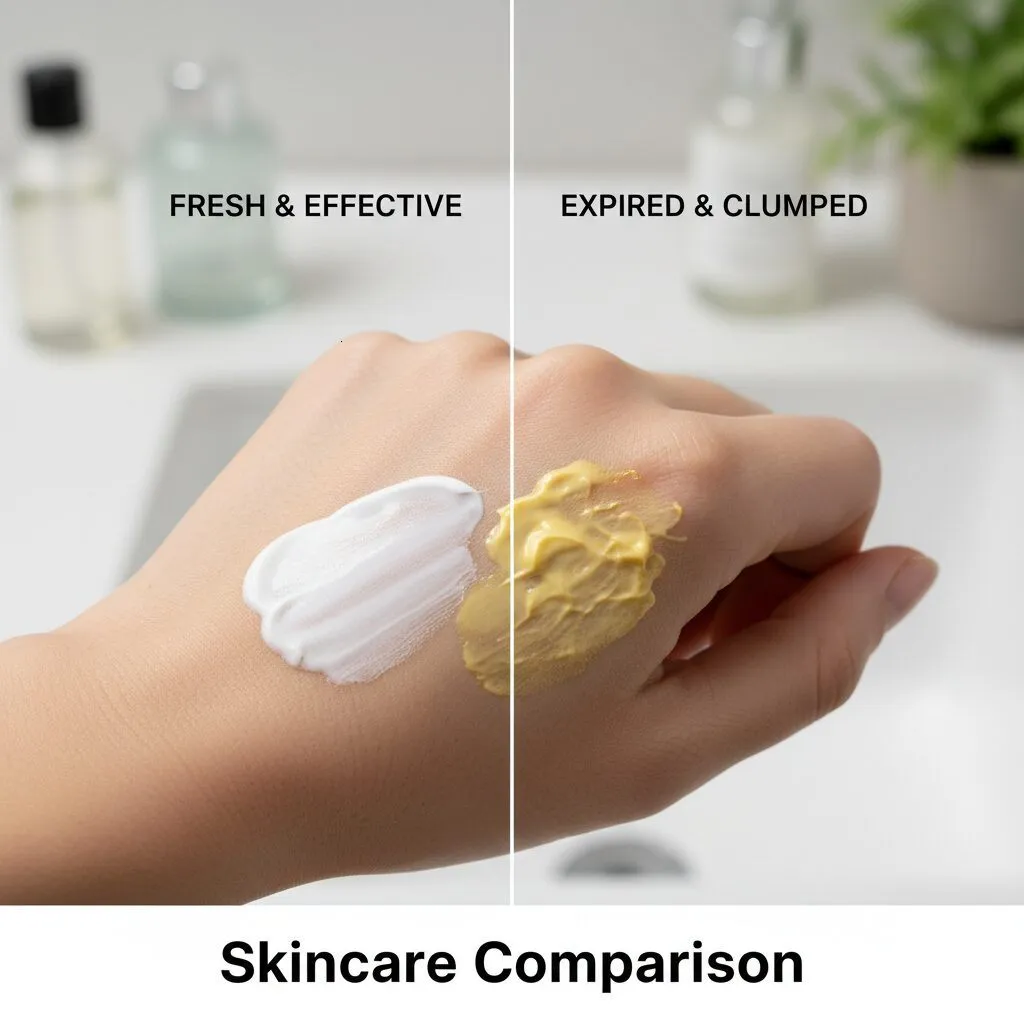
Squeeze a small amount onto your hand. Is it watery? Does it look like curdled milk? Separation is natural, but if shaking the bottle doesn’t restore a smooth, uniform consistency, the emulsion has broken. Do not use it.
2. The Olfactory (Smell) Test
Fresh sunscreen has a distinct, usually pleasant or neutral scent. If you catch a whiff of vinegar, sour milk, or a rancid oil smell, bacteria have likely colonized the bottle. This is common in “natural” sunscreens with fewer preservatives.
3. Visual Cues
White sunscreen that has turned yellow is oxidizing. It’s a chemical reaction indicating that the preservatives and active ingredients are no longer stable.
The Hidden Risks of Using Expired SPF
You might be thinking, “Better some protection than none, right?” In the world of SPF, that logic is dangerous. Using expired sunscreen poses risks far beyond a simple sunburn.
Beyond the Burn: The “Unrealized” Damage
The most immediate risk is a false sense of security. You apply the lotion, stay out for four hours, and only realize the product failed when you step into the shower that evening and feel the heat radiating from your skin.
A recent Reddit case from August 2024 documented a family vacation where an entire group used year-old sunscreen. They believed they were protected, leading to longer sun exposure. By day three, every family member had developed significant burns. This illustrates a critical failure: the product provided lubrication, but zero protection.
Chemical Instability and Contamination
It’s not just about efficacy; it’s about safety. As ingredients degrade, they can break down into potential irritants. Dr. Dawn Davis of the Mayo Clinic warns that degraded preservatives can lead to contact dermatitis.
Furthermore, we must address the benzene issue. Throughout 2023 and 2024, the FDA issued recall lists for specific aerosol sunscreens found to contain benzene, a known carcinogen. While this was primarily a manufacturing contamination issue, older aerosol cans are more prone to chemical interactions that could theoretically increase risks. Using old stock simply increases your odds of using a tainted or recalled batch.
Expert Storage Hacks to Maximize Shelf Life
You can buy the most expensive sunscreen on the market, but if you treat it poorly, it won’t last a month, let alone three years.
The “Hot Car” Death
This is the number one suncreen killer. Leaving your SPF in the center console of your car during July is essentially cooking the formula. High heat accelerates the breakdown of active ingredients.
Why the Bathroom Might Be Wrong
While convenient, bathrooms are high-humidity environments with fluctuating temperatures from showers. Ideally, sunscreen should be stored in a cool, dry place—like a hallway linen closet or a bedroom drawer—away from direct sunlight.
The New 2025 Standards: Why You Should Upgrade Anyway
Even if your old sunscreen isn’t technically expired, it might be outdated in terms of standards. The sun protection industry is moving fast. The Skin Cancer Foundation updated its Seal of Recommendation criteria recently, reflecting the need for better protection.
According to Packaging Digest (May 2025), the new standard raises the minimum requirement to SPF 30 for daily use and SPF 50 for active use. If your old bottle is SPF 15, it’s time to upgrade regardless of the expiration date.
Source: BeautyMatter, July 2024
FAQ: Common Sunscreen Expiration Questions
Does unopened sunscreen expire?
Yes. Even if unopened, the chemical formulation degrades over time. If there is no printed date, follow the FDA’s 3-year guideline from the time of purchase. However, if stored in a hot environment (like a warehouse without climate control), its life could be shorter.
Can I use expired sunscreen in a pinch?
It is not recommended. While it might offer some negligible physical barrier, the SPF rating is no longer accurate. You might think you have SPF 50 protection when you effectively have SPF 4. It is safer to wear protective clothing (hats, long sleeves) and stay in the shade than to rely on expired sunscreen.
How to tell if mineral sunscreen is expired?
Mineral sunscreens (Zinc/Titanium) rarely smell “off.” Instead, look for texture changes. If the product comes out as a clear liquid followed by a hard clump of white paste, the suspension has failed. If you cannot mix it back together by vigorous shaking, discard it.
Conclusion: When in Doubt, Throw It Out
Skin cancer remains the most common cancer in the United States, yet it is also one of the most preventable. Trying to squeeze one more weekend out of a $15 bottle of expired sunscreen is a gamble with very poor odds.
To summarize:
- Check the expiration date; if missing, assume 3 years from purchase.
- Respect the PAO symbol (usually 12 months after opening).
- Perform the smell and texture test before applying.
- Never use sunscreen that has been stored in a hot car.
As Dr. Kathryn Anderson Sutton from the Cleveland Clinic noted in August 2025, “Realistically, if you’re using sunscreen every day, the way it’s directed, each bottle shouldn’t last you more than a few weeks or a couple of months.”
If you still have a bottle from two years ago, it means you likely aren’t wearing enough sunscreen to begin with. Toss the old bottle, buy a fresh one that meets the new 2025 SPF 30+ standards, and enjoy the sun with confidence.