


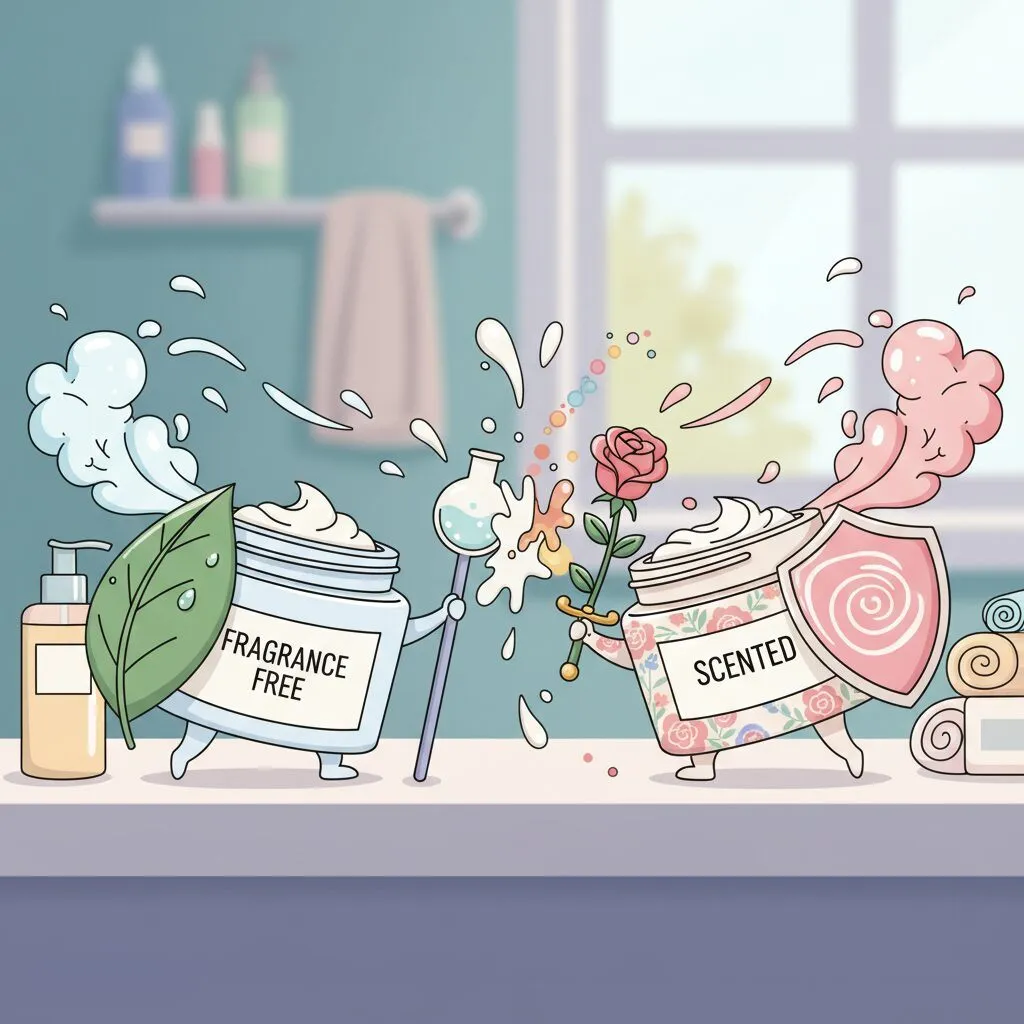
Comparison of Fragrance-Free and Scented Moisturizers
I remember standing in the drugstore aisle last month. I felt totally overwhelmed. There were hundreds of bottles staring back at me. Some said “unscented,” others said “fragrance-free,” and many promised a “soothing lavender scent.” I wondered if there was actually a difference. I just wanted something that wouldn’t make my face sting.
I learned I wasn’t alone in this confusion. The fragrance free vs scented moisturizer battle is something many of us face daily. I decided to dig into the research to understand what I was putting on my skin.
Here is the scary part. According to the American Academy of Dermatology (AAD), fragrance is the number one cause of allergic reactions in cosmetics. Yet, I see scented products everywhere. I want to share exactly what I found so you don’t make the same mistakes I did.
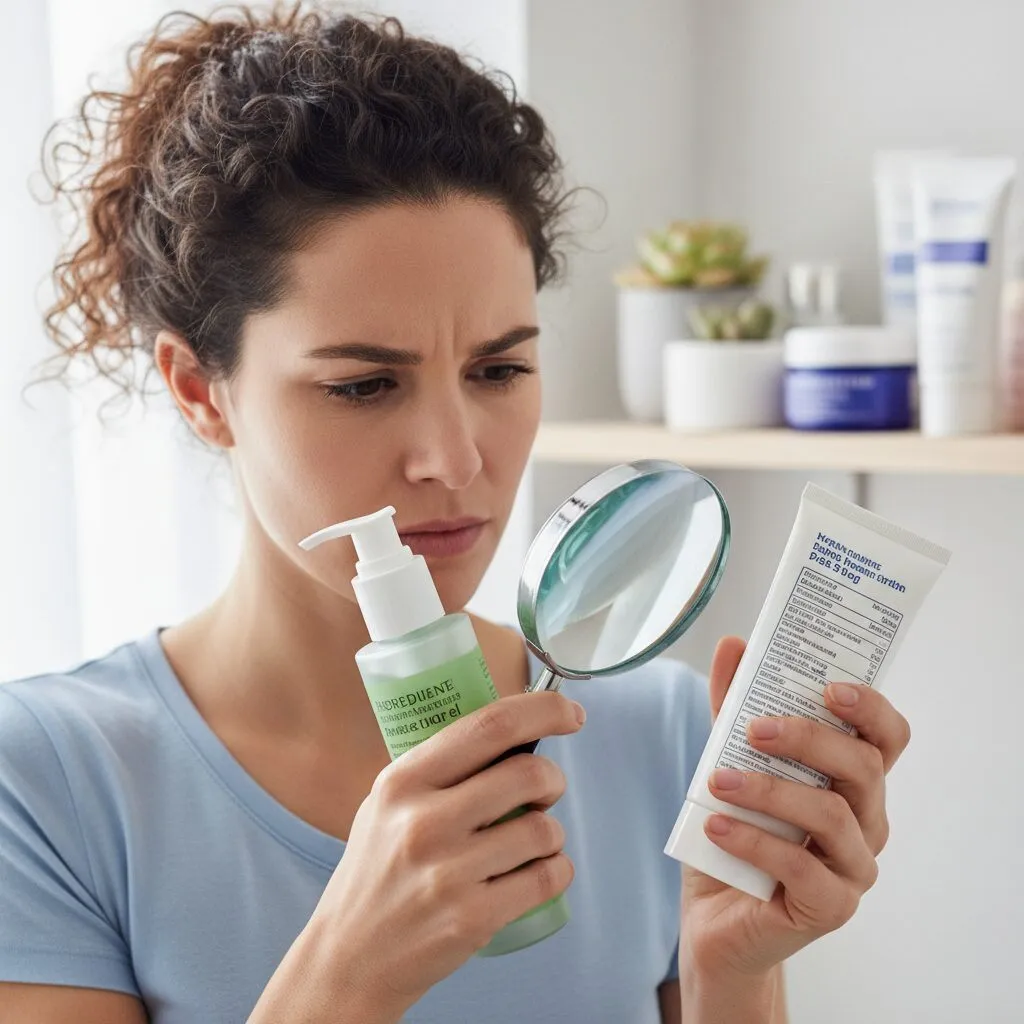

Definitions of Fragrance-Free, Unscented, and Scented Labels
I used to think “unscented” and “fragrance-free” meant the same thing. I was wrong. The FDA has specific definitions for these terms, but they can be tricky.
Meaning of Fragrance-Free Under FDA Guidelines
I found that “fragrance-free” is the gold standard for sensitive skin. It means the manufacturer added absolutely no fragrance ingredients. This includes synthetic perfumes and natural essential oils.
But here is what surprised me. These products might still smell. I bought a fragrance-free cream once that smelled like dirt. That was just the smell of the raw clay ingredients. It wasn’t pretty, but it was safe. If you have eczema or sensitive skin, I recommend looking for this specific label.
Use of Masking Agents in Unscented Products
This is where I felt tricked. “Unscented” does not mean the product has no fragrance chemicals. It often means the company added chemicals to hide the smell of other ingredients.
I read a study in the Cutis journal that shocked me. They found that up to 10% of pharmaceutical products contain fragrance used as masking agents. These agents neutralize bad odors so the lotion smells like nothing. But if you are allergic to fragrance, “unscented” products can still cause a reaction. I learned this the hard way when an unscented lotion turned my cheeks red.
Composition of Scented Moisturizers
Scented moisturizers are straightforward. Companies add ingredients specifically to make them smell good. This could be synthetic chemicals or natural oils. I found that sales for high-end scented moisturizers actually grew by 3% in 2024. People love a good smell. I admit, I enjoy a citrus lotion on my legs. But I learned I have to be careful where I apply it.
Differences in Chemical Ingredients
I looked at the ingredient lists to see what creates these smells. The difference usually comes down to volatile organic compounds. These are the molecules that fly into the air so you can smell them.
Synthetic Fragrances and Phthalates
When I see the word “fragrance” on a label, I get nervous. Under U.S. law, that one word can hide hundreds of different chemicals. Companies don’t have to list them. I found that many of these mixtures contain phthalates. These chemicals make the scent last longer. The problem is, I never know exactly what is in that bottle. It is a mystery mix.
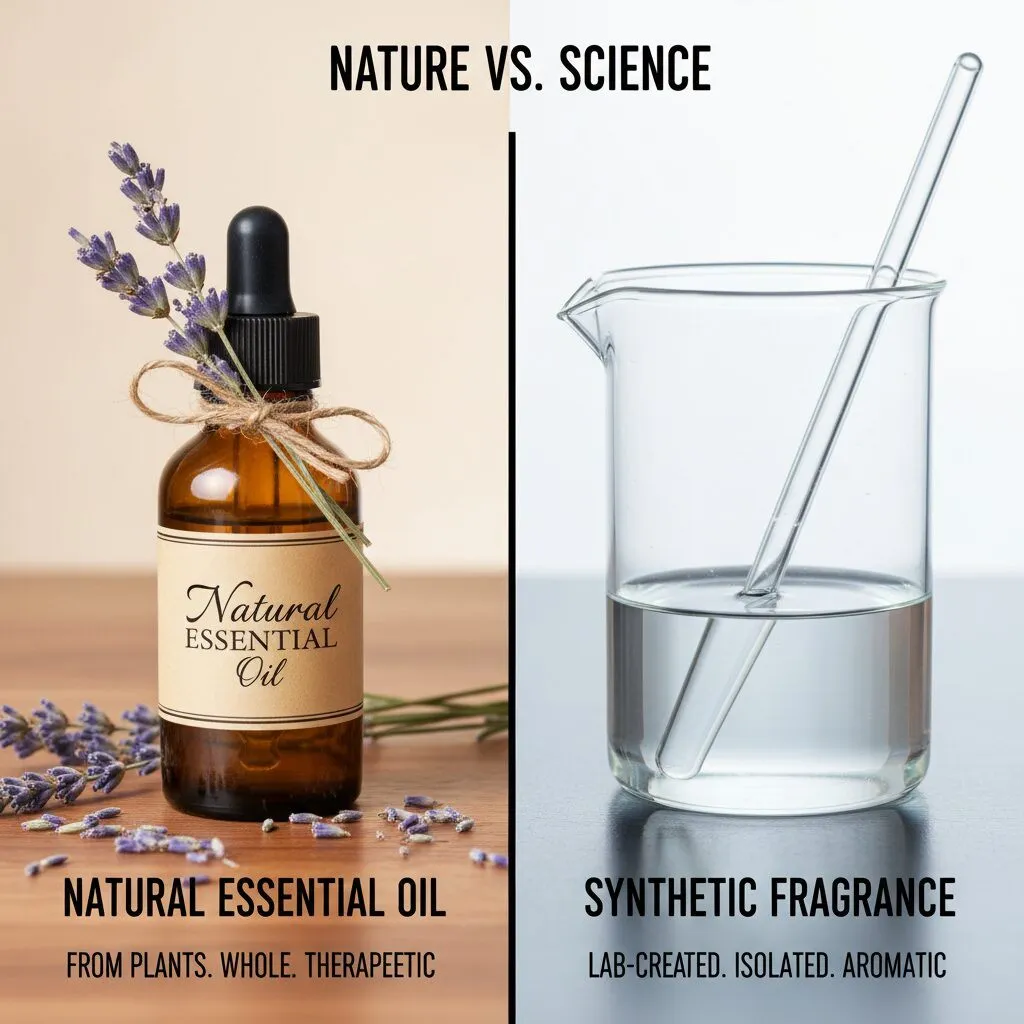
Essential Oils and Natural Aromatic Compounds
I love natural products. But I learned that “natural” doesn’t always mean “safe.” Poison ivy is natural, after all. Many natural moisturizers use essential oils like lavender or peppermint.
The European Commission requires companies to list 26 specific allergens. I was surprised to see that many of these come from plants. Ingredients like geraniol (from roses) and limonene (from citrus) are potent allergens. I stopped assuming that plant-based meant irritation-free.
Oxidization of Linalool and Limonene
This was the most shocking thing I discovered. I read a 2024 study in the Journal of Contact Dermatitis about “prehaptens.” Here is what that means in plain English.
Some ingredients, like linalool, are safe when the bottle is new. But when they touch air, they change. They oxidize. I realized that my six-month-old lotion might be causing my rash because the ingredients turned into allergens over time. I used to keep lotions for years. Now, I throw them out if they sit too long.
Effects of Fragrance on the Skin Barrier
My skin acts as a shield. I learned that fragrance chemicals can poke holes in that shield. This causes trouble for people who already have skin issues.
Risk of Allergic Contact Dermatitis
I checked the numbers from the National Institutes of Health (NIH). They suggest that up to 2.6% of people have a diagnosed fragrance allergy. That number jumps to 11% for people who already have skin problems. I noticed that when I used scented laundry detergent, my skin got itchy. That is Allergic Contact Dermatitis. It is the skin’s way of fighting a chemical invader.
Impact on Eczema and Rosacea
If you have eczema like my cousin does, your skin barrier is already weak. I learned that fragrance molecules penetrate deeper into broken skin. This causes immediate redness and stinging. The National Eczema Association is very strict about this. They say to avoid all fragrances. I told my cousin to stop using her fancy floral cream, and her skin cleared up in a week.
Sensitization Over Extended Use
I thought I was safe because I used the same scented lotion for five years. But I was wrong. I learned about “sensitization.” You can use a product for years with no problem. Then, one day, your immune system decides it has had enough.
Suddenly, you are allergic. I realized that by using heavy scents every day, I was training my body to react. Now, I save the scented stuff for special occasions.
Benefits of Scented Moisturizers for Healthy Skin
I don’t want to make it sound like scent is evil. It isn’t. If you have healthy skin, scented products can be great. I still use them on my body sometimes.
Psychological Impact and Aromatherapy
I noticed that a nice smell changes my mood. I use a lavender cream on my hands before bed. It helps me relax. Research from McGill University supports this. They found that pleasant scents can improve sleep and lower stress. If your skin can handle it, the mental boost is real. I enjoy that little moment of self-care.
User Consistency and Product Enjoyment
Here is the truth. If a lotion smells like wet cardboard, I won’t use it. I know myself. Scent makes me want to use the product. Consistency is key for soft skin. If a nice smell gets you to moisturize every day, that is a win. I just make sure to use it on my legs and arms, where my skin is tougher.
How to Identify Hidden Fragrances on Ingredient Lists
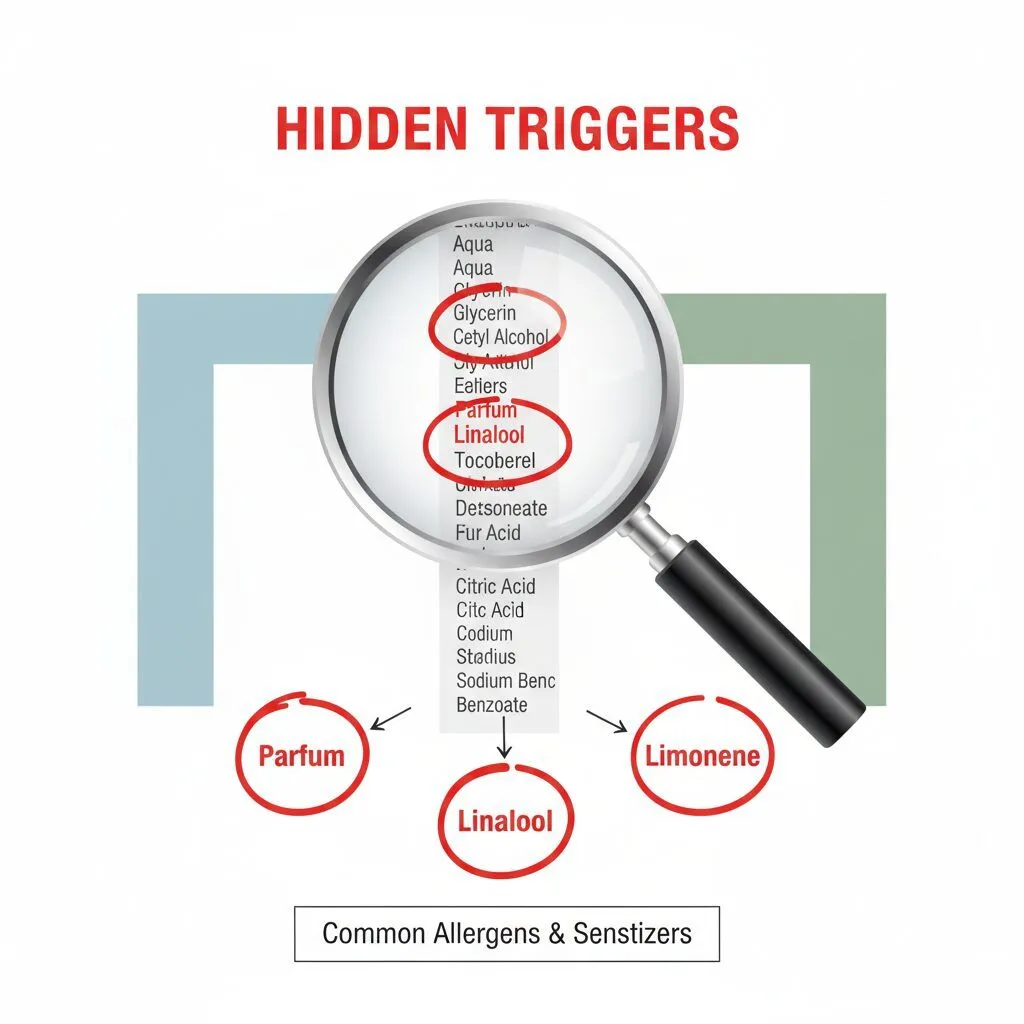
I got tired of guessing. So, I made a cheat sheet. I look for these specific words on the back of the bottle. If I see them, I know there is fragrance inside.
Common Synonyms for Fragrance Chemicals
- Parfum: This is the most common one.
- Linalool: It smells floral.
- Limonene: It smells like lemons.
- Eugenol: It smells spicy, like cloves.
- Citronellol: It smells like roses.
- Cinnamal: It smells like cinnamon.
Botanical Extracts with Aromatic Properties
Companies are clever. I found products labeled “fragrance-free” that contained “Lavandula Angustifolia Oil.” That is just lavender oil. It is still a fragrance. I check for any oil that comes from a flower, citrus, or mint plant. I treat them all the same as perfume.
Statistical Comparison of Skin Reactions (2024-2025 Data)
I wanted to see the hard numbers. I looked at recent data to understand the risks better. The numbers convinced me to be careful.
Key Data Points I Found
- Fragrance Allergy: Fragrance is the #1 cause of contact dermatitis in cosmetics (Source: AAD).
- Growth: The fragrance-free market is growing at 5.9% per year. People are waking up to this.
- Kids and Allergies: About 4% of kids with skin issues are allergic to fragrance mixes. This worries me for my niece.
- Market Size: Despite the risks, the scented lotion market will hit $88 billion soon. We still love our scents.
Steps to Select the Correct Moisturizer for Your Skin Type
I developed a simple system for picking lotions. This has saved me money and prevented rashes.
1. Assess Your Barrier Health
I look at my skin closely. Is it red? Is it peeling? Does it sting when I wash it? If I answer yes to any of these, I buy a product labeled fragrance-free. I don’t take risks when my barrier is broken.
2. Ignore the Front Label
I stopped reading the front of the bottle. Marketing terms like “hypoallergenic” or “dermatologist tested” can mean anything. I turn the bottle over immediately. I scan the ingredient list for the words on my cheat sheet.
3. Test Before You Commit
I used to slap new lotion all over my face. Big mistake. Now, I put a tiny dot behind my ear or on my inner arm. I wait two days. If nothing happens, I know it is safe to use. This patience has saved my face more than once.
4. Check Expiration Dates
I learned about the oxidation risk, so I check dates now. If a scented product is old, I toss it. I don’t want those “prehaptens” turning into allergens on my skin.
I hope this helps you navigate the confusing world of moisturizers. I know it feels complicated, but checking that ingredient list gets easier with practice. Your skin will thank you for the extra effort.