


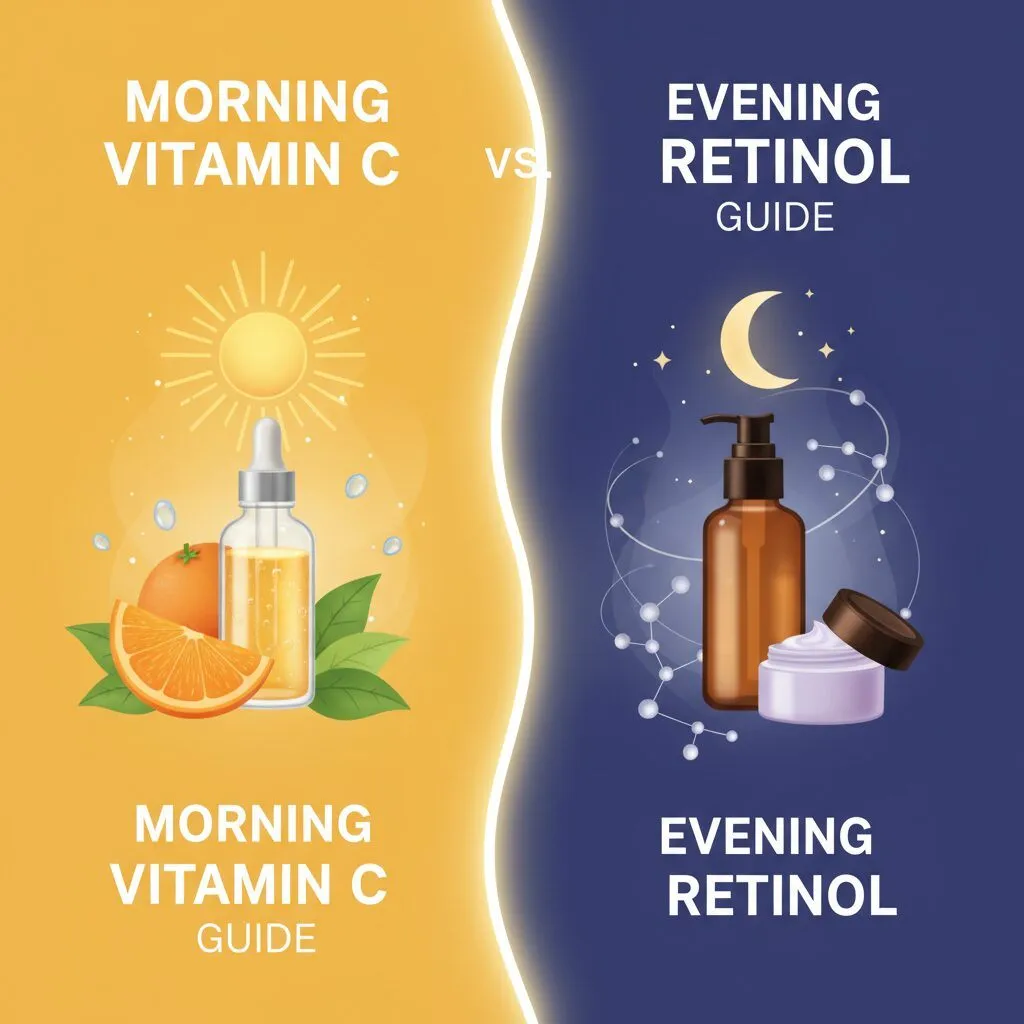
Morning Vitamin C vs Evening Retinol Guide for Daily Use
I remember the morning I woke up with red, peeling skin. I thought layering my potent serums would double the results. I was wrong. It took me weeks to repair my moisture barrier. You don’t have to make that same mistake.
Many people ask me if they can use these two ingredients in the same routine. The answer is yes, but timing is everything. If you use them incorrectly, they can cancel each other out or cause chemical burns. I have spent years testing different schedules to find the safest method.
In this morning vitamin c vs evening retinol guide, I will show you the exact schedule I use. I will explain the science of pH levels simply and help you get results without the irritation.

Functions of Vitamin C in Morning Skincare
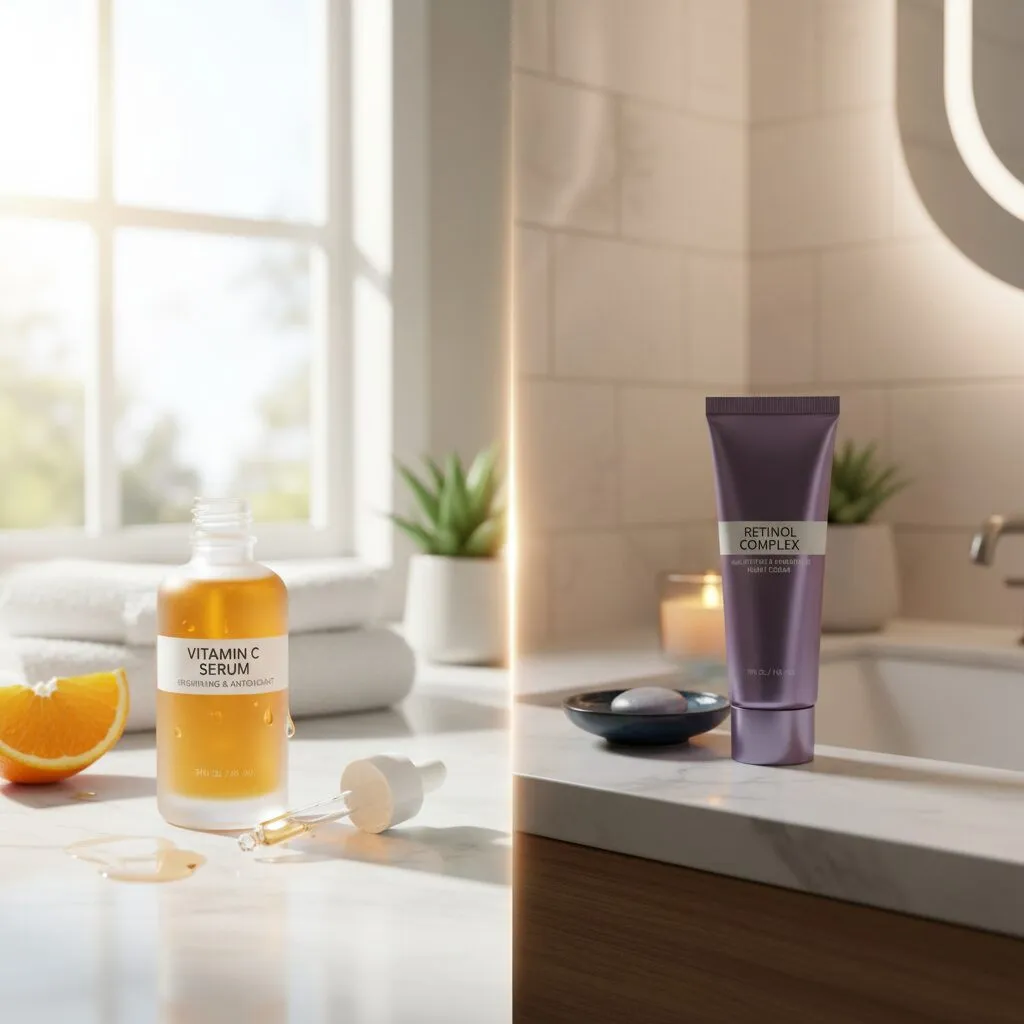
I always apply Vitamin C effectively in the morning. I used to use it at night, but I learned that was a waste of product. Vitamin C acts like a shield. It protects your face from things that damage it during the day.
Protection Against UV Damage
The main reason I use Vitamin C when I wake up is for protection. The sun emits UV rays that create “free radicals” in your skin. Think of free radicals as tiny molecules that attack your healthy cells. This causes wrinkles and sagging.
Vitamin C stops these molecules. It “donates” an electron to neutralize them. I found a study in the Journal of Dermatological Science that proves this. It showed that Vitamin C can reduce UV-induced redness by 50%. That is a huge difference. If you only use it at night, you miss this protective benefit entirely.
Making Sunscreen Work Better
I want to be clear: Vitamin C is not sunscreen. You still need SPF. However, I found that they work together as a team. Sunscreen blocks the rays, and Vitamin C catches anything that slips through.
I look for products that also contain Vitamin E (Tocopherol) or Ferulic Acid. These ingredients stabilize the Vitamin C. This makes the protection last longer. If I skip this step, my sunscreen has to do all the work alone.
Functions of Retinol in Evening Skincare
I save my Retinol for my evening routine. There are two very specific reasons for this. It involves how your skin sleeps and how light affects the ingredient.
Skin Repair During Sleep
Your skin has a daily rhythm, just like you do. I read a fascinating report in the Journal of Investigative Dermatology about this. It explained that skin permeability increases at night. This means your skin lets ingredients sink in deeper while you sleep.
Blood flow to the skin also increases at night. This helps flush out toxins and repair damage. Retinol speeds up this process. It tells your cells to turn over faster. By applying it before bed, I work with my body’s natural repair cycle, not against it.
Why Sunlight Destroys Retinol
I learned this the hard way. Most forms of Retinol break down in sunlight. They are “photolabile.” If you put Retinol on in the morning, the sun deactivates it before it can work. It becomes useless.
Even worse, some retinoids can make your skin more likely to burn. The American Academy of Dermatology (AAD) warns about this constantly. I always wash my face in the morning to remove any leftover Retinol residue. This keeps my skin safe from unexpected sunburns.
Scientific Reasons for Separating Vitamin C and Retinol
You might wonder why you can’t just mix them in your hand and apply them at once. I tried this once, and my skin turned bright red. The problem is chemical.
The pH Level Conflict
This is the most technical part, but I will keep it simple. Skincare ingredients need a specific acidity level, called pH, to work.
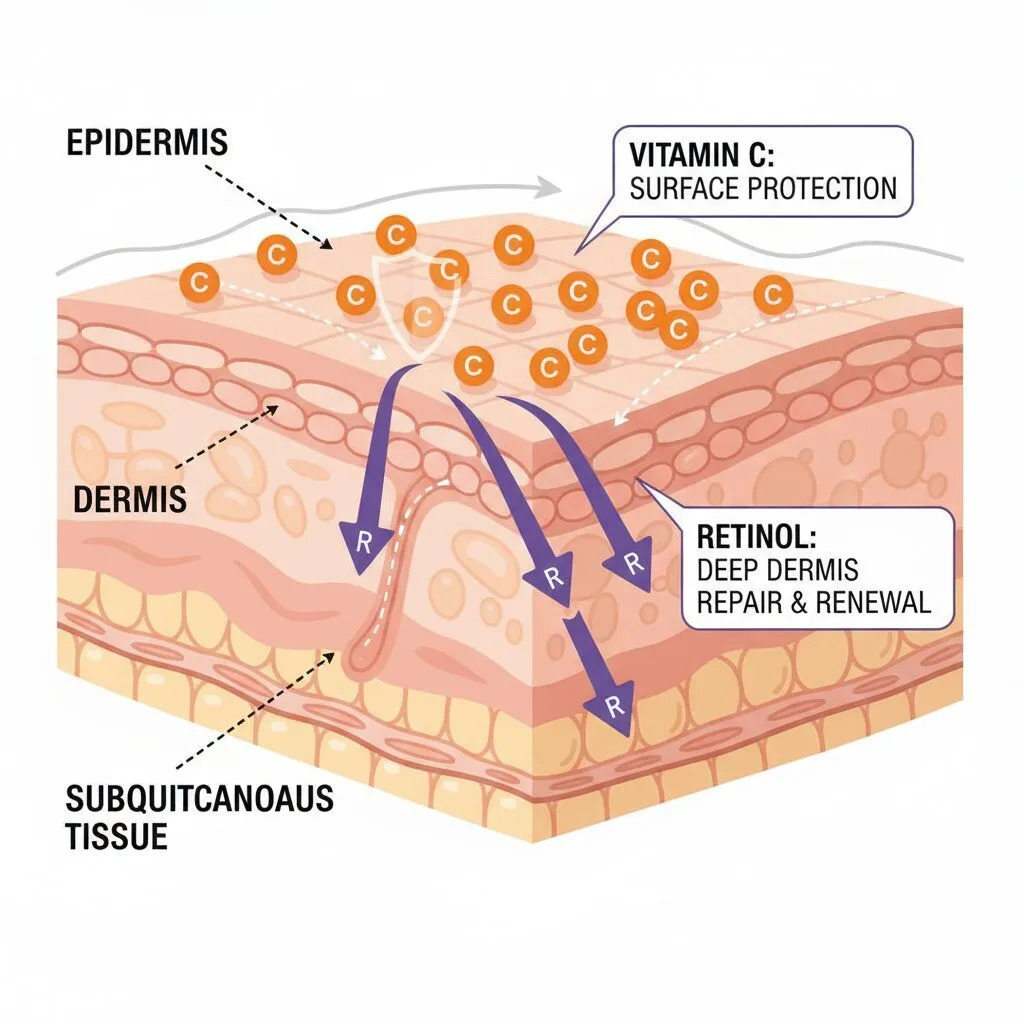
- Vitamin C (L-ascorbic acid): Needs a low pH of about 3.5. It likes to be acidic.
- Retinol: Needs a neutral pH of about 5.5 to 6.0. It does not like acid.
If you mix them, the pH levels clash. The Vitamin C is too acidic for the Retinol to convert into retinoic acid. The Retinol is too alkaline for the Vitamin C to absorb. I realized that by mixing them, I was essentially rendering both expensive products ineffective.
Preventing Barrier Damage
Both of these ingredients are powerful. They can strip the oils from your skin. I have seen many people damage their “moisture barrier.” This is the protective seal that keeps hydration in and bacteria out.
When I used both at the same time, my skin felt tight and itchy. This is a sign of barrier damage. By separating them by 12 hours (morning and night), I give my skin time to recover. The pH levels of my skin normalize during the day. This makes the evening application safer.
Step-by-Step Application Guide
I developed this schedule after a lot of trial and error. It ensures both products work at 100% capacity without hurting my face.
Morning Routine: The Vitamin C Step
- Cleanse Gently: I use a simple water-based cleanser. I need a fresh canvas, but I don’t want to strip my skin.
- Dry Your Face: This is important. I wait until my skin is totally dry. Vitamin C can sting if applied to damp skin.
- Apply Vitamin C: I use a serum with 10% to 15% concentration. I put 3-4 drops in my palm and press it into my face and neck.
- Wait 2 Minutes: I brush my teeth while I wait. This gives the serum time to absorb fully.
- Moisturize: I apply a basic moisturizer to lock it in.
- Sunscreen (Mandatory): I never skip this. Vitamin C helps, but it does not replace SPF 30+.
Evening Routine: The Retinol Step
- Double Cleanse: I use an oil cleanser first to remove my sunscreen. Then I use a regular cleanser. Retinol needs perfectly clean skin.
- Dry Completely: I learned that wet skin absorbs Retinol too quickly. This causes irritation. I pat my face dry and wait a full minute.
- Apply Retinol: I use a pea-sized amount. Seriously, only a pea. More is not better here. I dot it on my forehead, cheeks, and chin, then rub it in.
- The Sandwich Method (Optional): If my skin feels sensitive, I use this trick. I apply moisturizer before the Retinol. I wait for it to dry, then apply Retinol, then moisturizer again. It creates a buffer.
- Final Moisture: I finish with a heavy night cream. Retinol is drying, so I need extra hydration while I sleep.
Storage and Stability: Don’t Waste Your Money
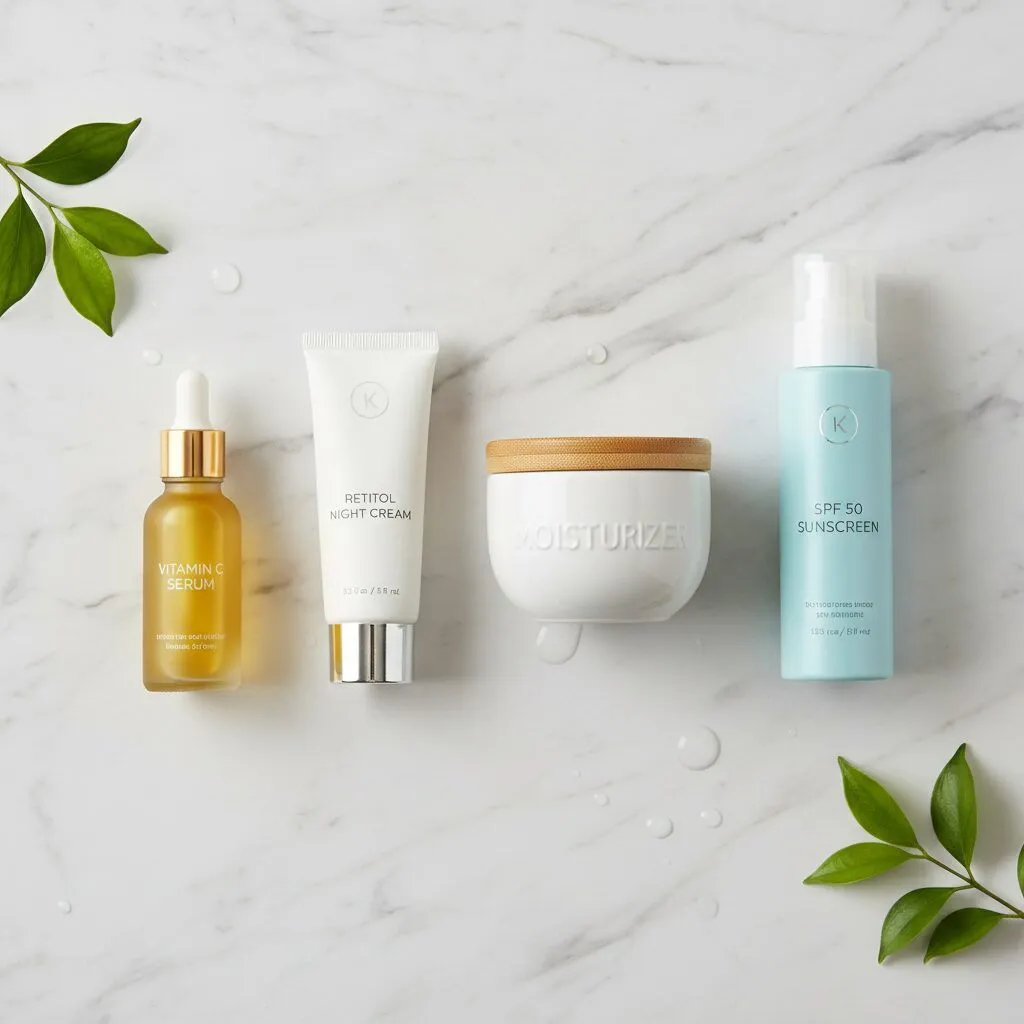
I have thrown away hundreds of dollars of skincare because I stored it wrong. Vitamin C is very unstable. Oxygen makes it go bad fast.
How to Spot “Dead” Vitamin C
I check the color of my serum every single morning. Fresh L-ascorbic acid should be clear or a very pale yellow (like champagne). If it turns dark yellow, orange, or brown, it has oxidized.
Oxidized Vitamin C does not work. In fact, it can actually cause more free radical damage. I keep my bottle in a dark drawer away from the steamy shower. Some people I know even keep it in a mini-fridge. I try to use a bottle within 3 months of opening it.
Managing Side Effects
When I first started this schedule, my skin freaked out a little. This is normal. It is called “retinization.” But you need to know the difference between a purge and a reaction.
The “Purge” vs. Irritation
I experienced purging in the first two weeks. This looked like small pimples in areas where I usually get acne. It happens because the Retinol pulls clogs to the surface faster. I stuck with it, and it cleared up in a month.
Irritation is different. I once used a product that was too strong, and my skin burned and turned bright red. It felt hot to the touch. If this happens to you, stop immediately. I had to take a break for a week and just use moisturizer.
A Note on Prescription Meds
I have friends on Accutane or Spironolactone. If you take these medications, your skin is already very dry. I strongly suggest you talk to your doctor before adding Vitamin C or Retinol. The combination might be too harsh. According to the American Academy of Dermatology, you may need to wait until your course of medication is finished.
Final Thoughts
I know this seems like a lot of rules. But once I got into the rhythm, it became second nature. I use my Vitamin C with my morning coffee and my Retinol before bed. The results were worth the initial confusion.
My skin looks brighter and feels smoother than it did five years ago. I attribute that to this exact schedule. Start slowly, listen to your skin, and don’t forget your sunscreen.