


How to Make Rose Hydrosol at Home (DIY Rose Water)
If you have a beautifully scented rose in your garden, you can use it to start making your own skincare products. Roses are really hydrating. They’re wonderful for sensitive skin. They’re rejuvenating. They’re used in anti-aging formulas and just such a beautifully scented flower to use in your skincare regime. Now, the first step with making skincare from roses is creating hydrosol, which is an extract of the rose petals. And although there are some pretty expensive products out on the market, and some pretty expensive stills, you can do it at home. And I’m going to show you exactly how you can do it using a pot, a few other cups and bits and bobs from your kitchen. And then you’ll have homemade rose water, homemade rose hydrosol that you can then use either as a toner or as a base for making skin creams and many other things.
Rose hydrosol, also known as rose water, is a gentle aromatic liquid that you can make using rose petals and steam distillation. It’s much lighter and gentler than essential oils and perfect for soothing skin, refreshing your face, or using in skincare recipes. To make it at home, you begin with rose petals, preferably fresh. Most plants prefer living outdoors, things like roses, and many other vegetables, plants, and trees. But if you don’t have a big space, there are some that will thrive indoors as long as you give them what they need. So things like house plants and culinary herbs, even some plants that you can use for skincare. But once you have them inside, keeping them alive and keeping them brightening up the space and looking their best can be a little bit of a challenge.
Harvesting Your Roses
The first step in making rose hydrosol is harvesting your roses. You can use dried roses, of course, but fresh is even better, especially if it’s from your own garden. And when you are choosing rose varieties for hydrosol, you are so much more flexible than if you are actually choosing for essential oil because you don’t need to necessarily go for varieties like the Damask roses that are super high in essential oil. So any fragrant roses in your garden that are just beautiful in their prime like these David Austin roses. This is Generous Gardener. I chose it because it’s got multiple purposes. It has really lovely rose hips. It has these gorgeous flowers that I can use in making skincare, but also in edible flower recipes. And it’s a repeat flowering variety, which means that as long as I keep them deadheaded, they’ll keep blooming and blooming all summer long, which makes them beautiful, but also really useful.
Choosing the Best Roses
With harvesting them, try to do it late morning. That’s the best time. And when you’re choosing roses to make into rose hydrosol, they should be at least halfway open, if not all the way open, but not gone over. So, you don’t really want old roses and old rose petals. You want them in their prime when they’re looking their best.
Preparing the Petals
Immediately after you pick your roses, take them someplace shady but calm. You don’t want the wind blowing them around outdoors. Take the petals off of the flowers and spread them on a clean cloth. I’m just using a tablecloth here. And the reason for this is that there’s all kinds of little insects living inside the flowers. And we want to give them a chance to escape before we take them inside and cook them. So, do this. Spread them out and then leave them for about half an hour to an hour before taking them inside. And I can already see tons of little thrips here. There was a little earwig here earlier that I have already removed. So, this is definitely a step you don’t want to miss.
The Distillation Process
Once you have the rose petals ready to go, the entire process of making rose hydrosol should only take about half an hour from start to finish. Begin by placing a stainless steel pot on the stove and put a clean folded cloth at the bottom. Set the heavy dish on top of it. Place a smaller heat proof dish on the top of that one. That’s where the finished rose water will collect. The lower dish helps to keep the rose water dish elevated and it reduces contamination. Fill the area in the pot around the dish with rose petals. If you’re using fresh rose petals, fill all the way to the top of the lower dish, halfway up if you’re using dried. Next, pour cold distilled water over the rose petals, completely submerging them. If you’re using dried rose petals, add a little extra to compensate for the rose petals rehydrating.
Simmering and Condensing
Place a lid on the pot upside down. If it has a ventilation hole, make sure to fill it with clay, mounting putty, or another non-toxic product. Heat the pot on medium until the water inside comes to a simmer. You’ll start to notice steam or condensation on the inside of the lid. Lower the heat now, but keep the water inside simmering. Fill the pot lid with ice. This will cool the steam that touches the lid and turn it back into liquid into that rose water that we’re after. That rose water will then begin rolling down on the inside of the lid and into the central container. As the ice melts, spoon it off and replace it with more ice. This keeps the top very cold and helps that steam to condense. Carry on with spooning off the water and replacing it with ice. And you want to do this for about 20 to 30 minutes.
Collecting the Hydrosol
When the dish is full, turn off the heat, remove the lid, and allow the pot to cool. You can then pour the rose water from the central dish into a jar for storage. The faded flower petals and the leftover water in the pan should be discarded. And that’s how you make hydrosol at home. It wasn’t that complicated. It does take some effort in scooping the ice water out and replenishing the ice, but at the end you’ve got this gorgeous rose scented liquid that you can use in your natural skincare regime.
Storage and Shelf Life
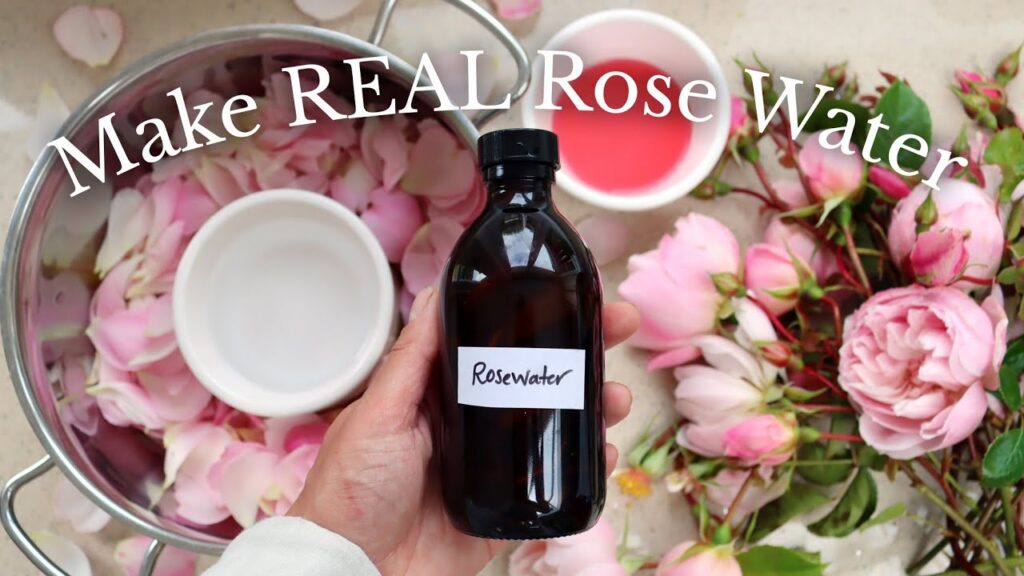
And as far as storage, you can either use a dark glass bottle like this, put it in the fridge, and rose water or homemade rose hydrosol will last at least 6 months. I have some in the fridge right now that I made last summer. That’s over a year now and it still smells rosy and gorgeous. Optionally, you can pour it into an ice cube tray, freeze it, and then pop them out and then store them in a Tupperware or a Ziploc bag, and that will keep them good for at least a year.
How to Use Rose Water
And what do you do with rose water after you have it? You can either use it as a toner, so use a cotton pad, and you can use it to cleanse and tone your face. It smells gorgeous. It adds moisture. It is super sensitive and nourishing. You can also use it to make handmade moisturizer. And that’s what I tend to do with mine. I make a handmade rose hip and rose water moisturizer.