 Johnson
Wrinkle Warriors: The Scientifically Proven Guide to Ageless Skin (2025 Update)
Let’s be honest: the skincare industry is noisy. Between 10-step routines on TikTok and shelves overflowing with “miracle” creams, it’s easy to feel defeated before you even start. I’ve been there, staring at a $200 serum, wondering if I’m paying for science or just fancy packaging.
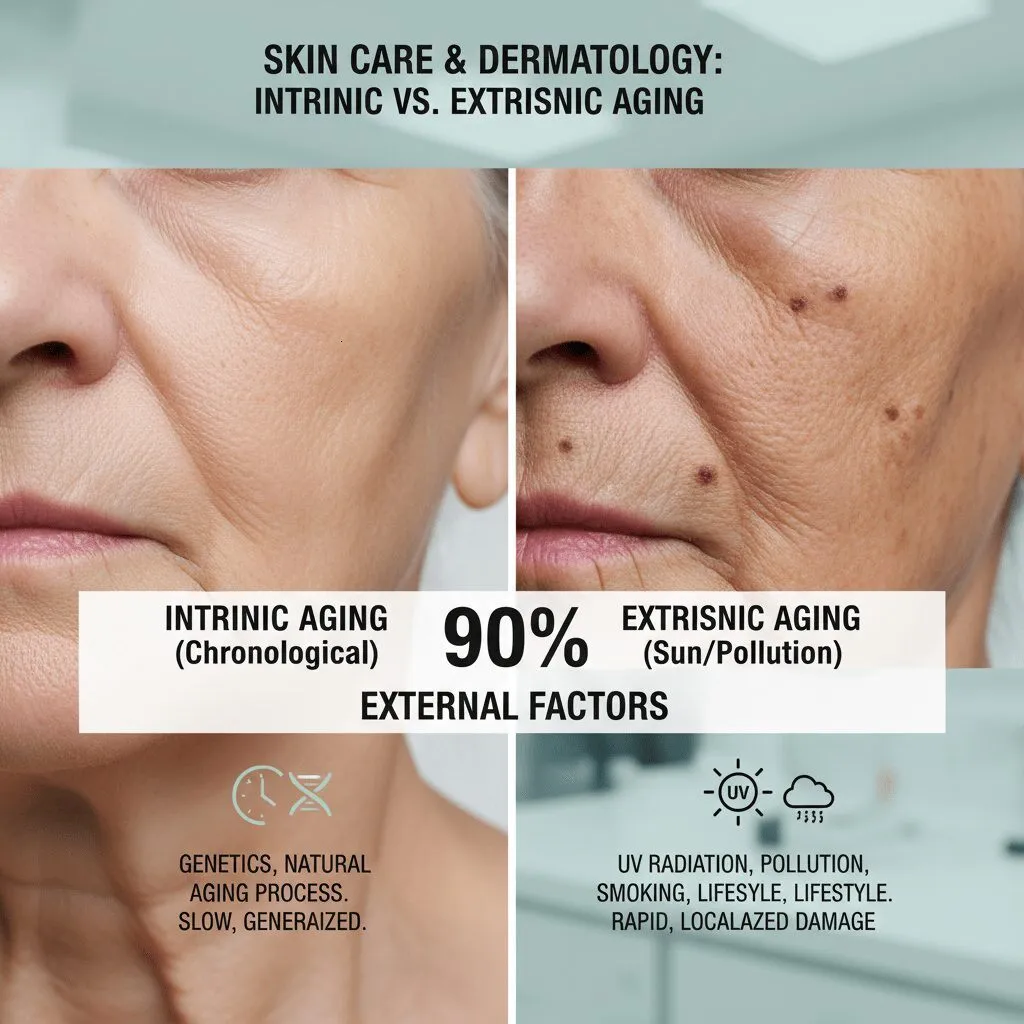
But here is the reality check that changed my entire approach: 90% of skin aging isn’t genetic—it’s external. That means the power to change your skin’s future is largely in your hands. It’s not about “hope in a jar”; it’s about a strategic battle plan.
This isn’t just another fluff piece about drinking more water. We are going to break down a scientifically proven anti-aging skincare routine based on the latest 2024-2025 clinical data. We are talking about barrier health, clinical efficacy, and ingredients that actually communicate with your cells.
If you are ready to stop guessing and start treating your skin like the vital organ it is, welcome to the resistance. Let’s build your arsenal.
The Enemy: Understanding Why We Age (The Science)
To win a war, you have to know your enemy. In the context of skin, the enemy isn’t the calendar; it’s biological degradation caused by specific triggers. When we understand the mechanism, we can intercept it.
The 1% Rule: Understanding Collagen Loss
Collagen is the scaffolding of your skin. It keeps everything tight, lifted, and firm. But here’s the kicker: starting in our mid-20s, our natural collagen production drops by about 1% every single year. By the time we hit menopause, that decline accelerates dramatically.
This concept has birthed a massive trend for 2025 known as “Collagen Banking.” The idea isn’t just to repair damage, but to stimulate the bank account of collagen while you still have high reserves. We aren’t just fighting wrinkles; we are fighting gravity.
Photoaging: The Silent Assassin
If there is one statistic you take away from this guide, let it be this: According to the Skin Cancer Foundation (Updated 2025), photoaging is responsible for 90 percent of visible changes to the skin. This includes fine lines, leathery texture, and hyperpigmentation.
We used to think this was just about burning at the beach. We now know better. It’s the cumulative daily exposure—driving to work, sitting by a window, walking the dog. Furthermore, according to a 2024 report by The Skin Cancer Foundation, estimated new melanoma cases are projected to increase by 5.9 percent in 2025. This isn’t just about vanity; it’s a health crisis.
of visible skin aging is caused by sun exposure, not genetics.
The New Threat: Pollution and “Urban Aging”
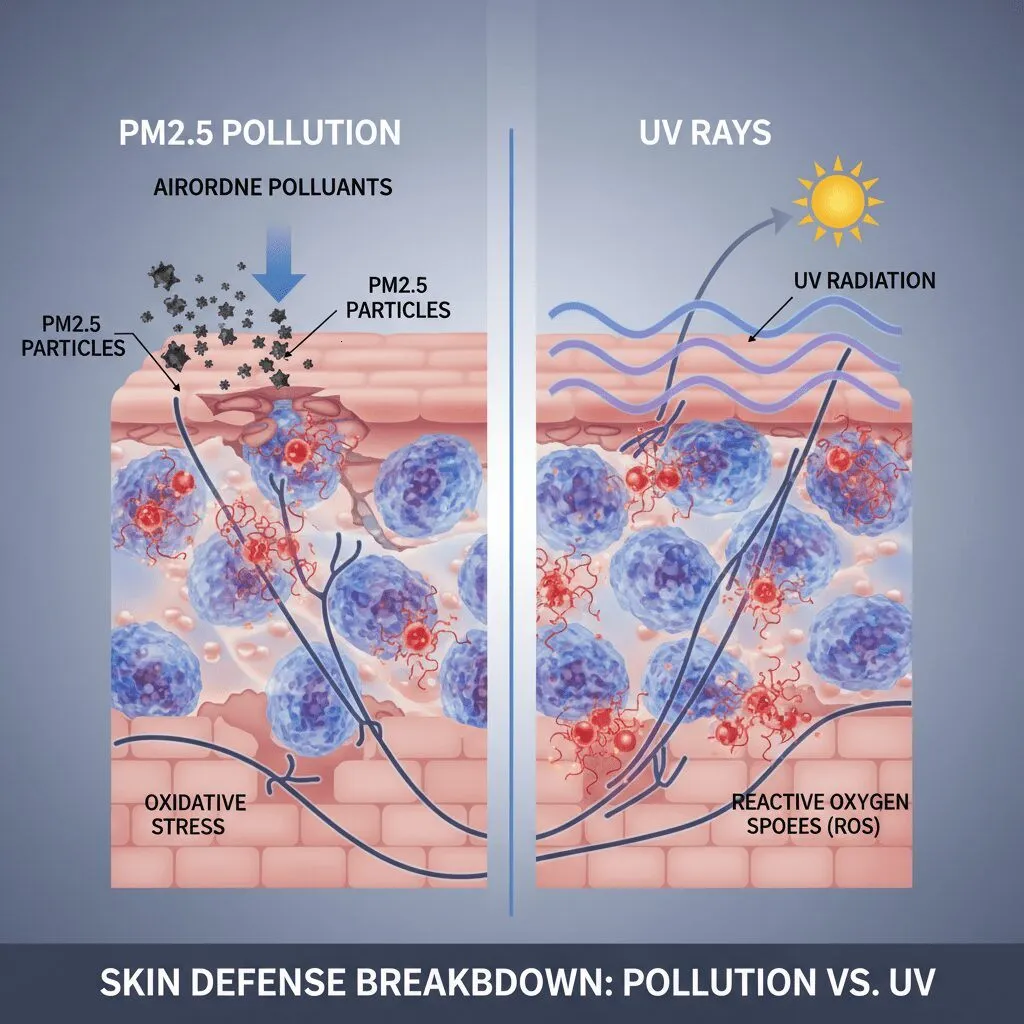
Living in a city? Your zip code might be aging you faster than your birthday. 2025 research has heavily pivoted toward the impact of Particulate Matter (PM2.5) on the skin barrier. These microscopic particles are small enough to penetrate pores and trigger oxidative stress.
According to research cited in the Journal of Investigative Dermatology, exposure to air pollution is linked to a 25% increase in pigment spots (lentigines) on the cheeks. The Deccan Chronicle Health Desk recently noted in February 2025 that compounds in air pollution degrade proteins, directly resulting in sagging and a loss of resilience. If your routine doesn’t account for pollution, it’s incomplete.
The Warrior’s Arsenal: Tier-1 Ingredients (Evidence-Based)
Walk into any Sephora, and it’s overwhelming. But scientifically, there are only a handful of ingredients that have enough data to be called “Tier-1.” Everything else is just a supporting character. Here is what belongs in your kit.
Retinoids: The Gold Standard
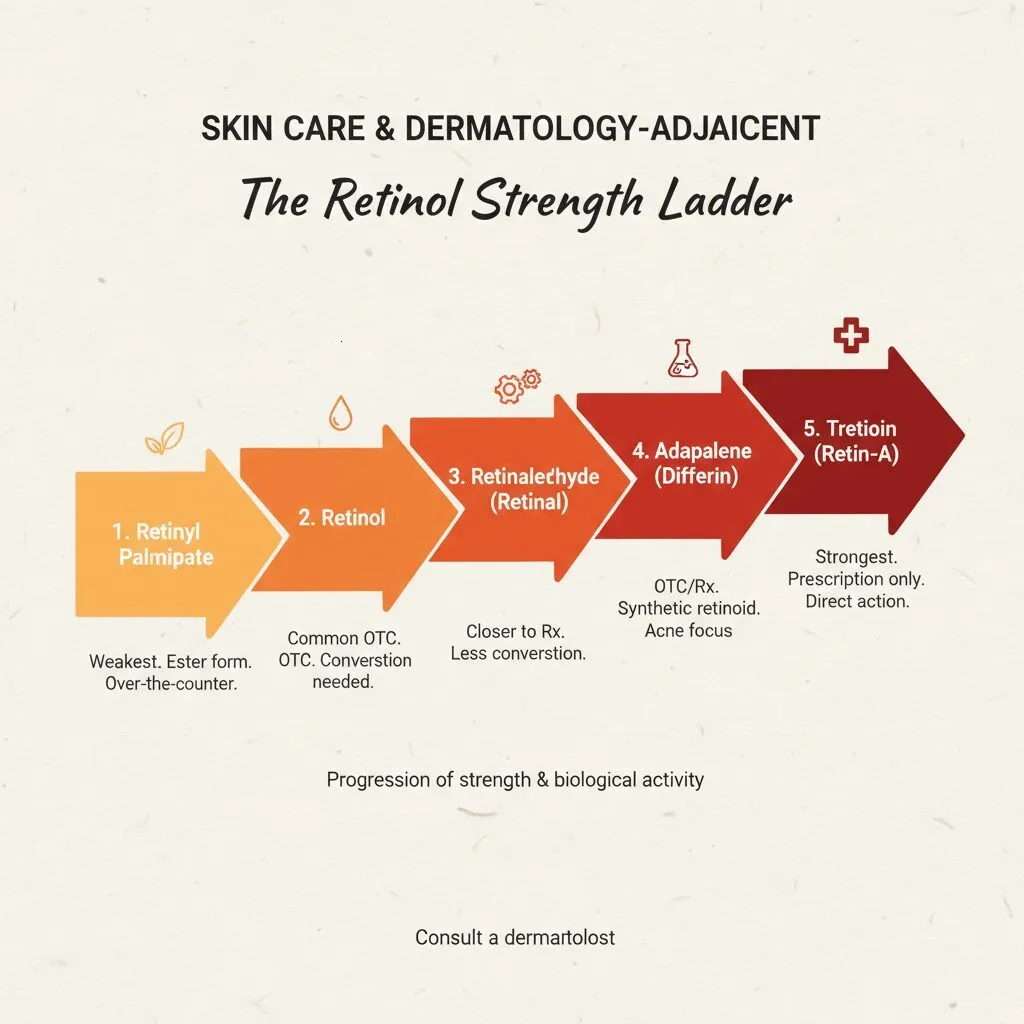
Retinoids (the umbrella term for retinol, retinaldehyde, and prescription tretinoin) remain the undisputed kings of anti-aging. They work by increasing cellular turnover rate and stimulating collagen production. However, the old “no pain, no gain” philosophy is dead.
I used to believe I had to peel like a snake for retinol to work. I was wrong. A massive April 2024 study published in the Journal of Drugs in Dermatology by Kenvue changed the narrative. The study analyzed women aged 30-70 and found that a topical 0.1% retinol significantly improved crow’s feet, facial wrinkles, and uneven skin tone in just 12 weeks.
“This 0.1% retinol, which is a relatively low concentration retinol, provides excellent skin benefits with a very low irritation potential.”
— Dr. Patricia Farris, FAAD (Tulane University School of Medicine), Dermatology Times Interview, April 2024
This is huge. You don’t need to destroy your moisture barrier with high-strength prescriptions to see results. Consistency beats intensity every time.
Peptides & Polynucleotides: The Messengers
If retinol is the general barking orders, peptides are the messengers delivering the mail. They signal your skin cells to perform specific functions, like “make more collagen” or “calm down inflammation.”
In 2025, we are seeing a surge in Polynucleotides (derived from salmon DNA). These are biostimulators that repair damage at a cellular level. While peptides like Matrixyl 3000 have been around, the new generation of copper peptides and polynucleotides focus on wound repair mechanisms to rejuvenate aging skin.
Antioxidants: The Shield
You wouldn’t go into battle without a shield. Antioxidants neutralize free radicals—unstable atoms caused by UV and pollution that steal electrons from your healthy cells. The most potent combination remains Vitamin C (L-Ascorbic Acid) paired with Vitamin E and Ferulic Acid. This trio has been shown to boost UV protection by up to 8x when worn under sunscreen.
The Battle Plan: Your Daily Protocol
Now, let’s put this into practice. The goal here is a scientifically proven anti-aging skincare routine that respects the skin barrier. Complex routines often lead to irritation, and inflammation is a pro-aging factor (a phenomenon we call “Inflammaging”).
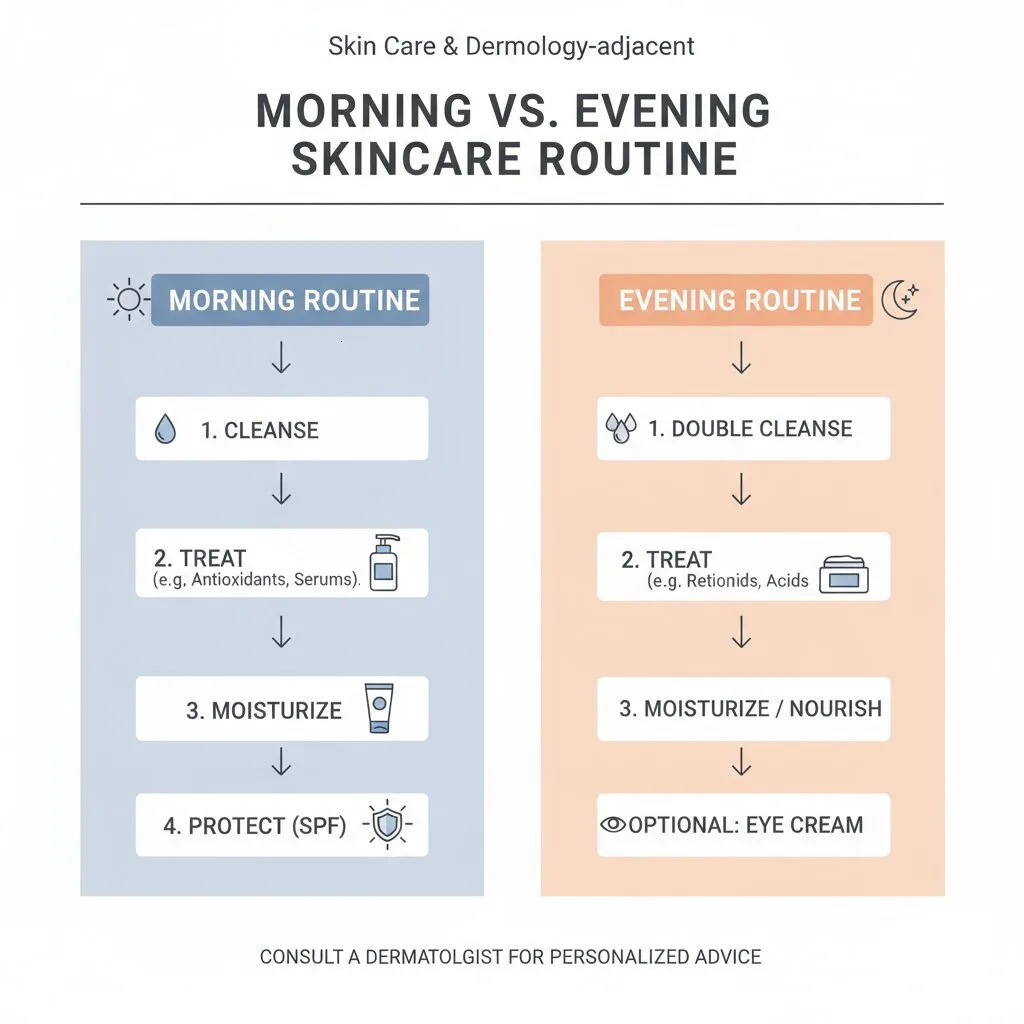
Morning Routine: Defend & Protect
Your morning job is simple: create a shield against the environment.
- Step 1: Gentle Cleanser. Do not strip your skin in the morning. A splash of water or a non-foaming milk cleanser is sufficient.
- Step 2: Vitamin C Serum. Apply this to dry skin. Look for 10-20% L-Ascorbic acid in an opaque bottle (it oxidizes easily).
- Step 3: Moisturizer (Optional). If you have oily skin, your sunscreen might be enough. Dry skin types need a lipid-rich cream here.
- Step 4: Broad-Spectrum SPF 50+. This is non-negotiable. As Dr. Melanie Palm, Medical Director of Art of Skin MD, states via the Skin Cancer Foundation: “Premature aging of the skin is caused by light exposure… We can keep skin looking good for decades if we just take care of it.”
Evening Routine: Repair & Stimulate
While you sleep, your skin switches from “defense mode” to “repair mode.” This is when we deploy the actives.
- Step 1: Double Cleanse. Use an oil balm to break down the sunscreen and pollution (remember those PM2.5 particles?), followed by a water-based cleanser.
- Step 2: Retinoid. Apply a pea-sized amount of 0.1% to 0.3% retinol. If you are new, start twice a week.
- Step 3: Barrier Support. Look for ingredients like Ceramides, Niacinamide, and Hyaluronic Acid. This seals in moisture and mitigates retinoid irritation.
The “Skin Barrier First” Philosophy
In the past, we exfoliated until we were shiny. In 2025, that’s a major mistake. A compromised barrier leads to Transepidermal Water Loss (TEWL), making fine lines look deeper. If your skin stings when you apply products, stop the actives and focus purely on barrier repair for two weeks.
Advanced Warfare: Clinical Treatments (2025 Trends)
Sometimes, topicals aren’t enough for deep structural changes. According to a 2025 report by Grand View Research, the global anti-aging products market was estimated at USD 56.31 billion in 2024, and a huge chunk of that is shifting toward non-invasive clinical procedures.
Exosomes and Biostimulators
The days of just filling a wrinkle with Hyaluronic Acid fillers are evolving. The trend is now Biostimulation—injecting substances that force your body to grow its own collagen.
A 2025 trend report from Livglam Aesthetic Clinic notes: “2025 brings a new trend: customized treatments tailored to individual skin needs… stimulating the body’s natural collagen production.” This includes Exosome therapy (cell signaling packets) and Polynucleotides, which create a more natural, less “puffy” look than traditional fillers.
Microneedling & RF
Radiofrequency (RF) Microneedling remains a powerhouse. It creates controlled micro-injuries to trigger a wound-healing response, while the heat tightens existing collagen fibers. It’s particularly effective for the jawline and neck, areas where creams often struggle to penetrate deep enough.
Lifestyle Logistics: The Internal Defense
You cannot skincare your way out of a bad diet or poor sleep. The skin is an organ, and it reflects your systemic health.
Sugar & Glycation
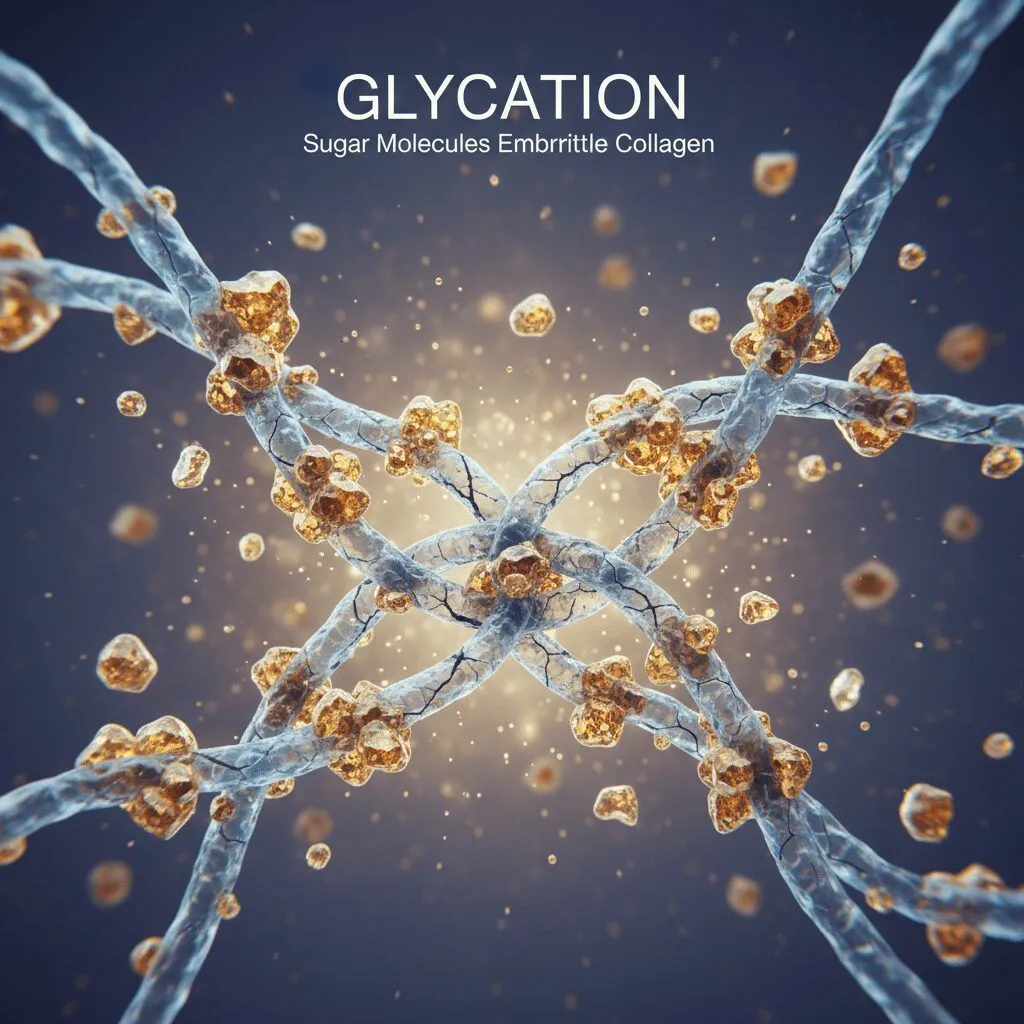
Here is a hard truth I had to learn: Sugar makes you sag. Through a process called Glycation, sugar molecules in your blood attach to proteins (collagen and elastin), forming harmful new molecules called Advanced Glycation End Products (AGEs). These make your collagen stiff, brittle, and prone to breaking. Reducing refined sugar intake is arguably one of the most powerful anti-aging moves you can make.
The “Beauty Sleep” Hormone
It’s not a cliché. Melatonin, the sleep hormone, is also a potent antioxidant. During deep sleep, your body produces growth hormones that repair tissue damage. Chronic sleep deprivation keeps cortisol levels high, which breaks down collagen. Aim for 7-9 hours to let your biological repair crews do their job.
Frequently Asked Questions (FAQ)
Most dermatologists recommend starting a gentle retinol in your mid-20s. This is when collagen production begins to taper off. Prevention is always easier than reversal.
Topicals can significantly soften fine lines and improve texture, but “deep” structural folds (like nasolabial folds) are usually due to volume loss and bone resorption. For these, clinical treatments like biostimulators or fillers are often necessary for full reversal.
They do different things. Hyaluronic acid hydrates and plumps the skin temporarily, reducing the appearance of lines. Retinol actually communicates with cells to build new collagen for long-term repair. You need both.
Without question, it is UV exposure (Photoaging). As noted earlier, up to 90% of visible aging stems from the sun. If you aren’t using SPF, the rest of your routine is essentially wasted.
Conclusion: The Long Game
I want to leave you with one final thought. In my years of researching skin health, the people with the best skin aren’t the ones who buy the most expensive creams or jump on every trend. They are the ones who are consistent.
Skincare is not a sprint; it’s a marathon. You likely won’t see the full benefits of that retinol for 12 weeks. You won’t see the benefits of your sunscreen for 20 years—but your future self will thank you.
Start with the basics: protect with SPF, repair with Vitamin A, and respect your barrier. That is the warrior’s way. Don’t look for miracles; look for science, stick to the protocol, and let your biology do the work.