 Johnson
Say Goodbye to Breakouts: The Most Effective Acne Treatment Plans (2025 Guide)
If you feel like you are fighting a losing battle against your own pores, you aren’t alone. According to a 2024/2025 study published via the NIH, patients dealing with acne have a 29% prevalence rate for anxiety. It’s not “just skin”—it’s your mental well-being on the line.
But here is the good news: the science has shifted. We aren’t just “drying out pimples” anymore. This guide condenses the new 2024 American Academy of Dermatology (AAD) guidelines into a simple, actionable roadmap. We’re moving away from the “burn it off” method and toward the “balance and multimodal” approach.
Let’s fix this, once and for all.

The New Rules of Acne: What Changed in 2024?
For decades, the standard advice was simple: scrub your face and apply benzoyl peroxide until it hurts. I’m relieved to tell you that approach is dead. The global acne treatment market is valued at b$11.62 billion in 2024 according to Fortune Business Insights, and that investment has driven massive research breakthroughs.
1. The “Multimodal” Approach
If you are relying on a single spot treatment to cure your acne, you are likely wasting your time. Acne is complex—it involves sebum (oil), bacteria (Cutibacterium acnes), inflammation, and clogged pores. A single product rarely tackles all four.
“Most single agent treatments have limited efficacy as monotherapy. As a result, it is often necessary to use multimodal treatment approaches that combine multiple mechanisms of action.”
— Dr. John S. Barbieri, Co-chair AAD Acne Guideline Workgroup (Source)
This means your effective acne treatment plan must attack on multiple fronts simultaneously. We aren’t just fighting the pimple you see today; we are preventing the one forming two weeks from now.
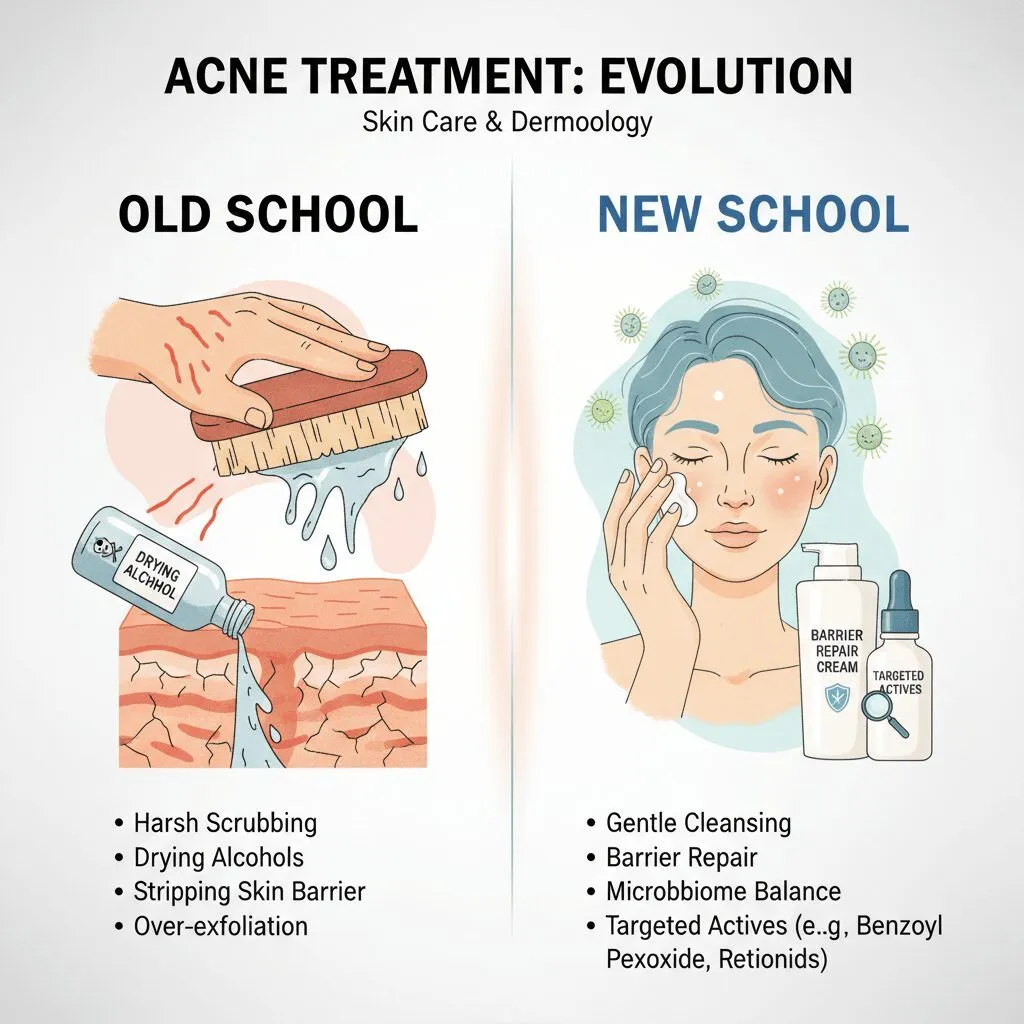
2. The Rise of the Microbiome
We used to think all bacteria were bad. Now, we know better. The goal is to balance the skin’s microbiome, not nuke it. Aggressive scrubbing destroys your moisture barrier, leading to more inflammation. A calmer barrier means clearer skin.
Building Your “Clear Skin” Arsenal (OTC Solutions)
Before you rush to a dermatologist, you need to optimize your Over-The-Counter (OTC) game. Many cases of mild to moderate acne can be resolved here, provided you choose the right molecules.
Benzoyl Peroxide vs. Salicylic Acid
These two are often used interchangeably, but they have distinct jobs.
- Salicylic Acid (BHA): This is oil-soluble. It dives deep into the pore to dissolve the “glue” holding dead skin cells together. It’s best for blackheads and clogged pores (comedonal acne).
- Benzoyl Peroxide (BP): This is an antimicrobial powerhouse. It kills the C. acnes bacteria and reduces inflammation.
Retinoids: The Gold Standard
If you aren’t using a retinoid, you aren’t really treating acne. Retinoids (Vitamin A derivatives) speed up cell turnover, preventing dead cells from clogging pores in the first place.
According to Dr. Andrea L. Zaenglein from Penn State University, “Typically, when we think about retinoids, we think of adapalene as being more tolerable and tazarotene as being more effective.” (Source). Adapalene (Differin) is the only prescription-strength retinoid available OTC in the US and is your best starting point.
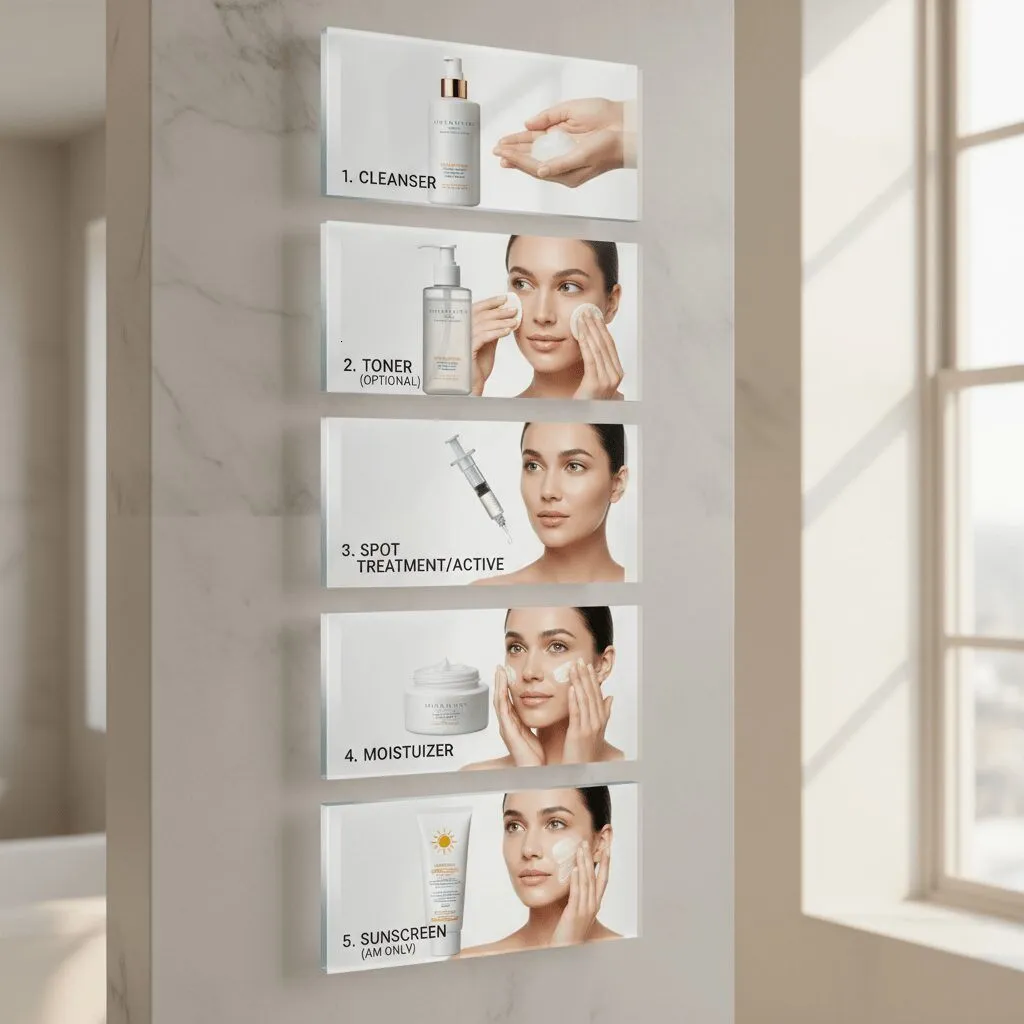
The Correct Order of Application (Crucial)
This is where 90% of people fail. You can have the best products in the world, but if you apply them in the wrong order, they won’t work.
Dr. Sandra Lee (aka Dr. Pimple Popper) stated in May 2024: “You want to avoid layering oils or emollients (like you’d find in moisturizers) before acne treatments, because they could interfere with the treatment’s absorption.” (Source).
The Layering Ladder
- Cleanse: Use a gentle, pH-balanced cleanser. Wash for at least 60 seconds.
- Treat (Active): Apply your Retinoid or Benzoyl Peroxide to clean, dry skin. Wait 2-3 minutes for it to absorb.
- Moisturize: Seal it in with a non-comedogenic moisturizer.
- Protect: SPF is non-negotiable. Acne scars (PIH) get darker with sun exposure.
The “Sandwich Method” for Sensitive Skin: If you find retinoids too drying, try this: Moisturizer -> Retinoid -> Moisturizer. This buffers the irritation without rendering the product useless.
Prescription Power: When OTC Isn’t Enough
Sometimes, OTC products just don’t cut it. This is especially true for hormonal acne, which affects approximately 50% of women in their 20s and 35% of women aged 30-39, according to a report in Dermatology Times (April 2024).
Clascoterone (Winlevi): The Game Changer
For years, men had few options for hormonal acne because oral hormonal blockers have feminizing side effects. Enter Clascoterone cream. It’s the first topical androgen receptor inhibitor. Think of it as “topical Spironolactone.” It blocks hormones in the skin without affecting your systemic hormones.
Spironolactone: The Secret Weapon for Women
I’ve seen Spironolactone change lives for women dealing with deep, cystic jawline acne. It’s an oral medication that blocks androgens (male hormones) that trigger oil production. It treats the root cause, not just the symptom.
Isotretinoin (Accutane): Dispelling Myths
Isotretinoin is serious medicine, but it is also the closest thing we have to a cure. A 2025 study in JAMA Dermatology indicates that reaching a higher cumulative dose (120-220+ mg/kg) is associated with significantly lower relapse rates. If you have scarring cystic acne, waiting too long to start this can lead to permanent skin damage.
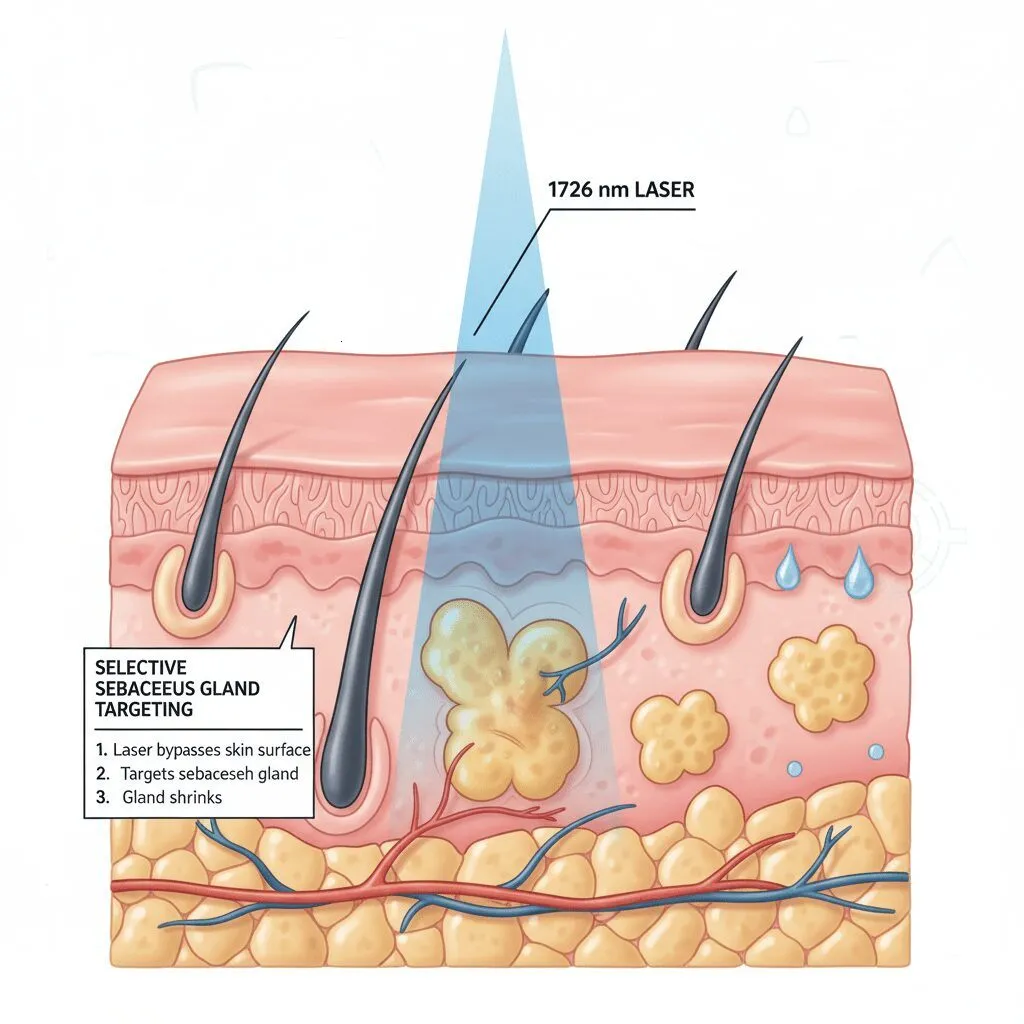
New Tech: 1726 nm Lasers
If you want to avoid pills entirely, technology has caught up. The new 1726 nm lasers (like AviClear) target sebaceous glands directly. Data from Dr. John Barbieri via Dermsquared (Jan 2025) shows that approximately 40% of patients achieve clear skin for up to 6 months post-treatment without drugs.
Inside Out: Diet & Lifestyle Myth Busting
This section is where things get controversial. I want to set the record straight using the latest data, because there is a lot of fear-mongering online.
The Whey Protein Debate
If you lift weights, you’ve likely been told whey protein destroys your skin. Not so fast. A 2024 randomized control trial published in the Journal of Dermatology found no significant difference in acne lesions between men taking whey protein versus a placebo over 6 months. While some individuals are sensitive to dairy, it is not a universal trigger for everyone.
Probiotics: The New Frontier
Gut health is intimately linked to skin health. A clinical trial published in Acta Dermato-Venereologica (May 2024) showed a 50% improvement in global acne severity for patients taking oral probiotics (specifically L. rhamnosus) compared to only 29% in the placebo group. Balancing your gut bacteria reduces systemic inflammation, which shows up on your face.
Case Study: The Probiotic Boost
The Study: Published in J Cosmet Dermatol (Oct 2024).
The Setup: 80 patients. Group A took Doxycycline + Probiotic. Group B took only Doxycycline.
The Result: The group adding probiotics had significantly better clearance on the forehead, chin, and nose (p < 0.021) and suffered fewer antibiotic side effects.
My Takeaway: If you are prescribed antibiotics for acne, ask your doctor about adding a high-quality probiotic immediately.
FAQ: Dermatologist Answers to Your Burning Questions
What is the new triple combination acne cream I keep hearing about?
Recent 2024 data from the AAD Annual Meeting highlighted a fixed-dose combination of Clindamycin, Benzoyl Peroxide, and Adapalene. The study showed that this “triple-combo” had superior outcomes compared to using the ingredients separately. It simplifies the routine and increases adherence.
How long does it take for acne treatments to work?
Patience is the hardest ingredient. Most treatments, especially retinoids, take 8 to 12 weeks to show significant results. You may experience a “purge” (worsening of skin) in the first 4 weeks as deep impactions are brought to the surface.
Is it better to pop a pimple or leave it?
Leave it. Popping forces bacteria deeper into the follicle, potentially rupturing the wall and causing a cyst or permanent scar. Use a hydrocolloid patch instead to draw out the fluid safely.
What foods actually trigger hormonal acne?
High Glycemic Index (GI) foods—like white bread, sugar, and processed snacks—spike insulin, which in turn increases oil production. Focusing on a low-GI diet is scientifically proven to help reduce acne severity.
Conclusion: Consistency Beats Intensity
If you take one thing away from this guide, let it be this: More is not better. Better is better.
The “kitchen sink” approach of throwing twelve different acids at your face will only destroy your skin barrier. An effective acne treatment plan in 2025 is about targeted precision. It involves respecting the microbiome, using multimodal therapy (like combining a retinoid with BP), and giving the products the 12 weeks they need to work.
Whether you opt for the new 1726 nm laser therapy, a prescription like Winlevi, or a solid OTC routine with Adapalene, the key is sticking to the plan when you don’t see overnight results. Your skin is an organ, not a math problem. Treat it with patience, and it will reward you.