 Johnson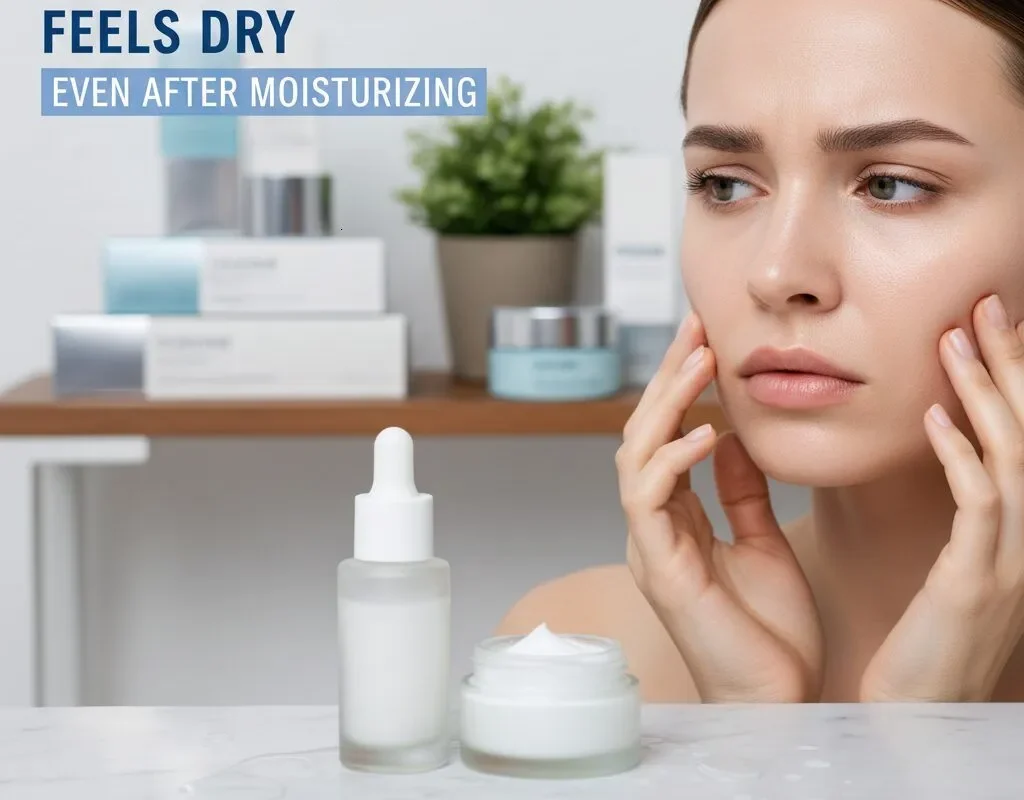
Why Your Skin Feels Dry Even After Moisturizing: 2025 Science-Backed Solutions
You’ve slathered on the richest, most expensive cream you own. For a moment, relief. Yet, barely twenty minutes later, your face feels like parchment paper—tight, uncomfortable, and visibly flaking. If you’ve ever found yourself reapplying lotion three times before lunch, you aren’t alone.
In my years of consulting with clients struggling with compromised barriers, the most common frustration I hear is, “I’m moisturizing constantly, so why is my skin still dry?” It feels like pouring water into a bucket that never fills up.
Here is the reality: The global skincare market is massive, valued at $122.11 billion in 2025 according to a December 2025 report by Fortune Business Insights. Yet, despite this abundance of products, consumer satisfaction regarding hydration is plummeting. Why? Because most people are treating the symptom (dryness) rather than the mechanism causing it.
It is not necessarily that your moisturizer is “bad”—it’s that your skin is leaking. This guide moves beyond the basic “drink more water” advice. We are analyzing the latest 2025 clinical research on Transepidermal Water Loss (TEWL), microbiome dysbiosis, and lipid deficiency to help you fix your skin barrier once and for all.
The “Leaky Bucket” Syndrome: Understanding Transepidermal Water Loss (TEWL)
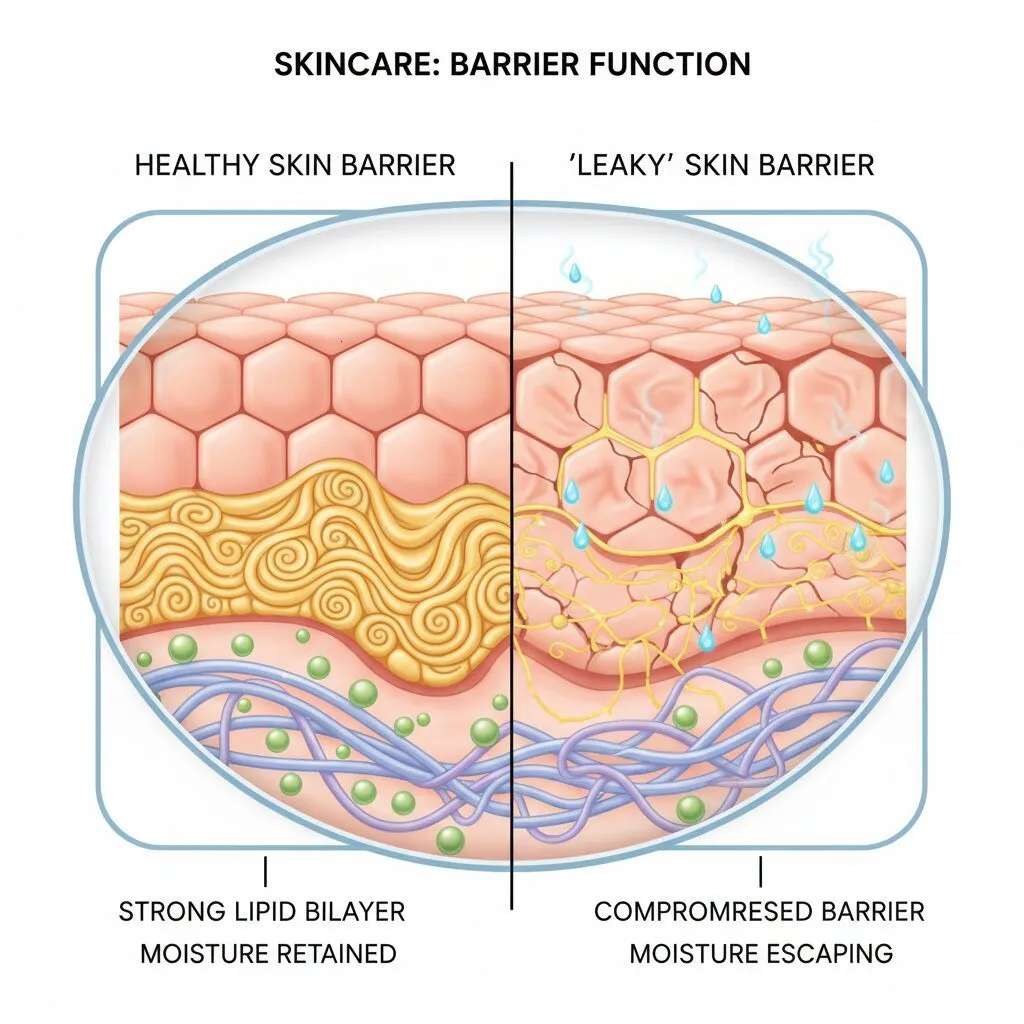
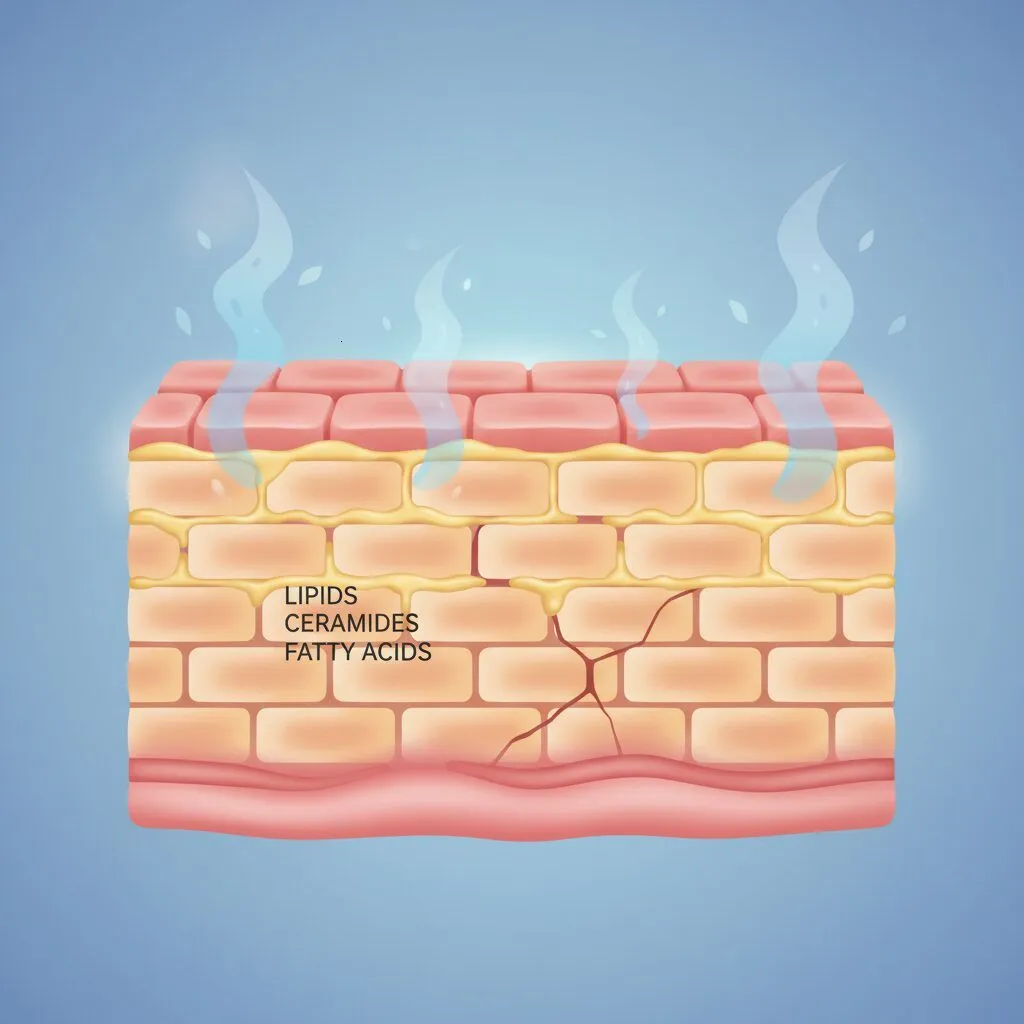
To understand why your moisturizer seemingly vanishes, we have to talk about Transepidermal Water Loss (TEWL). Imagine your skin’s outer layer, the stratum corneum, as a brick wall. The skin cells (corneocytes) are the bricks, and the lipids (oils) are the mortar holding them together.
When that mortar degrades—due to harsh cleansers, hot water, or age—micro-tears form. Moisture from the deeper layers of your skin evaporates through these cracks into the air. This is TEWL.
According to a 2025 study published in the Asian Journal of Pharmacy, researchers found that while applying mineral oil increased surface hydration temporarily, it did not significantly reduce TEWL in subjects with damaged barriers. This confirms a critical distinction: greasing the surface is not the same as repairing the leak.
Functional vs. Visual Barrier Repair
We often judge our skin by how it looks immediately after product application. Does it look shiny? Good. But this is deceptive. A true repair involves restoring the Natural Moisturizing Factors (NMF) and the lipid matrix deep within the epidermis.
If you have Xerosis Cutis (the medical term for abnormally dry skin), your barrier is functionally compromised. A meta-analysis published in PubMed/NIH in October 2023 found that the pooled prevalence of xerosis cutis is 53% among older adults. This isn’t just “dry skin”—it’s a breakdown of cutaneous homeostasis.
7 Hidden Reasons Your Moisturizer is Failing You
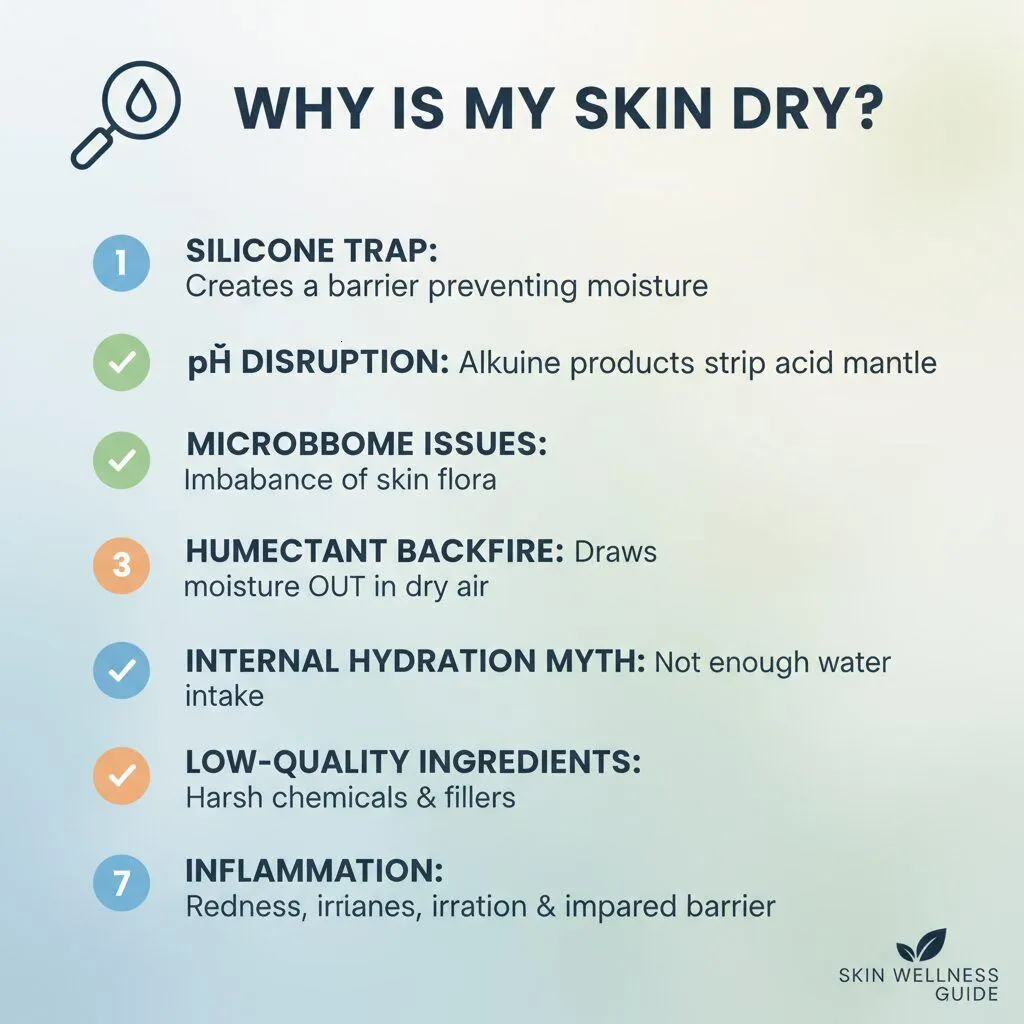
If you are applying product and still feeling dry, one of these seven factors is likely the culprit. Let’s break down the science behind the dryness.
1. The “Silicone Trap” (Occlusion Without Hydration)
Many popular moisturizers rely heavily on dimethicone or other silicones. These ingredients are excellent at smoothing texture and creating a silky feel. However, they are primarily occlusive. If you apply a silicone-heavy cream to dehydrated skin without a water-based humectant underneath, you are effectively sealing in dryness.
You need water (hydration) before you apply the seal (moisture). Without the water content, the silicone just sits on top of dead skin cells, offering zero physiological improvement.
2. Over-Cleansing and pH Disruption
This is the most common mistake I see. Your skin is naturally acidic, with a pH sweet spot between 4.7 and 5.5. Most foaming cleansers are alkaline (pH 8-10). When you use them, you strip the acid mantle, which enzymes need to produce ceramides.
If your skin feels “squeaky clean,” you have stripped your lipids. No moisturizer can compensate for a barrier that is being chemically assaulted twice a day.
3. Microbiome Dysbiosis
We used to think bacteria on the skin was bad. Now, we know that a diverse microbiome is essential for lipid production. When your skin’s good bacteria are killed off (by preservatives or harsh acne treatments), your skin loses its ability to self-moisturize.
Research published in Dovepress (2025) demonstrated a massive 40% enhancement in skin microbial diversity after 4 weeks of using probiotic sprays, which directly correlated with a reduction in reported dryness. If your flora is off, your hydration will be too.
4. Climate and the “Humectant Backfire”
Hyaluronic Acid (HA) is hailed as a hydration hero, but in the wrong climate, it’s a villain. HA is a humectant, meaning it draws moisture from the environment into your skin.
However, if the air around you is drier than your skin (think low humidity winter or air-conditioned offices), the HA will draw moisture out of the deep layers of your dermis and evaporate it into the air.
The Fix: Never apply HA to dry skin. Apply it to damp skin and immediately seal it with an emollient.
5. The “Internal Hydration” Myth
You have likely been told to “just drink more water.” While systemic dehydration is real, drinking gallons of water will not fix a damaged barrier. If the “bucket” has holes (TEWL), the water you drink won’t stay in the skin.
A 2024 study accessed via MDPI confirms that while dietary water intake influences skin physiology, it cannot correct barrier defects caused by external aggression. You must treat the surface.
6. Rapid Evaporation of Low-Quality Humectants
Not all moisturizers are created equal. Drugstore formulations often use cheap humectants that provide a “flash” of hydration that vanishes quickly.
According to clinical trials presented at the Nova Southeastern University Research Day (Nov 2024), advanced humectant formulations provided 5 hours of sustained hydration, whereas standard commercial lotions showed a significant drop in hydration levels after just 3 hours. Investing in formulation technology matters.
7. Underlying Inflammation (The Silent Dryer)
Sometimes, dryness is a symptom of inflammation like eczema or dermatitis. According to the American Academy of Dermatology (Feb 2025), approximately 1 in 10 Americans suffer from eczema-related dryness. If your skin is red, itchy, and dry, your immune system is involved, and a simple lotion won’t suffice.
High-Performance Ingredients for 2025: Beyond Hyaluronic Acid
So, what actually works? To fix a barrier that feels dry after moisturizing, you need to mimic the skin’s natural lipid composition. This is known as the “Golden Ratio.”
The Golden Trio: 3:1:1 Ratio
Your skin’s mortar is composed roughly of:
- 50% Ceramides
- 25% Cholesterol
- 15% Free Fatty Acids
If your moisturizer contains only ceramides but no fatty acids, the repair will be incomplete. You need a product that lists all three.
Advanced Ingredient Arsenal
| Ingredient | Function | Best For |
|---|---|---|
| Urea (5-10%) | Keratolytic & Humectant | Rough, scaly texture + hydration. |
| Squalane | Emollient | Bio-identical to human sebum; lightweight sealing. |
| Niacinamide | Barrier Strengthening | Boosting ceramide production naturally. |
| Postbiotics | Microbiome Support | Restoring bacterial diversity to prevent dryness. |
How to Test If Your Skin Barrier is Damaged
Before you overhaul your routine, let’s determine the severity of your barrier damage. I often walk my clients through this simple sensory check.
The “Sting” Test: Wash your face and apply your regular moisturizer. Does it sting or burn for a few seconds?
Verdict: If yes, your acid mantle is compromised. Healthy skin should not sting when moisturizer is applied.
The “Tightness” Test: Smile broadly 10 minutes after moisturizing. Does the skin feel like it’s stretching or about to crack?
Verdict: If yes, you are experiencing high TEWL. Your moisturizer lacks sufficient occlusives.
The “Oil Slick” Paradox: Does your skin feel dry and tight, but look oily by midday?
Verdict: This is dehydration. Your skin is overproducing sebum to compensate for the lack of water.
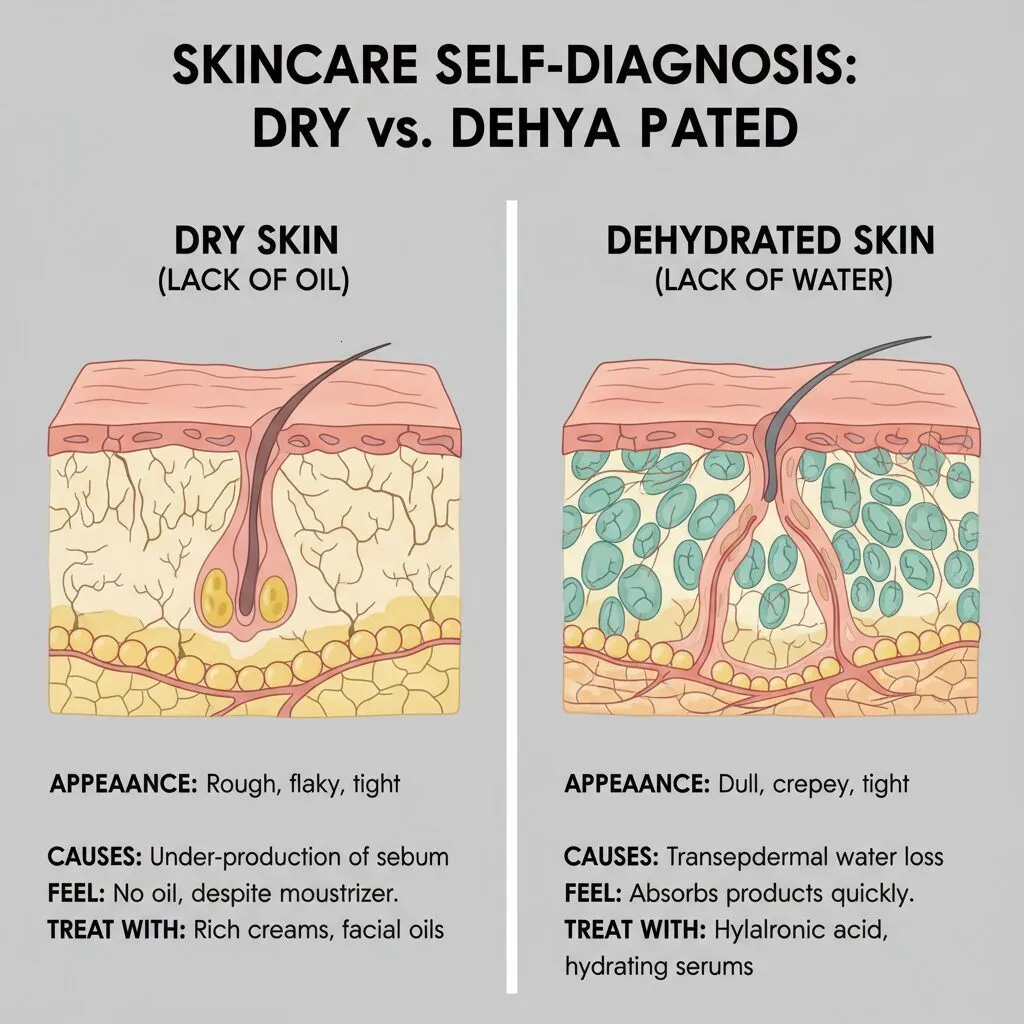
The Ultimate 2025 Protocol for Chronically Dry Skin
Based on the latest data regarding lipid depletion and microbiome health, here is a routine designed to stop the cycle of dryness.
Step 1: The Reset (Stop the Damage)
Stop exfoliating. Put down the glycolic acid, the scrubs, and the retinol for 14 days. Your barrier cannot heal if you keep sandblasting it. Switch to a non-foaming, milky cleanser.
Step 2: Hydration Sandwiching
Apply your products in this specific order to trap moisture:
- Water/Essence: Apply to damp skin.
- Humectant Serum: Glycerin or Beta-glucan (better than HA for dry climates).
- Barrier Cream: Look for the 3:1:1 ratio (Ceramides/Cholesterol/Fatty Acids).
- The Occlusive Seal: At night, finish with a thin layer of healing ointment or squalane oil.
This method prevents the “Humectant Backfire” we discussed earlier.
Step 3: Invest in Consumer Intelligence
In 2024, IMARC Group reported that 23% of U.S. women identified “skin sensitivity” as a primary concern driving purchases. The industry knows this, which means “barrier repair” is becoming a marketing buzzword. Always turn the bottle around and look for the science, not just the “repair” label on the front.
Conclusion: Closing the Gap
If your skin feels dry even after moisturizing, it is a clear signal that your skin’s protective wall is down. The solution isn’t to apply more of the same product, but to apply the right combination of lipids to patch the leaks.
By understanding TEWL, respecting your pH balance, and nurturing your microbiome, you can transition from constant reapplying to lasting comfort. Remember, in 2025, smart skincare isn’t about the most expensive jar on the shelf—it’s about respecting the biology of your barrier.
Start by checking your cleanser’s pH, adding a cholesterol-rich cream, and giving your skin a two-week break from actives. Your barrier will thank you.
Frequently Asked Questions
Why does my face feel tight after moisturizer?
This usually indicates that your moisturizer contains high water content (humectants) but lacks sufficient oils (occlusives) to lock it in. The water evaporates, taking your skin’s natural moisture with it. It can also mean your moisture barrier is damaged, causing immediate dehydration.
Can moisturizer actually dry out your skin?
Yes. Moisturizers high in alcohol, fragrance, or harsh emulsifiers can strip your natural oils. Additionally, using pure Hyaluronic Acid in a dry climate without a sealer can dehydrate the skin via osmosis.
Does drinking water help dry skin or is it a myth?
It is largely a myth in the context of fixing dry skin. While severe dehydration affects the skin, simply drinking excess water will not repair a damaged lipid barrier or reduce TEWL (Transepidermal Water Loss).
Why is my skin absorbing moisturizer so fast?
If your skin “eats” lotion instantly, it is likely severely dehydrated and porous. This rapid absorption suggests you have gaps in your stratum corneum (outer layer), and you likely need a richer, thicker cream with ceramides to fill those gaps.