 Johnson
Decoding Psoriasis: Effective Strategies for Clearer Skin & Long-Term Remission
If you have ever stared in the mirror, frustrated by a red, scaly patch that refuses to heal, you know the isolation that comes with psoriasis. You are not alone in this battle. In fact, according to the National Psoriasis Foundation (2024 Health Indicator Report), 125 million people worldwide—that’s 2 to 3 percent of the global population—share this condition.
For years, the standard advice was simple: moisturize and manage your stress. But let’s be honest—that rarely works for moderate to severe cases. Psoriasis is a complex autoimmune disease, not dry skin.
In my experience analyzing medical trends, the landscape of psoriasis treatment strategies has shifted dramatically in the last 18 months. We aren’t just managing symptoms anymore; we are aiming for remission. This article decodes the latest non-steroidal topicals, the rise of “super-biologics,” and the exact diet protocols backed by 2025 research.
The “Psoriasis Triad”: Skin, Joints, and Mental Health
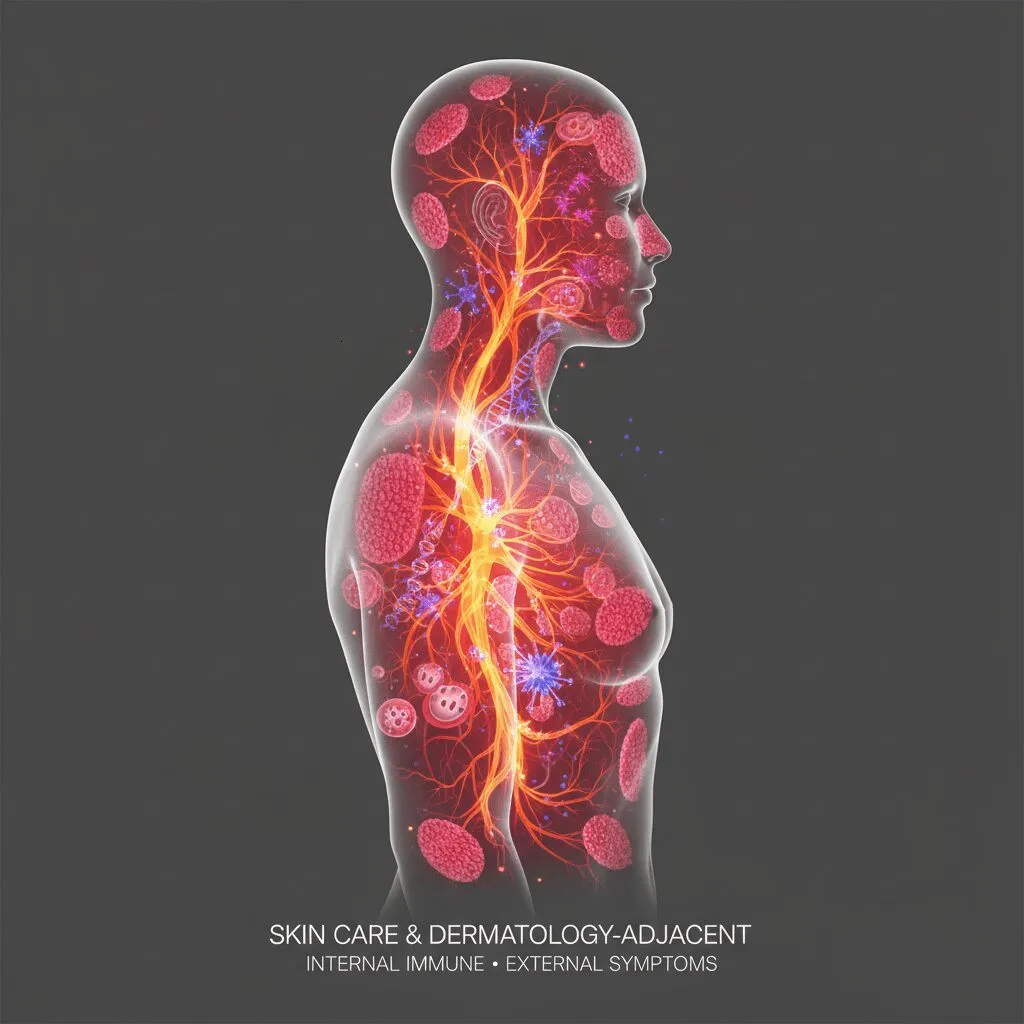
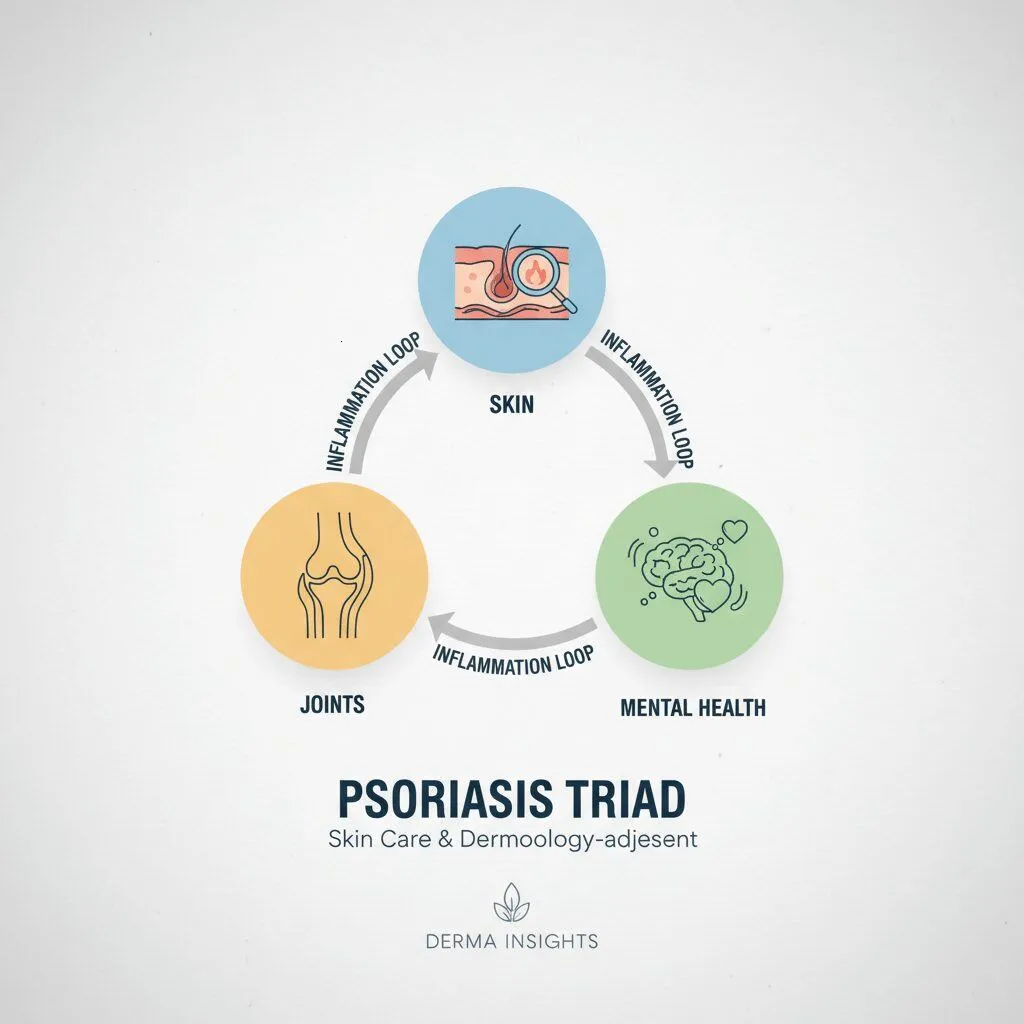
One thing that often surprises people when they first receive a diagnosis is the systemic nature of the disease. It’s easy to focus on the plaques, but psoriasis is actually a “triad” affecting the skin, the joints, and the mind. Ignoring one aspect can often lead to the worsening of the others.
The Hidden Burden: Mental Health
The mental toll of psoriasis is often heavier than the physical itch. It’s not just about feeling self-conscious; there is a biological link between inflammation and mood. According to data from the HMP Global Learning Network (2024), depression actually increases the risk of developing psoriatic arthritis by 68%. This suggests a feedback loop where mental distress fuels physical inflammation.
— Dr. Marcus Schmitt-Egenolf, Dermatologist, Umeå University (News-Medical, 2024)
Furthermore, nearly 60% of people with psoriasis reported their disease to be a large problem in their everyday life, according to the World Psoriasis Day Consortium / NPF (2024). If you are feeling mentally fatigued, it’s not “all in your head”—it’s part of the disease burden.
Early Warning Signs of Psoriatic Arthritis (PsA)
The second pillar of the triad is joint health. Psoriatic arthritis affects up to 33% of patients with psoriasis and often goes undiagnosed for years, according to The Dermatologist (2024).
Here is the critical part: Early detection is everything. A 2024 study published in Rheumatology Oxford found that even a 6-month delay in psoriatic arthritis treatment can result in permanent joint damage. If you wake up with stiffness lasting more than 30 minutes or notice “sausage-like” swelling in your fingers (dactylitis), you need to speak to a rheumatologist immediately.
The New Wave of Medical Treatments (2024-2025 Update)
The days of relying solely on messy coal tar and thinning steroid creams are fading. The psoriasis treatment strategies available in 2025 are targeted, efficient, and safer than their predecessors.
Topical Revolution: Moving Beyond Steroids
For decades, topical corticosteroids were the gold standard, but they came with risks like skin atrophy (thinning). Enter the era of non-steroidal topicals. Two major players have changed the game: Tapinarof (Vtama) and Roflumilast (Zoryve).
Tapinarof cream 1% is particularly interesting because it modulates the aryl hydrocarbon receptor. According to FDA / Vtama Prescribing Info (2024), this cream showed a 35-40% complete clearance rate in Phase 3 trials. It’s powerful, but without the steroid side effects.
— Dr. George Han, Dermatologist, Zucker School of Medicine (Dermatology Times, 2024)
Biologics 2.0: The Clearance Race
If topicals aren’t enough, we look to biologics—injections that block specific immune pathways. The older drugs targeted TNF-alpha (like Humira), but the newer “Biologics 2.0” target IL-17 and IL-23, offering significantly higher clearance rates.
Bimekizumab (Bimzelx) has been a headline-maker recently. According to UCB / FDA Approval Data (Oct 2024), Bimekizumab achieved complete skin clearance (PASI 100) in over 60% of patients at week 16. This is a staggering improvement over older therapies.
In the BE OPTIMAL trial, patients who failed older treatments saw hope. According to Dermatology Times (2024), 44% of patients receiving bimekizumab reached ACR50 (50% improvement in arthritis symptoms) compared to just 10% on placebo.
| Drug Class | Target | Example Drugs | Typical Clearance (PASI 90) |
|---|---|---|---|
| TNF Inhibitors | Systemic Inflammation | Humira, Enbrel | 40-50% |
| IL-23 Inhibitors | Specific Protein | Skyrizi, Tremfya | 70-75% |
| IL-17 Inhibitors | Specific Protein | Cosentyx, Taltz, Bimzelx | 80-90%+ |
Lifestyle Protocols: Biohacking Your Skin
While medication is crucial, you can’t out-medicate a pro-inflammatory lifestyle. In my opinion, the most empowered patients are those who combine medical treatment with “biohacking” their diet and environment.
The “Anti-Inflammatory Plate”: 2024 Data
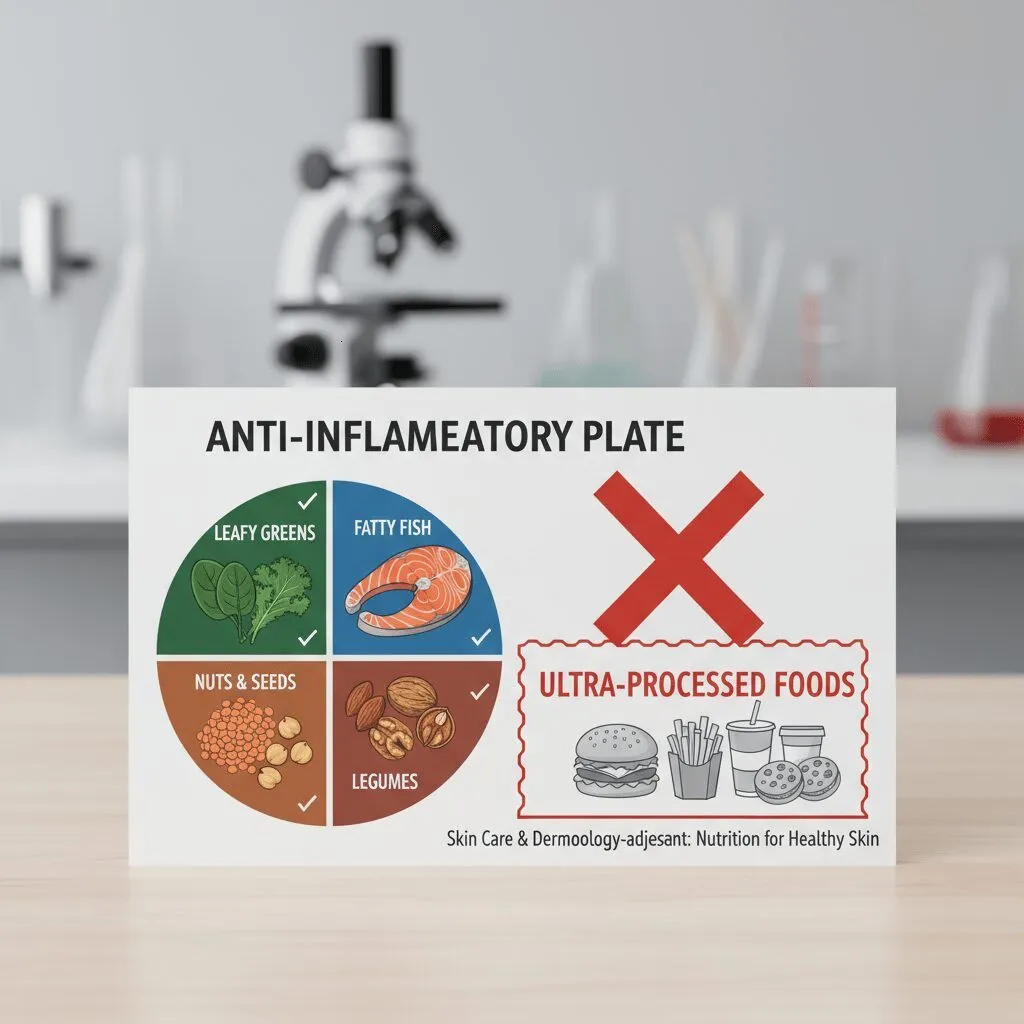
You’ve likely heard of the Mediterranean diet, but recent research confirms its specific utility for psoriasis. According to the 2024 APPLE study results discussed by Prof. Wendy Hall at King’s College London, “intake of fruits, nuts, and legumes were negative predictors of severity.” This means the more of these you eat, the less severe your symptoms tend to be.
However, the real villain might be what you stop eating. A 2024 study published in JAMA Dermatology revealed that high intake of ultra-processed foods (UPFs) is associated with a 36% higher likelihood of active psoriasis. It’s not just about gluten; it’s about chemicals and processing agents that trigger the gut-skin axis.
The Weight Connection
There is also a direct correlation between adipose tissue (body fat) and inflammation, as fat cells secrete inflammatory cytokines. A meta-analysis of 6 RCTs published by Medicom Publishers (2024) showed that obese patients who underwent caloric restriction saw a significant reduction in PASI scores at week 16. This also helped their systemic drugs work better.
Targeted Strategies for Stubborn Areas
Psoriasis doesn’t always play fair. It often hides in areas that are difficult to treat, like the scalp, nails, or skin folds (inverse psoriasis). These areas require specialized tactics.
Scalp Psoriasis Remedies
Scalp psoriasis is notoriously difficult because hair blocks creams from reaching the scalp. However, 2024 saw the rise of foam-based deliveries. In a clinical case regarding Roflumilast foam, Dermatology Times (2024) reported that 59.1% of patients achieved success at Week 8 compared to 11.4% on vehicle foam. The foam penetrates the hair barrier much more effectively than thick ointments.
Nail Psoriasis
Nail pitting and separation (onycholysis) can be painful and embarrassing. While biologics are the most effective treatment for nail psoriasis, keeping nails short and protecting them from trauma is vital. I always tell people: your nails are jewels, not tools. Don’t use them to open cans.
The Financial Roadmap
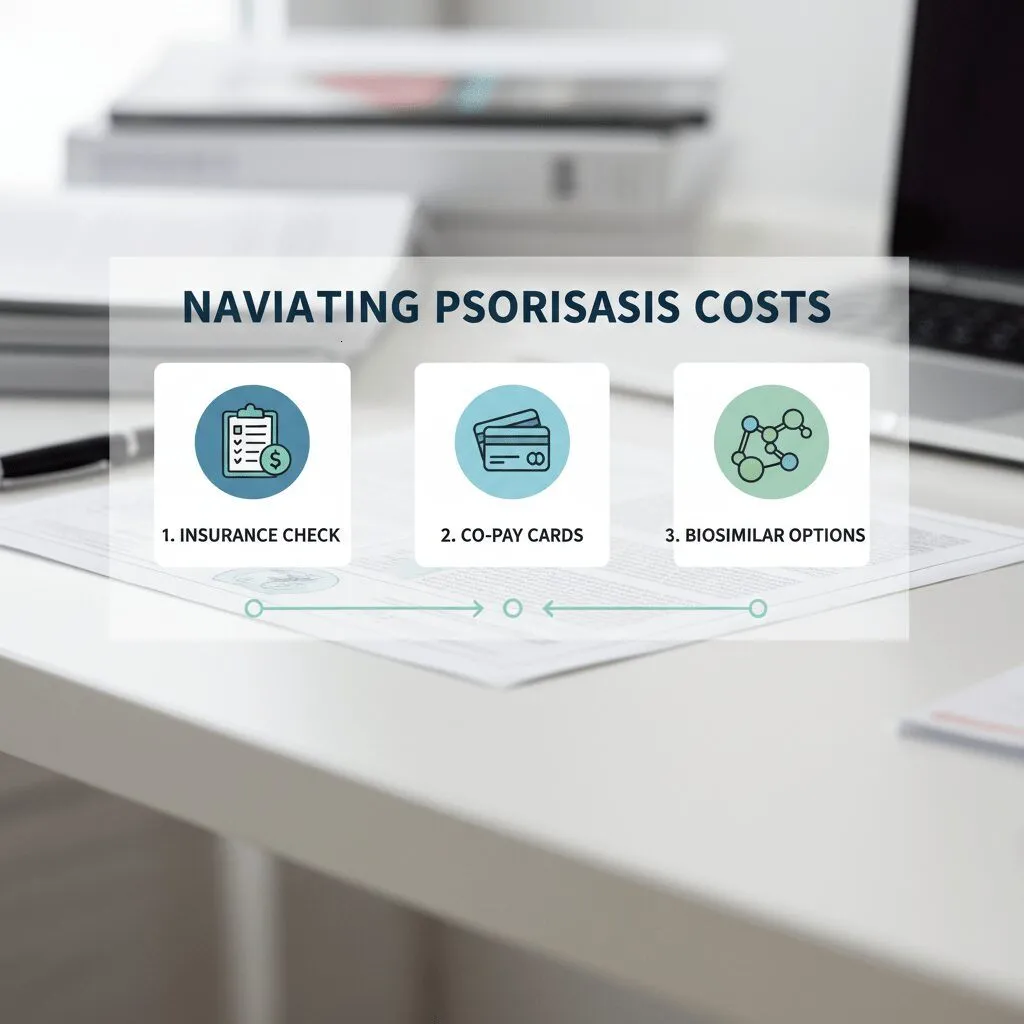
We have to address the elephant in the room: cost. The global psoriasis treatment market is massive, projected to reach $57.68 billion by 2032 according to Fortune Business Insights (2024), and that cost often trickles down to the patient.
Biologics can cost thousands per month. However, the introduction of biosimilars is changing the landscape. Biosimilars to Ustekinumab (Stelara), approved in late 2024, are expected to reduce treatment costs by 15-20%, according to Grand View Research (2024).
If you are struggling with costs:
- Check for Co-pay Accumulator Adjusters: Ensure your insurance counts your manufacturer co-pay card toward your deductible.
- Patient Assistance Programs: Almost every major drug manufacturer (AbbVie, Novartis, UCB) has a hardship program that provides free medication if you are uninsured or underinsured.
Frequently Asked Questions
The newest treatments focus on non-steroidal topicals like Tapinarof (Vtama) and Roflumilast (Zoryve), as well as highly effective IL-17 biologics like Bimekizumab (Bimzelx) which has shown high clearance rates.
Currently, there is no cure, so it does not go away “permanently” in the sense of being eradicated. However, modern treatments can induce long-term remission where skin remains clear for months or years.
It depends. A gluten-free diet is highly effective for patients who have a confirmed sensitivity to gluten or Celiac disease. However, for the general population, reducing ultra-processed foods (UPFs) shows a stronger correlation with reduced inflammation according to 2024 data.
Absolutely not. Psoriasis is an autoimmune disease, not an infection. You cannot catch it from touching someone, sharing towels, or swimming in the same pool.
Conclusion: Remission is the Goal
Navigating psoriasis is a journey, but the road is smoother now than it has ever been. We have moved from simply trying to reduce the itch to aiming for complete skin clearance.
Remember, inflammation is systemic. Addressing your skin also means protecting your heart and your joints. According to the National Psoriasis Foundation (2024), individuals with severe psoriasis experience up to a 39% increased risk of cardiovascular mortality. Treating your skin is, quite literally, protecting your heart.
If you are still relying on treatments from five years ago and aren’t seeing results, it is time to advocate for yourself. The data from 2024 and 2025 is clear: you do not have to settle for “manageable.” You can aim for clear.