 Johnson
The Scientific Guide: Best Way to Wash Your Face Without Drying It Out (2025 Update)
I remember the first time I realized I was destroying my face. I was standing in front of the mirror, my skin feeling tight, shiny, and “squeaky clean.” For years, I thought that squeak meant hygiene. In reality, it was the sound of my skin barrier crying for help.
You’ve probably felt it too—that immediate sense of dehydration the moment you towel off. It’s a frustrating cycle: you wash to remove impurities, but in the process, you strip away the very lipids that keep your skin healthy. It’s no wonder the global skin barrier product market has surged to a value of $5.1 billion in 2024, according to Exactitude Consultancy. We are collectively destroying our barriers and paying billions to fix them.
But you don’t need a ten-step recovery routine if you get the first step right. This isn’t just about splashing water on your face; it’s about adhering to a dermatological “Moisture-First” protocol.
In this guide, we will move beyond basic advice. We’re going to look at the chemistry of surfactants, the truth about water temperature, and why applying cleanser to dry skin might be the game-changer you’ve been looking for.
The Biology of the “Squeaky Clean” Mistake
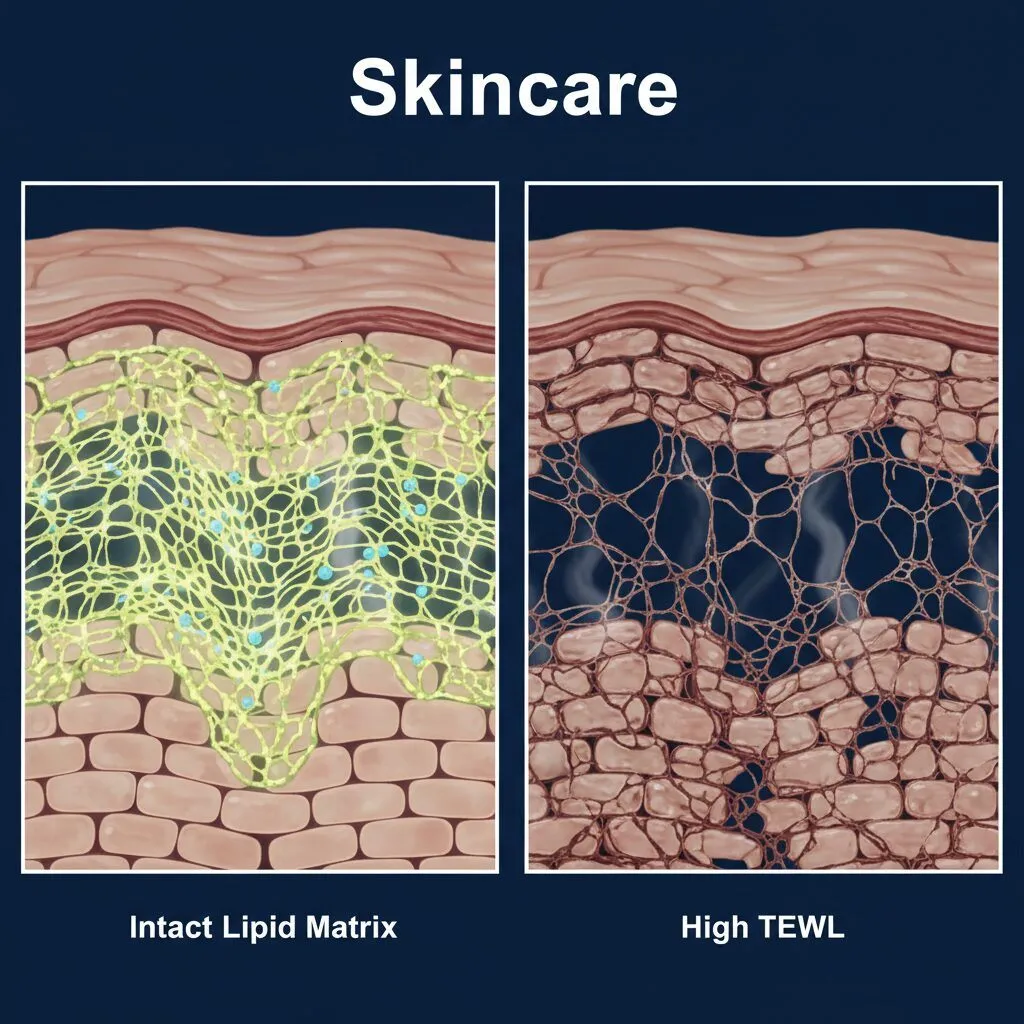
To understand the best way to wash your face without drying it out, you have to understand what you’re actually washing. Your skin’s outer layer, the Stratum Corneum, is often described as a “brick and mortar” structure. The bricks are your skin cells, and the mortar is a lipid matrix composed of ceramides, cholesterol, and fatty acids.
When you use a harsh, foaming cleanser, the surfactants (the cleaning agents) don’t distinguish between the dirt on your face and that precious lipid “mortar.” They strip everything.
Understanding Trans-Epidermal Water Loss (TEWL)
Once that lipid barrier is compromised, you experience Trans-Epidermal Water Loss (TEWL). This is the scientific term for moisture evaporating from your skin into the air. If you feel tight after washing, your TEWL has just spiked. This triggers your skin to overcompensate by producing more oil, often leading to the paradoxical situation where you have dry, flaky skin that is also breaking out.
— Dr. Hope Mitchell, Founder of Mitchell Dermatology, via NYMag/Strategist (May 2025)
The Moisture-Preserving Cleansing Protocol
Through my research and testing, I’ve found that how you wash is just as critical as what you wash with. Here is the optimized protocol for 2025.
1. The 98-Degree Rule (Lukewarm vs. Scalding)
There is a persistent myth that hot water opens pores and cold water closes them. Pores do not have muscles; they do not open and close. However, temperature matters immensely for hydration.
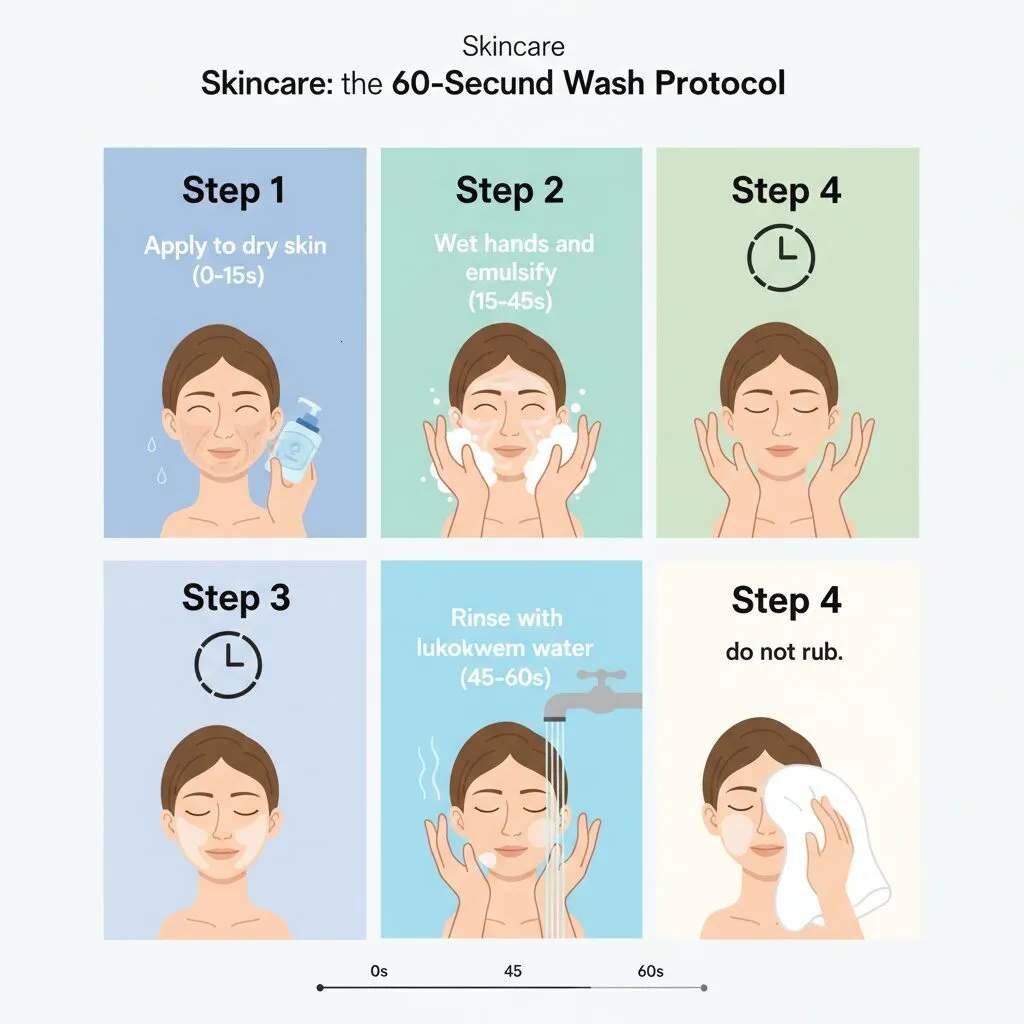
Hot water acts as a solvent. Just as hot water melts grease off a frying pan, it melts the natural moisturizing factors (NMF) off your face. The ideal temperature is lukewarm—roughly 98°F (36.6°C), or body temperature. If the water turns your skin red, it is inducing inflammation and accelerating dehydration.
2. The “Dry Cleanse” Method
Here is a technique that changed my skincare game completely. Instead of splashing your face with water first, apply your cream, oil, or milk cleanser directly onto dry skin.
Why? Water dilutes the cleanser immediately. By massaging the cleanser into dry skin, the oil-loving ends of the surfactants can grab onto sebum, sunscreen, and makeup more effectively without needing aggressive scrubbing. Once you’ve massaged it in, then add water to emulsify and rinse. This dramatically reduces the mechanical friction needed to clean your face.
3. The 60-Second Rule
Most of us spend about 10 seconds washing our faces. This isn’t enough time for the active ingredients in a hydrating facial cleanser to work. The “60-Second Rule” suggests massaging the cleanser gently for a full minute. This allows hydrating ingredients like glycerin or ceramides to deposit on the skin surface, even in a wash-off product.
Choosing Your Weapon: Cleanser Formulations for 2025
If you take nothing else away from this article, let it be this: Stop using bar soap on your face.
The human skin has a natural pH of around 4.7 to 5.5—slightly acidic. This acid mantle is vital for the skin microbiome balance. Traditional soaps are alkaline, with a pH ranging from 9 to 10.
The Rise of Syndets
This is where “Syndets” (Synthetic Detergents) come in. These are cleansers formulated to match the skin’s pH. A shocking study released in February 2024 highlighted the disparity in the market.
According to a study presented at the AAAAI Annual Meeting (2024), researchers analyzed 250 cleansing products. They found that all tested traditional soaps were alkaline (damaging), whereas 84.9% of liquid syndets were acidic (skin-compatible). Crucially, only 12.8% of products actually disclosed their pH on the label.
This means you cannot trust the front of the bottle. You have to look at the ingredients. Avoid sodium lauryl sulfate (SLS), which is a harsh foaming agent. Instead, look for gentle surfactants and barrier-repairing ingredients.
Recommended Ingredients for Dry Skin:
- Ceramides: Lipid molecules that repair the barrier.
- Glycerin: A humectant that pulls moisture into the skin.
- Hyaluronic Acid: Hydrates without adding grease.
- Squalane: An oil that mimics skin’s natural sebum.
— Dr. Joshua Zeichner, Director of Cosmetic Research at Mt. Sinai, via The Guardian (2025)
Interactive: Is Your Cleanser Too Harsh?
Quiz: Check Your Cleanser Severity
Select the statement that best fits your skin after washing:
Morning vs. Night: The Great Frequency Debate
One of the most common long-tail questions I encounter is: “Can I wash my face with just water in the morning?”
For those with dry or sensitive skin, the answer is increasingly leaning toward yes.
Over-washing is a primary cause of barrier dysfunction. If you performed a thorough double cleanse at night, your skin does not get “dirty” while you sleep; it simply produces a layer of natural oils. Removing these oils immediately in the morning with a detergent can set you back.
However, nighttime cleansing is non-negotiable. Throughout the day, your skin accumulates pollution, sunscreen, and oxidized oils. Dr. Corey L. Hartman, a dermatologist based in Birmingham, AL, explains the necessity of evening removal:
— Dr. Corey L. Hartman, via The Guardian (Aug 2025)
Interestingly, adhering to a gentle routine has significant benefits beyond just comfort. A recent study highlights how routine impacts skin integrity.
According to a December 2024 NIH/PMC study, adherence to face-washing guidelines varies significantly by gender, but those who stick to gentle, non-alcoholic cleansers show markedly better skin health outcomes. Furthermore, a case report from MDPI (2024) demonstrated that using pH-balanced moisturizers and cleansers reduced skin tear incidence by up to 50% in patients with fragile skin.
Advanced Tactics: Overcoming Environmental Driers
Sometimes, you do everything right—gentle cleanser, lukewarm water—and your skin still dries out. The culprit might be your environment.
Hard Water Filters
If you live in an area with hard water, the high mineral content (calcium and magnesium) can react with your skin oils to form a waxy residue that clogs pores and prevents moisturizers from absorbing. Hard water also has a high alkalinity. Installing a simple shower or tap filter can be the missing link in your hydration strategy.
The 3-Minute Moisture Window
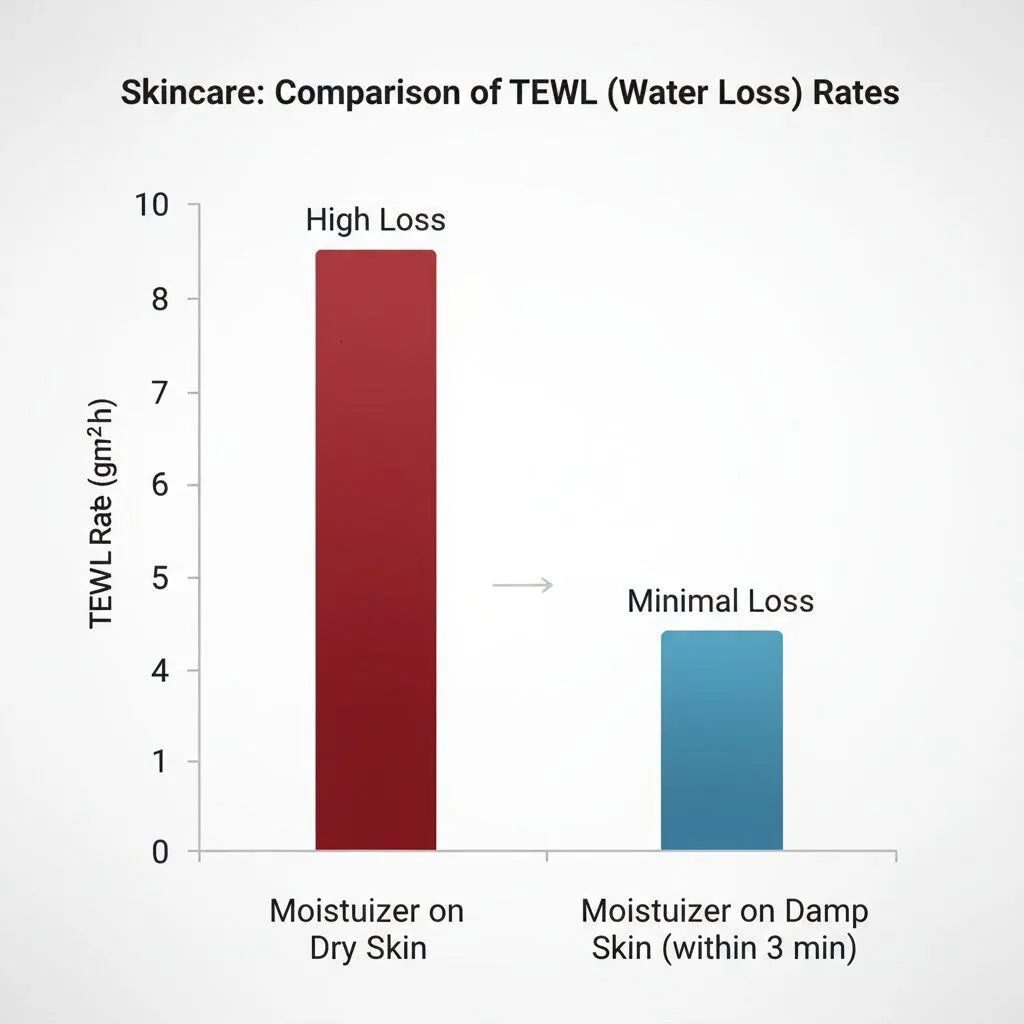
Timing is everything. After you pat your face dry (never rub!), you have a critical window of roughly 3 minutes where your skin is still damp. Applying your moisturizer during this window traps that surface water into the skin. If you wait until your skin is bone dry, the moisturizer sits on top rather than absorbing effectively.
FAQ: Common Cleansing Concerns
How can I wash my face in winter without drying it out?
In winter, humidity drops, and your skin loses water faster. Switch to an oil-to-milk cleanser or a cleansing balm. Consider washing your face only once a day (at night) and using a micellar water for sensitive skin in the morning if you feel you need a refresh.
Is double cleansing good for dry skin?
Yes, but choose your products wisely. Double cleansing involves an oil-based cleanser followed by a water-based one. For dry skin, ensure the second cleanser is a non-foaming cream or lotion. The oil step is actually beneficial as it dissolves makeup without scrubbing, which protects the skin barrier.
Does hot water cause dry skin on the face?
Absolutely. Hot water strips natural oils (sebum) that protect your skin. It can also dilate capillaries, leading to redness and sensitivity. Always stick to lukewarm water.
How to repair skin barrier after over-washing?
If you’ve overdone it, stop using all active ingredients (retinols, acids, exfoliants). Switch to a bland, fragrance-free cleanser and a heavy moisturizer containing ceramides and cholesterol. According to Physicians Weekly (2025), reporting on a study in the Journal of Cosmetic Dermatology, skin treated with specific barrier-repair formulas recovers significantly faster from harsh cleanser aggression than untreated skin.
Conclusion: The New Standard for Clean
The best way to wash your face without drying it out isn’t about buying the most expensive product; it’s about respecting your biology. That tight sensation you were taught to crave is actually a sign of damage.
By lowering your water temperature, switching to pH-balanced syndets or cream cleansers, and perhaps skipping the morning scrub, you can maintain a healthy, hydrated skin barrier. Remember, your skin is an organ of protection, not a surface to be scoured.
Your Action Plan for Tonight: Check the ingredients on your face wash. If you see Sodium Lauryl Sulfate or high alkalinity soap, toss it. Your skin barrier will thank you in the morning.