 Johnson
How Much Sunscreen for Your Face? The Definitive 2025 Guide to the “Two-Finger Rule”
Here is a terrifying piece of math: if you apply half the recommended amount of SPF 50, you aren’t getting SPF 25. You are likely getting something closer to SPF 7.
Let that sink in.
Most of us treat sunscreen like a precious serum, dabbing a few dots on the forehead and cheeks. But when it comes to UV radiation, “a little goes a long way” is a dangerous myth. According to updated 2024 testing protocols, the average consumer applies only 25% to 50% of the required sunscreen thickness.
Why does this matter? Because 80-90% of visible skin aging is caused by UV radiation, according to the Skin Cancer Foundation. If you are under-applying, you are essentially going out unprotected while thinking you’re safe.
This article is the definitive resource on how much sunscreen for face protection you actually need, moving beyond vague advice to concrete, measurable rules backed by the latest 2024/2025 dermatological standards.
The Gold Standard: How Much Sunscreen is Enough?
Before we get to the practical “hacks” like the two-finger rule, we need to understand the laboratory standard. This isn’t just arbitrary advice; it’s chemistry.
Sunscreen SPF (Sun Protection Factor) ratings are determined based on an application density of 2 milligrams per square centimeter (2mg/cm²) of skin. This is the global standard used by the FDA and international regulatory bodies.
The problem? 2mg/cm² is a lot of product. It feels heavy. It takes a minute to rub in. Because of this texture issue, studies published in the Journal of the American Academy of Dermatology show that most people apply between 0.5 and 1.0 mg/cm²—effectively diluting their protection.
Americans will develop skin cancer by age 70. Proper application volume is your first line of defense.
Source: Skin Cancer Foundation, Jan 2025
The 1/4 Teaspoon Rule (The Laboratory Standard)
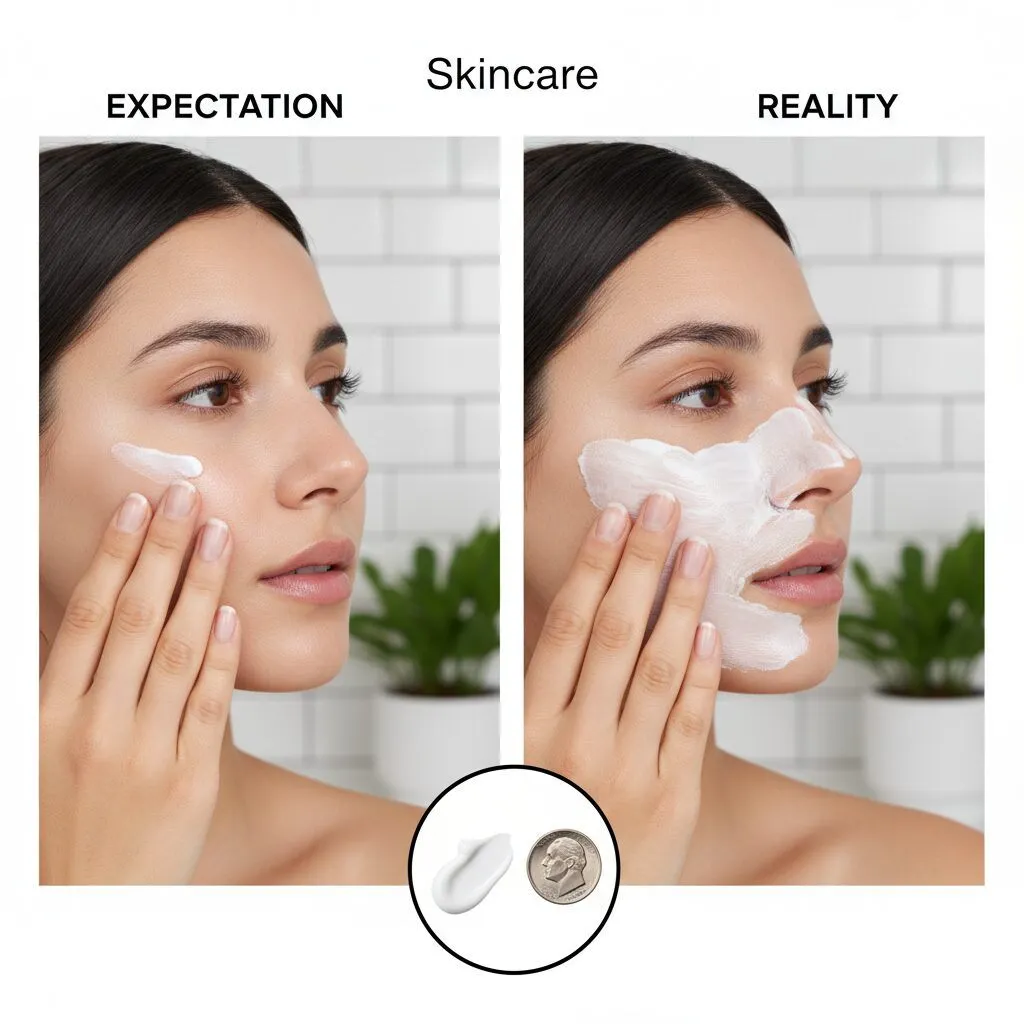
If you were to measure this out on a scale, 2mg/cm² translates roughly to 1/4 teaspoon for the average human face.
However, there is a catch that most articles miss: does “face” include your neck? Usually, no. If you want to cover your face and the front of your neck (which ages just as fast), you need closer to a 1/2 teaspoon or a nickel-sized dollop.
Dr. Jennifer Lin, a dermatologist cited by Harvard Health, clarifies this measurement: The most common mistake is using a ‘pea-sized’ amount. To get the SPF on the bottle, you need 2 milligrams per square centimeter of skin.
The “Two-Finger Rule”: The Practical Application
Nobody carries a measuring spoon into the bathroom in the morning. This is where the “Two-Finger Rule” saves the day. It is the most reliable visual metric for ensuring you hit that 1/4 teaspoon benchmark without making a mess.
How to Execute the Two-Finger Rule
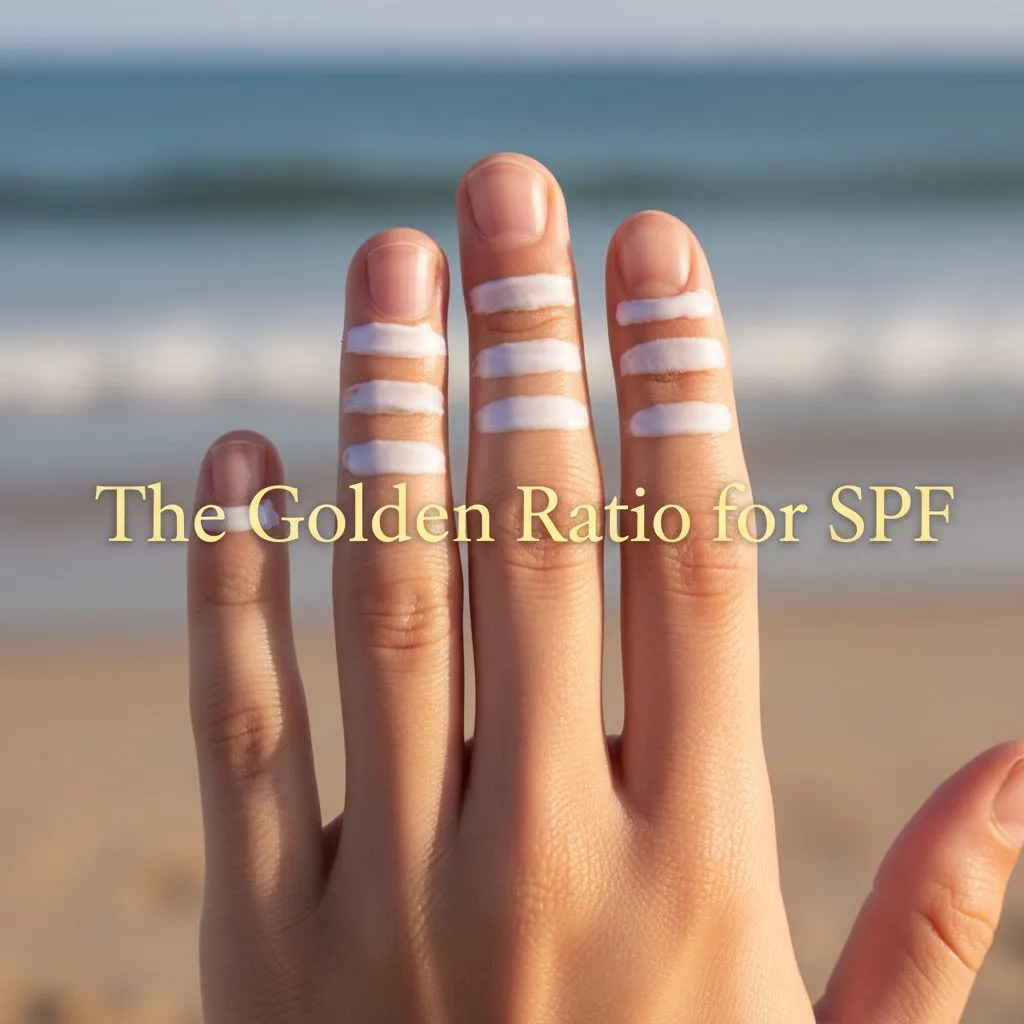
- Squeeze: Squeeze two strips of sunscreen onto your pointer finger and middle finger.
- Length: The strips should run from the crease where the finger joins the hand all the way to the tip.
- Apply: Use this amount for your face and neck.
According to clinical interviews with experts like Dr. Shari Marchbein (AAD), two full strips are generally sufficient to provide the labeled protection for the face and neck area.
Does Face Size Matter?
Yes, naturally. A petite face might achieve full coverage with just one and a half fingers, while a larger surface area might need a touch more. However, in sun protection, it is always safer to over-apply than under-apply. Your skin can only absorb so much; the excess will simply sit on top (which is exactly what you want physical blockers to do) or eventually absorb.
Measuring Different Formulations (Stick, Spray, Gel)
The “Two-Finger Rule” works beautifully for lotions and creams. But what about 2025’s trending formulations like sunscreen sticks and setting sprays? This is where many people accidentally fail their skin.
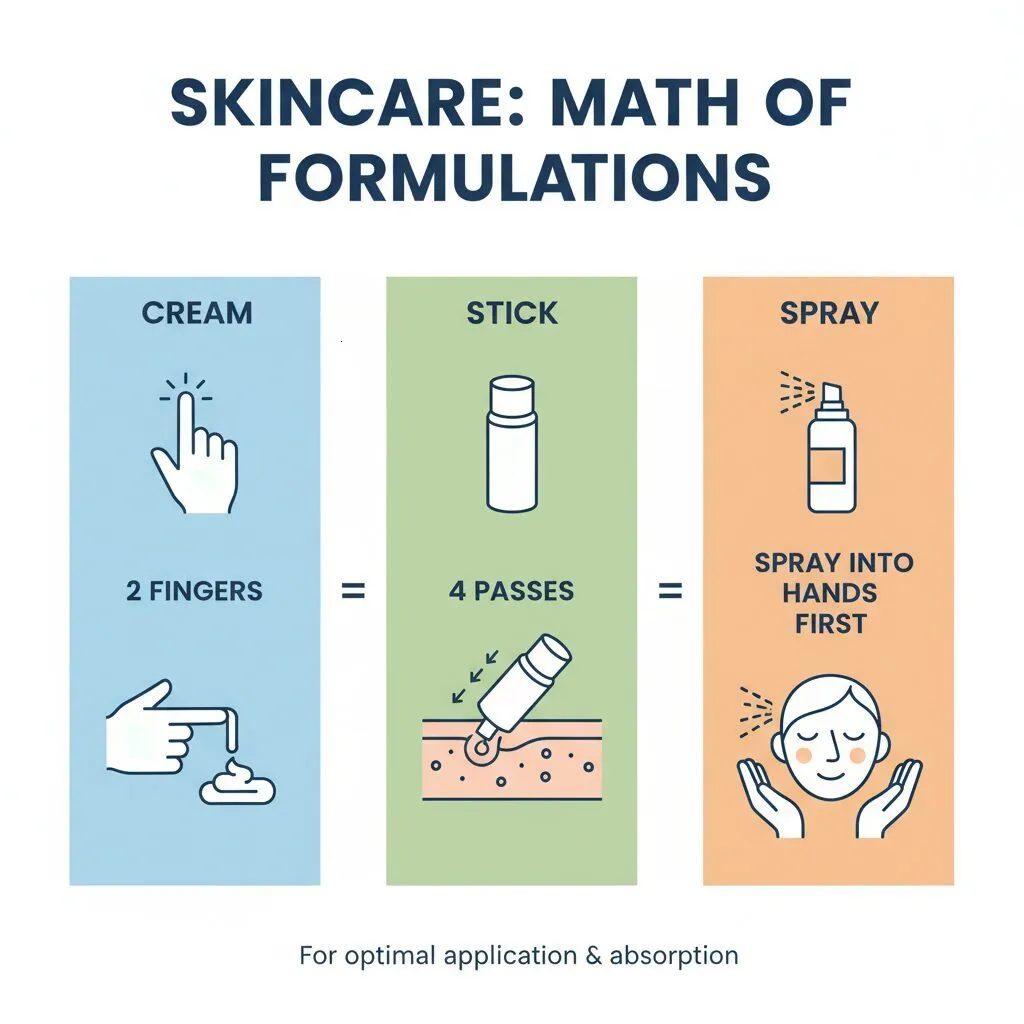
Sunscreen Sticks: The “4-Pass” Rule
Sunscreen sticks are incredibly popular for convenience and mess-free application. However, a single swipe across your cheek provides almost zero protection.
Recent data presented by the American Academy of Dermatology indicates that users need four passes back and forth over the same area to deposit enough product to match the SPF label. That means you shouldn’t just draw a line; you need to “color in” your entire face like a crayon, four times over.
Sprays: Never Spray Directly
How much spray sunscreen for your face? It’s a trick question. You should rarely spray directly onto the face due to inhalation risks and uneven coverage.
The Correct Method: Spray into the cup of your hand until you have a small pool of liquid (roughly that 1/4 teaspoon amount), then rub it onto your face. If you are using a “setting spray” with SPF, understand that these are for supplemental protection only. You would need to drench your face to the point of dripping to get SPF 50 from a fine mist.
The Science of Dilution: Why Quantity Matters More Than SPF Number
I often hear people say, “I use SPF 100, so I can use less of it.” This is mathematically incorrect and biologically risky.
SPF protection does not work on a linear scale relative to volume. It follows a curve. If you apply half the required amount of SPF 50, you don’t get SPF 25. You get the square root of the SPF, which drops your protection dramatically.
A 2024 study published in the Photodermatology, Photoimmunology & Photomedicine Journal highlighted this “SPF Dilution Effect.” The clinical trial demonstrated that users applying a thick layer of SPF 15 actually had better protection against DNA damage than users applying a thin, patchy layer of SPF 50.
The Takeaway: An SPF 30 applied generously is infinitely better than an SPF 100 applied sparingly.
The “Hidden” Zones: Where People Miss
Even when you measure the right amount, coverage matters. In my experience reviewing skin cancer case studies, lesions frequently appear in specific “forgotten” zones.
- The Eyelids: 5% to 10% of all skin cancers occur on the eyelids. Use a mineral stick here if chemical filters sting your eyes.
- The Ears: The tops of the ears are a prime spot for basal cell carcinoma. Don’t ignore them.
- The Hairline: We tend to stop an inch before the hair to avoid grease. This leaves a vulnerable strip of skin exposed to direct overhead sun.
- The Lips: Your face sunscreen isn’t enough; use an SPF lip balm.
Reapplication Math: The 2-Hour Clock
Applying enough in the morning is step one. But sunscreen isn’t armor; it’s a sacrificial layer. It breaks down as it absorbs UV energy. This is why the FDA mandates the “reapply every 2 hours” warning on labels.
However, according to a 2024 CDC Health Statistics Report, only 33% of adults reapply sunscreen. If you apply at 8:00 AM, by 10:30 AM, your protection is compromised.
How to Reapply Over Makeup
This is the number one question I get. You’ve done your makeup; you can’t just smear lotion over it. Here is the compromise:
- Blot: Remove excess oil.
- SPF Powder/Spray: While I mentioned sprays aren’t enough for the base layer, they are acceptable for touch-ups.
- Stippling: Use a damp beauty sponge with lotion SPF and gently press (don’t drag) it over your makeup.
The Sunscreen Calculator: Is Your Bottle Lasting Too Long?
One of the easiest ways to audit your own habits is to look at how quickly you finish a bottle. If you have had the same tube of facial sunscreen for six months, you are under-applying.
Let’s do the math for a standard 50ml (1.7 oz) bottle used on the face and neck daily.
| Usage Pattern | Daily Amount Needed | Days Bottle Will Last |
|---|---|---|
| Face Only (Once Daily) | ~1.2 ml (1/4 tsp) | ~41 Days |
| Face & Neck (Once Daily) | ~2.5 ml (1/2 tsp) | ~20 Days |
| Face & Neck (With 1 Reapplication) | ~5.0 ml (1 tsp) | ~10 Days |
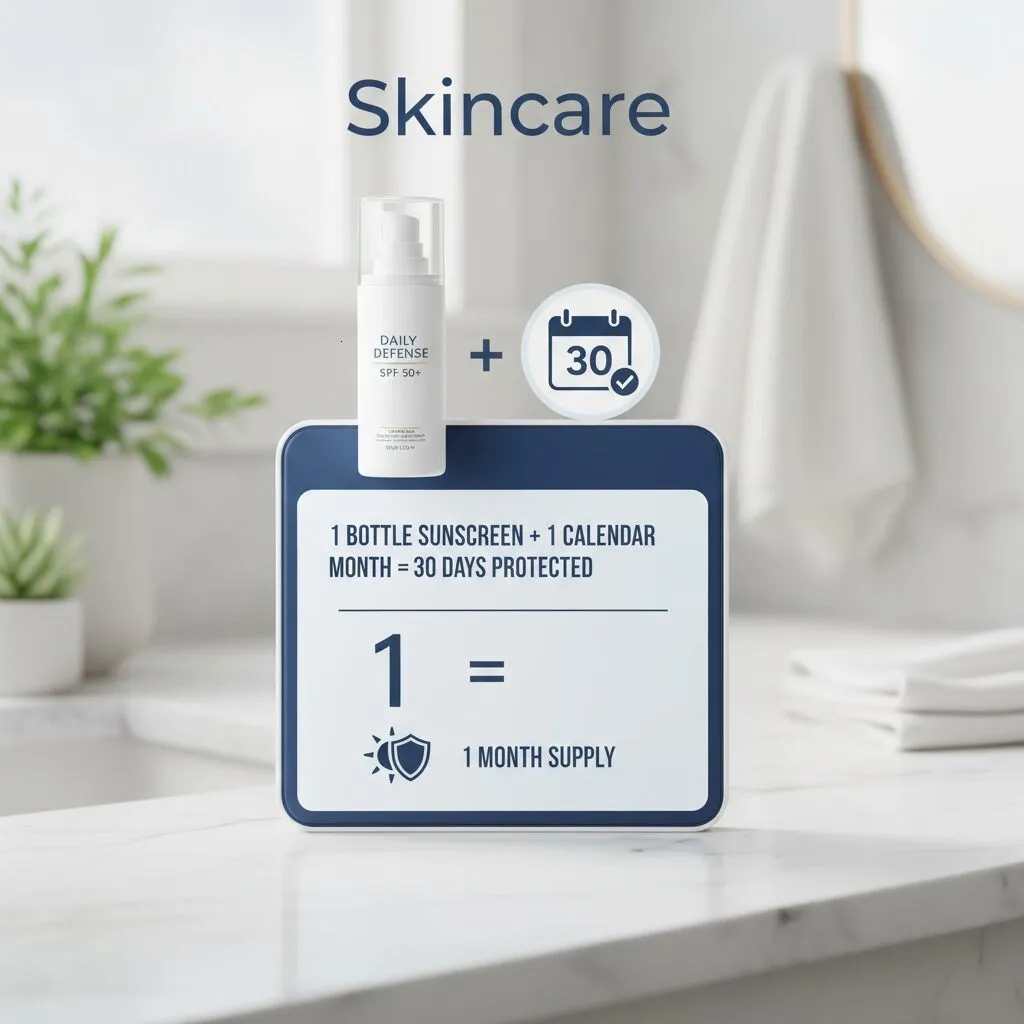
If you are serious about anti-aging and prevention, a standard facial sunscreen bottle should effectively be a monthly subscription.
FAQ: Common Questions on Sunscreen Amount
Is 1/2 teaspoon too much sunscreen for oily skin?
It can feel like too much if the formulation is heavy. For oily skin, look for “lightweight,” “fluid,” or “serum” textures. These absorb faster, allowing you to apply the full 1/2 teaspoon without feeling greasy.
How many fingers of sunscreen for face and neck?
The standard recommendation is two full fingers (index and middle) for the face and neck combined. If you are covering your chest (décolletage) as well, add a third finger length.
Does mixing sunscreen with moisturizer affect the amount needed?
Never mix them. Mixing sunscreen with moisturizer dilutes the formula and creates gaps in the protective film. Apply your moisturizer first, let it dry, and then apply your full layer of sunscreen.
How much sunscreen for a toddler’s face?
Children have a smaller surface area. The American Academy of Dermatology suggests covering all exposed skin thoroughly. For a small child’s face, the “two-finger rule” might be excessive; aim for visible coverage that requires rubbing in, ensuring the “white cast” disappears only after thorough blending.
Do I need the same amount of sunscreen indoors?
UVA rays (the aging rays) penetrate glass. If you sit near a window or drive, yes, you need protection. However, if you are in a windowless room all day, you may skip the 2-hour reapplication, but the initial morning application remains crucial.
Conclusion: Measure, Apply, Repeat
We often overcomplicate skincare with 10-step routines, yet we fail at the most scientifically proven step. The difference between “applying sunscreen” and “being protected” is volume.
To summarize the definitive rules for 2025:
- The Volume: 1/4 teaspoon for the face, or a nickel-sized dollop.
- The Method: The Two-Finger Rule (face and neck).
- The Stick Math: 4 passes, not one.
- The Audit: If your bottle lasts all summer, you’re using it wrong.
Protecting your skin is an investment. Don’t shortchange yourself by skimping on the product. Squeeze out that extra line of SPF—your future self will thank you.