 Johnson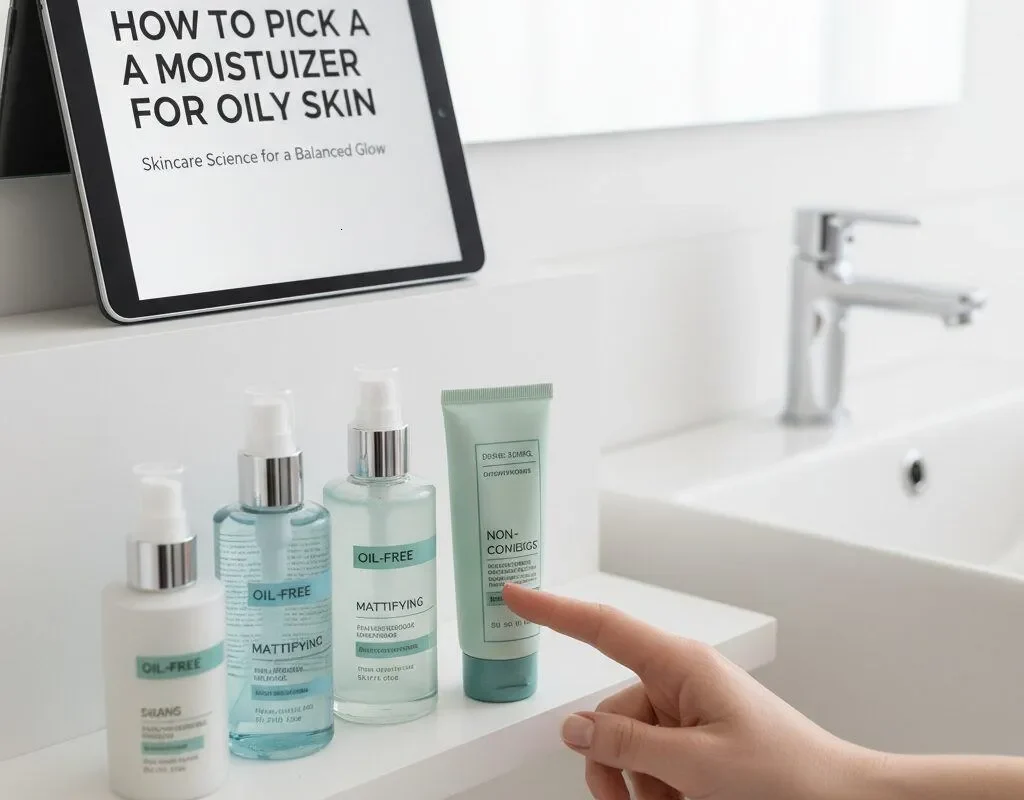
How to Pick a Moisturizer for Oily Skin: A Science-Backed 2025 Guide
It feels like a paradox, doesn’t it? You wake up, look in the mirror, and see enough shine on your forehead to reflect a signal to outer space. Yet, the moment you wash your face, your skin feels tight, uncomfortable, and strangely fragile. This is the daily reality for millions, and if you’ve been skipping moisturizer because you think it will make your “oil slick” worse, you are likely part of the majority making a critical skincare error.
I’ve seen it time and time again in the skincare community: the belief that oily skin needs to be “dried out” to be controlled. But modern dermatology tells a different story. In fact, skipping hydration might be the very engine driving your excess sebum production.
Navigating the skincare aisle is no longer just about picking a pretty bottle. With the oily skin skincare market projected to reach $2.88 Billion by 2025 according to Cognitive Market Research, the options are overwhelming. But quantity doesn’t equal quality.
In this guide, we are going to strip away the marketing fluff. You will learn to decode ingredient labels like a chemist, understand the critical difference between oil and water in your skin, and find a formula that regulates sebum rather than just sitting on top of it. Let’s fix your moisture barrier.
The Science of Oily Skin: Why You Still Need Hydration
To pick the right product, you first have to understand what is happening beneath the surface. Many people conflate “oil” with “moisture,” but biologically, they are two completely different entities.
Sebum vs. Hydration
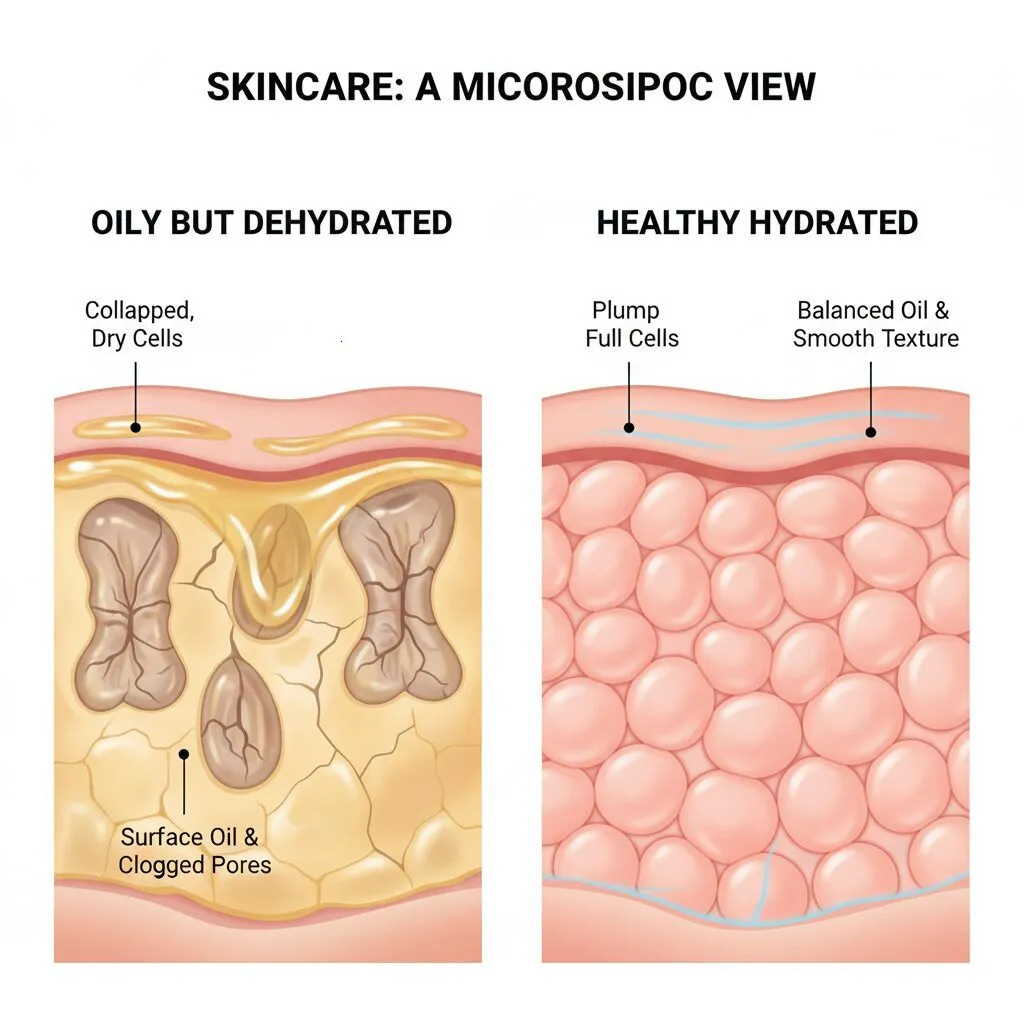
Sebum is the waxy substance produced by your sebaceous glands to protect the skin. Hydration refers to the water content within the skin cells (specifically the stratum corneum). You can have an abundance of oil sitting on the surface while your actual skin cells are starving for water. This condition is known as dehydrated oily skin.
Dr. Samantha Ellis, a Board-Certified Dermatologist, puts it perfectly: “Oily skin can still be dehydrated. Moisturizers aren’t just for oil; they trap water to help with plumping.”
The “Overcompensation” Myth and TEWL
Here is where things get interesting. When you strip your skin of all moisture using harsh cleansers and zero moisturizers, you damage the skin barrier. This leads to Transepidermal Water Loss (TEWL)—where water evaporates from your skin into the air.
Your skin senses this loss of water and panic-reacts. It can’t produce water, so it produces the only thing it can: more oil. By skipping moisturizer, you aren’t drying out your acne; you are likely fueling it.
“If someone never uses a moisturizer, their skin cells are going to be like raisins… they’ll be more like a grape and not as wrinkly when they moisturize.”
— Dr. Shilpi Khetarpal, MD, Cleveland Clinic (April 2025)
of dermatologists report patients misdiagnosing dehydration as dryness or simply “bad skin,” leading to incorrect product choices. (ResearchGate Survey, 2024)
The “30-Minute Wash Test”: Diagnose Before You Buy
Before you spend a dime, let’s verify your skin state. I recommend this simple test to determine if you are truly oily or just dehydrated-oily.
- Wash your face with a gentle cleanser.
- Pat dry and do not apply any products.
- Wait exactly 30 minutes.
- Analyze:
- True Oily: You see shine on your nose and forehead, and your cheeks feel fine.
- Dehydrated Oily: You see shine, but your skin feels tight when you smile, or you see tiny crepey lines.
Decoding the Label: Must-Have Ingredients for Oily Skin
2024 and 2025 have been breakthrough years for skincare formulations. We’ve moved past the days of chalky mattifying lotions. According to Dr. John Barbieri, Director of the Advanced Acne Clinic at Harvard/Brigham, “2024 was a year of breakthroughs in optimized vehicles… using advanced formulations to minimize irritation.”
When scanning the back of a bottle, look for these three categories of ingredients:
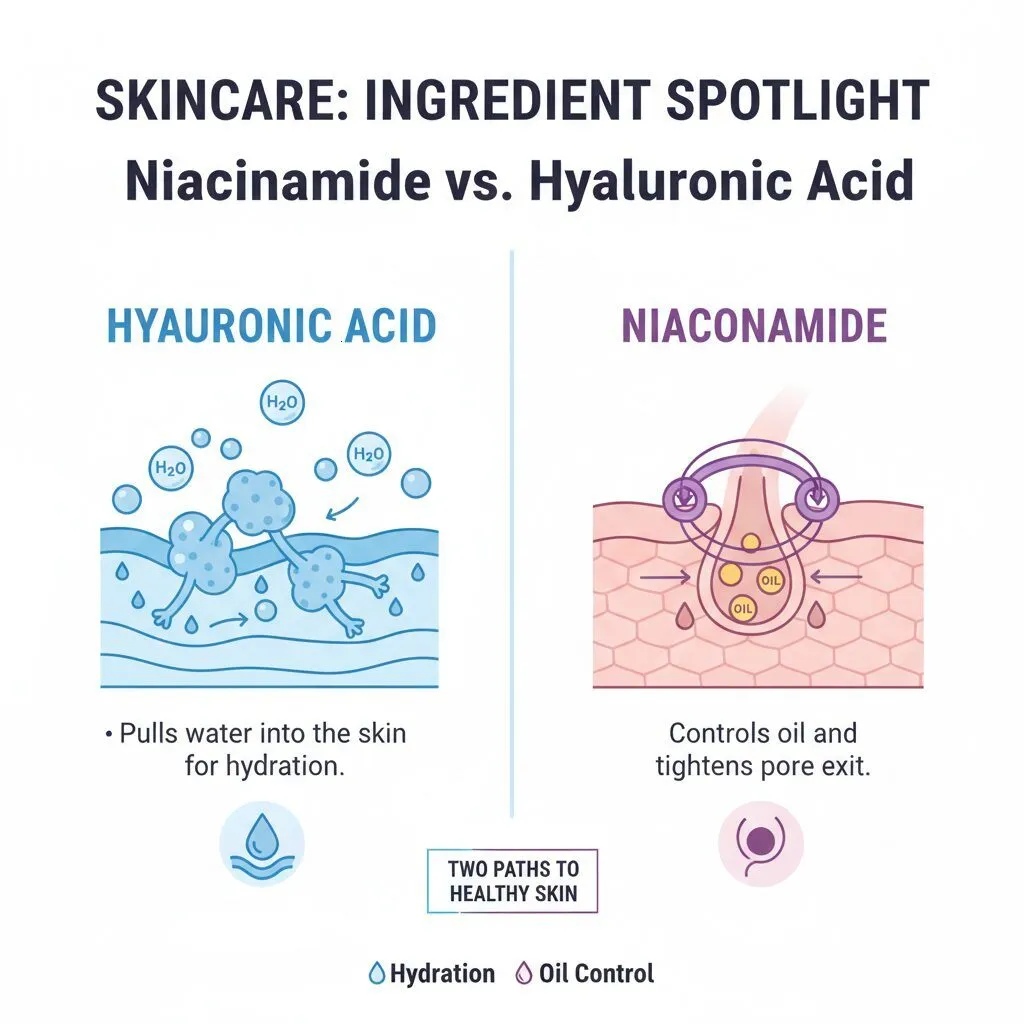
1. Humectants (The Water Magnets)
Humectants draw water from the air or deeper layers of skin into the epidermis without adding weight. They are non-negotiable for oily skin.
- Hyaluronic Acid: Can hold up to 1,000 times its weight in water. Look for multi-molecular weights for deeper penetration.
- Glycerin: The gold standard. It’s cheap, effective, and mimics the skin’s natural moisturizing factors.
2. Sebum Regulators (The Oil Controllers)
These ingredients don’t just soak up oil; they talk to your pores to reduce production.
- Niacinamide (Vitamin B3): A powerhouse that strengthens the barrier and regulates oil.
- Zinc PCA: Acts as a physical astringent to reduce surface shine.
3. Chemical Exfoliants (The Pore Clearers)
For acne-prone oily skin, mild exfoliation within a moisturizer prevents clogging.
- Salicylic Acid (BHA): This is oil-soluble, meaning it can dive inside the pore to dissolve gunk.
Case Study: The Power of Gel Formulations
A recent study published by the NIH in July 2025 tracked 42 participants with oily/acne-prone skin using a salicylic acid-based gel. The results were undeniable:
- 23.65% decrease in sebum levels.
- 40.5% increase in skin hydration.
- 49.26% reduction in Transepidermal Water Loss (TEWL).
Source: NIH/PubMed (July 2025)
Texture Matters: Gel vs. Cream vs. Lotion
In my years analyzing skincare, I’ve found that texture is often more important than the active ingredients for compliance. If it feels heavy, you won’t wear it.
| Formula Type | Best For | Why It Works for Oily Skin |
|---|---|---|
| Gel Moisturizer | Extreme Oily / Acne-Prone | Water-based, zero oils, evaporates quickly leaving a matte finish. Best for humid climates. |
| Gel-Cream (Water Cream) | Dehydrated Oily | Hybrids that offer the hydration of a cream with the weightlessness of a gel. Usually contains silicone for smoothing. |
| Lotion | Combination Skin | Lightweight emulsion. Good if you have dry cheeks but an oily T-zone. |
Red Flags: Ingredients to Avoid
Just as important as what you put on your face is what you keep off it. Given that acne affects approximately 20.5% of the global population over age 16 (Pierre Fabre/JAAD, 2024), avoiding comedogenic (pore-clogging) ingredients is vital.
- Coconut Oil: Highly comedogenic. While great for the body, it is a nightmare for oily faces.
- Cocoa Butter: Too heavy and likely to cause congestion.
- Petrolatum (in high concentrations): While excellent for dry skin, it creates an occlusive seal that can trap heat and bacteria in oily skin, potentially leading to breakouts.
- Isopropyl Myristate: A texture enhancer that is notorious for causing acne mechanica.
Interactive Tool: Do You Need a Heavy or Light Moisturizer?
The 2025 Shopping Checklist
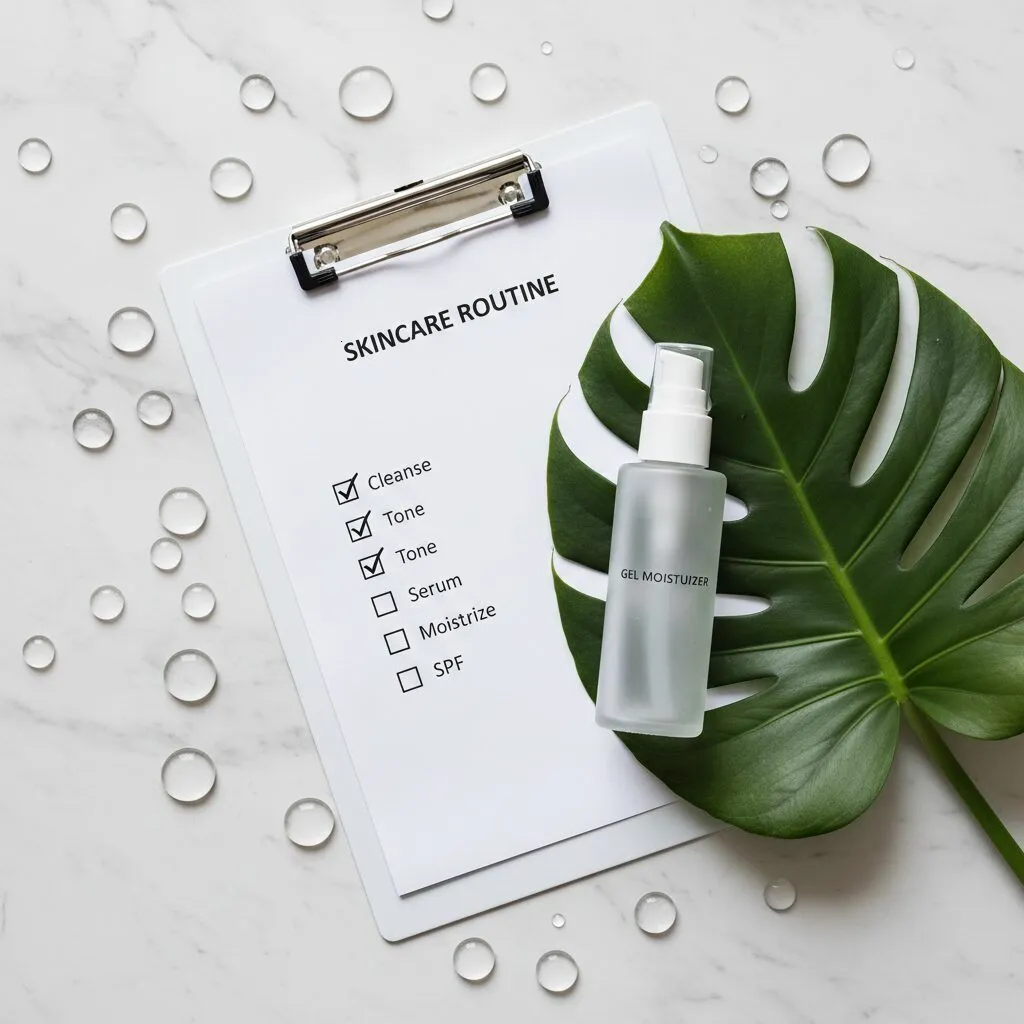
Ready to shop? Take a screenshot of this checklist. Do not buy a product unless it ticks these boxes:
- [ ] Label says “Non-Comedogenic” or “Non-Acnegenic” (Won’t clog pores).
- [ ] Fragrance-Free (Fragrance is a common irritant that can trigger inflammation-based oil production).
- [ ] First ingredient is Water (Aqua).
- [ ] Contains at least one Humectant (Glycerin, Hyaluronic Acid, Sodium Hyaluronate).
- [ ] Free from Mineral Oil and Coconut Oil.
Frequently Asked Questions
1. Do I really need a moisturizer if my skin is extremely oily?
Yes. As established by the American Academy of Dermatology, stripping moisture can lead to rebound oil production. If you skip moisturizer, your skin assumes it is drying out and pumps more oil to protect itself. A lightweight gel stops this cycle.
2. Why is my face oily but feels tight?
This is the classic sign of dehydrated skin. You lack water, not oil. You need to focus on hydration (water-based products) rather than moisturizing (oil-based products). Look for “hydro-boost” or “water gel” products.
3. Can moisturizer cause more acne?
Only if you pick the wrong one. If you use a cream rich in shea butter or coconut oil, yes, you will likely break out. However, using a non-comedogenic gel with salicylic acid can actually reduce acne by keeping pores clear, as shown in the 2025 NIH study.
4. Is Hyaluronic Acid safe for oily skin?
It is not just safe; it is ideal. Hyaluronic Acid is a sugar molecule, not an oil. It hydrates without adding grease, making it the perfect ingredient for oily skin types.
5. Should I use a different moisturizer for day and night?
Ideally, yes. In the morning, use a lightweight gel with SPF protection. At night, you can use a slightly more hydrating gel-cream to repair the skin barrier while you sleep, as TEWL increases overnight.
Conclusion: The Balance is Within Reach
Finding the holy grail moisturizer for oily skin isn’t about trial and error anymore; it’s about science. The days of drying your face into submission are over. We now know that the path to a clear, matte complexion involves respecting your skin barrier, not destroying it.
Remember the golden rule: Hydration is water, moisture is oil. Your oily skin has plenty of the latter but is desperate for the former. By selecting a gel-based formula rich in humectants like glycerin and hyaluronic acid, and avoiding heavy occlusives, you can flip the switch on your skin’s oil production.
Don’t let the fear of shine keep you from the health of hydration. Start with the “30-Minute Wash Test” tonight, and treat your skin with the balance it deserves.