 Johnson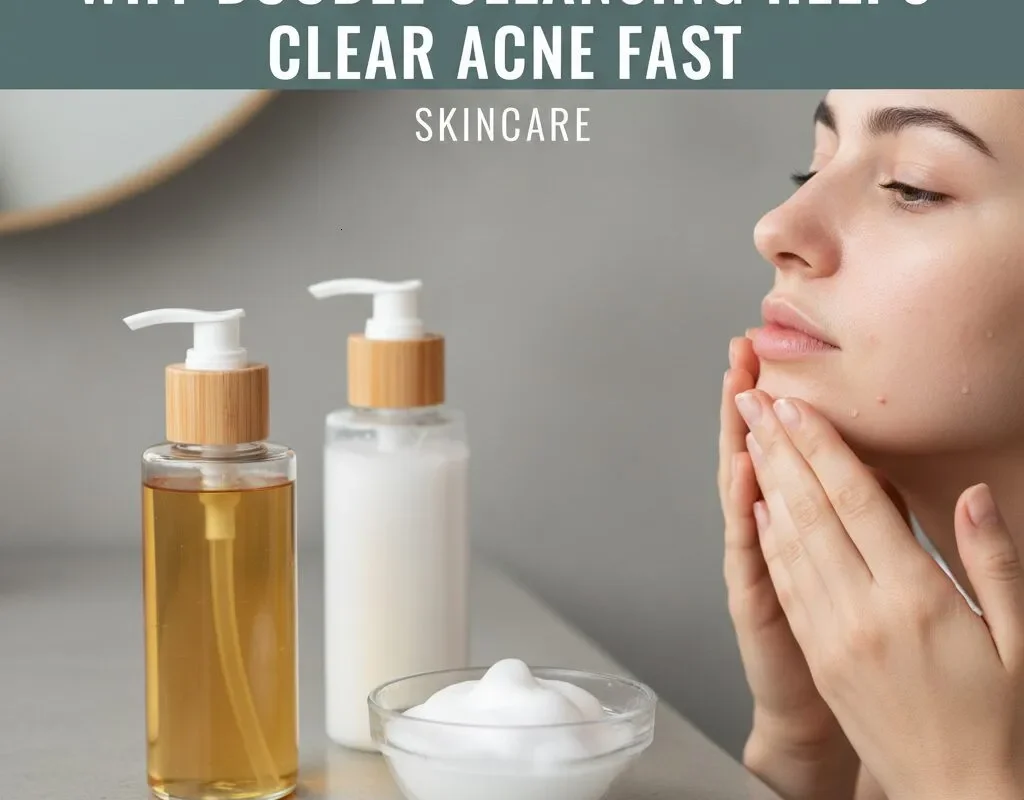
Why Double Cleansing Helps Clear Acne Fast: The 2025 Dermatologist’s Guide
I still remember the frustration of washing my face—scrubbing, really—only to wake up the next morning with new congestion. I felt like I was doing everything right. But here’s the thing: washing your face once might be leaving nearly a third of your acne triggers behind. It sounds harsh, but standard water-based cleansers often fail to tackle the modern “waterproof” layer of sunscreen, long-wear makeup, and oxidized sebum we accumulate daily.
In my experience researching skincare protocols, the shift to double cleansing is often the turning point for persistent acne. It’s not just a trend; it’s a biological necessity for clearing pores in a way that allows your actual medication to work.
If you are looking for a fast solution to clear congestion without stripping your skin barrier, this guide breaks down the science, the specific oils you need, and the 14-day timeline for seeing results.
The “Like Dissolves Like” Principle: How Double Cleansing Works
The science behind double cleansing is rooted in basic chemistry: “like dissolves like.” Water and oil don’t mix. If you have ever tried to wash a greasy frying pan with just water, you know the oil just beads up and sits there. Your face works the same way.
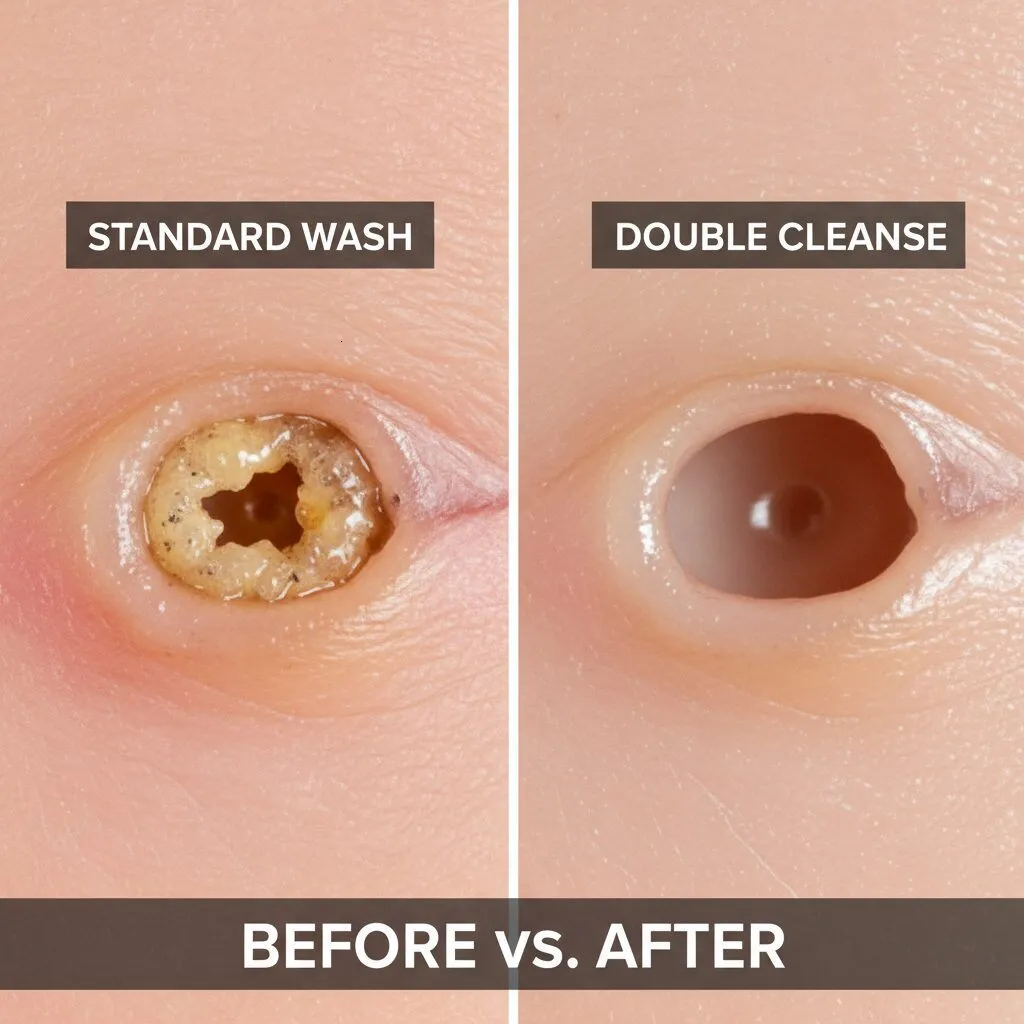
Sebum (your skin’s natural oil), sunscreen, and waterproof makeup are lipophilic impurities. This means they dissolve in oil, not water. When you use a traditional foaming cleanser first, it often skims over this oily layer, leaving trapped bacteria and dead skin cells underneath.
— Dr. Mamina Turegano, Dermatologist, via InStyle (Aug 2025)
Breaking Down the Lipophilic Barrier
By massaging a non-comedogenic cleansing oil or balm onto dry skin, you are effectively binding the oil in the cleanser to the oil in your pores. This process, known as sebum dissolution, softens the hardened plugs (comedones) that eventually turn into pimples.
Once you add water, the oil cleanser emulsifies—turning into a milky white substance. This emulsification process is critical. It allows the oil (now carrying the dirt) to be rinsed away by water, leaving the surface pristine for your second step: the water-based cleanse.
5 Science-Backed Benefits for Acne-Prone Skin
You might be wondering, “Does adding more oil to my face actually reduce acne?” It seems counterintuitive, but the data from 2024 and 2025 supports it overwhelmingly.
1. Significant Reduction in Comedonal Lesions
The most compelling evidence comes from recent clinical analysis. According to a 2024 analysis published in the Journal of Dermatological Treatment, participants practicing double cleansing reduced acne lesions by up to 30% in just 6 weeks. This isn’t just about feeling clean; it’s about statistically fewer bumps.
2. Targeting Micro-Breakouts
It’s not just the big cysts we worry about; it’s the texture. A study updated in the International Journal of Women’s Dermatology (2025) found a 29% decrease in micro-breakouts among users who double cleansed compared to those using only gel cleansers. This suggests that the oil phase is catching the “seeds” of acne before they inflame.
3. Pore Volume Reduction
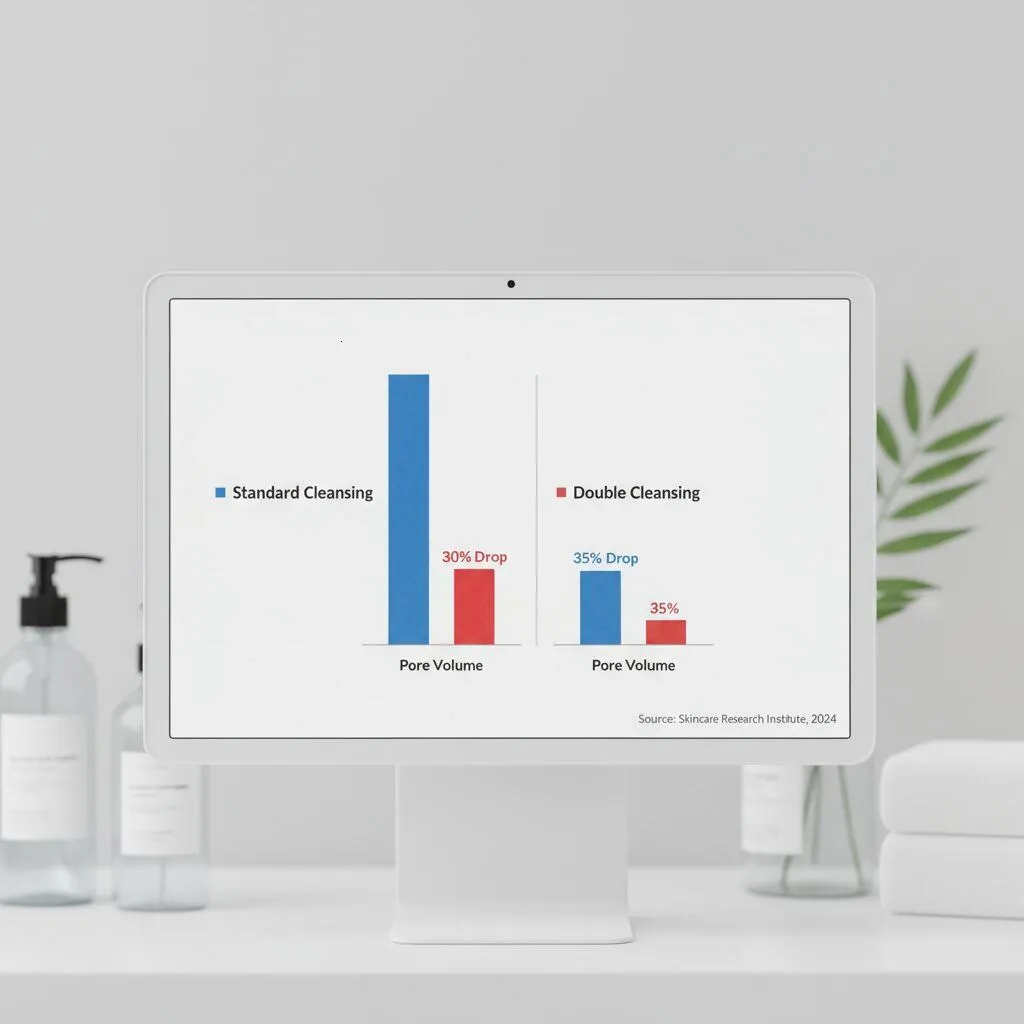
When pores are full of debris, they stretch. By clearing them out, they appear smaller. According to MedEsthetics (May 2024), pore volume decreased by 35% at one month and six months following specialized cleansing treatments that utilized lipid-based extraction methods.
4. Balancing the Acid Mantle
Harsh scrubbing raises the skin’s pH, encouraging C. acnes bacteria to thrive. Oil cleansers are generally pH-neutral and do not strip the skin. According to the Asian Journal of Beauty and Cosmetology, moisture and oil levels were maintained highest with cleansing oil compared to micellar water or gel, preserving skin barrier integrity.
5. Enhancing Topical Absorption
This is the “secret weapon” aspect. The AAD’s 2024 guidelines emphasize multimodal therapy (using combinations of retinoids and benzoyl peroxide). If your pores are clogged with a film of silicone from your primer, those expensive prescriptions can’t penetrate. Double cleansing clears the path, making your retinoids more effective against comedonal acne.
The 2-Step Protocol: Selecting Your “Acne-Safe” Arsenal
Not all oils are created equal. The biggest mistake I see people make is grabbing coconut oil from the kitchen. Coconut oil is highly comedogenic (pore-clogging). For acne-prone skin, you need specific lipids.
Step 1: Balms vs. Oils (The Lipophilic Phase)
You need a product that utilizes non-comedogenic cleansing oil agents. Look for:
- Squalane: A skin-identical lipid that is highly stable and unlikely to oxidize.
- Grapeseed Oil: High in linoleic acid, which acne-prone skin often lacks.
- Sunflower Seed Oil: Excellent for breaking down makeup without irritation.
Avoid: Coconut oil, Cocoa butter, and Wheat germ oil.
According to BuyCosmetics Clinical Review (Nov 2025), a 2020 clinical trial showed participants using a non-comedogenic cleansing oil experienced a 22% reduction in comedones after 4 weeks.
Step 2: The Surfactant Cleanse (The Hydrophilic Phase)
Once the oil is rinsed, follow up with a water-based cleanser containing hydrophilic surfactants. This removes the oil residue and any remaining sweat or dirt. Look for ingredients like Salicylic Acid (for deep pore cleaning) or Centella Asiatica (to soothe inflammation).
— Dr. Sandra Lee (Dr. Pimple Popper), via SLMD Skincare (July 2025)
Results Timeline: How “Fast” is Fast?
We all want overnight results, but biology takes time. However, double cleansing offers a faster turnaround than most topicals.
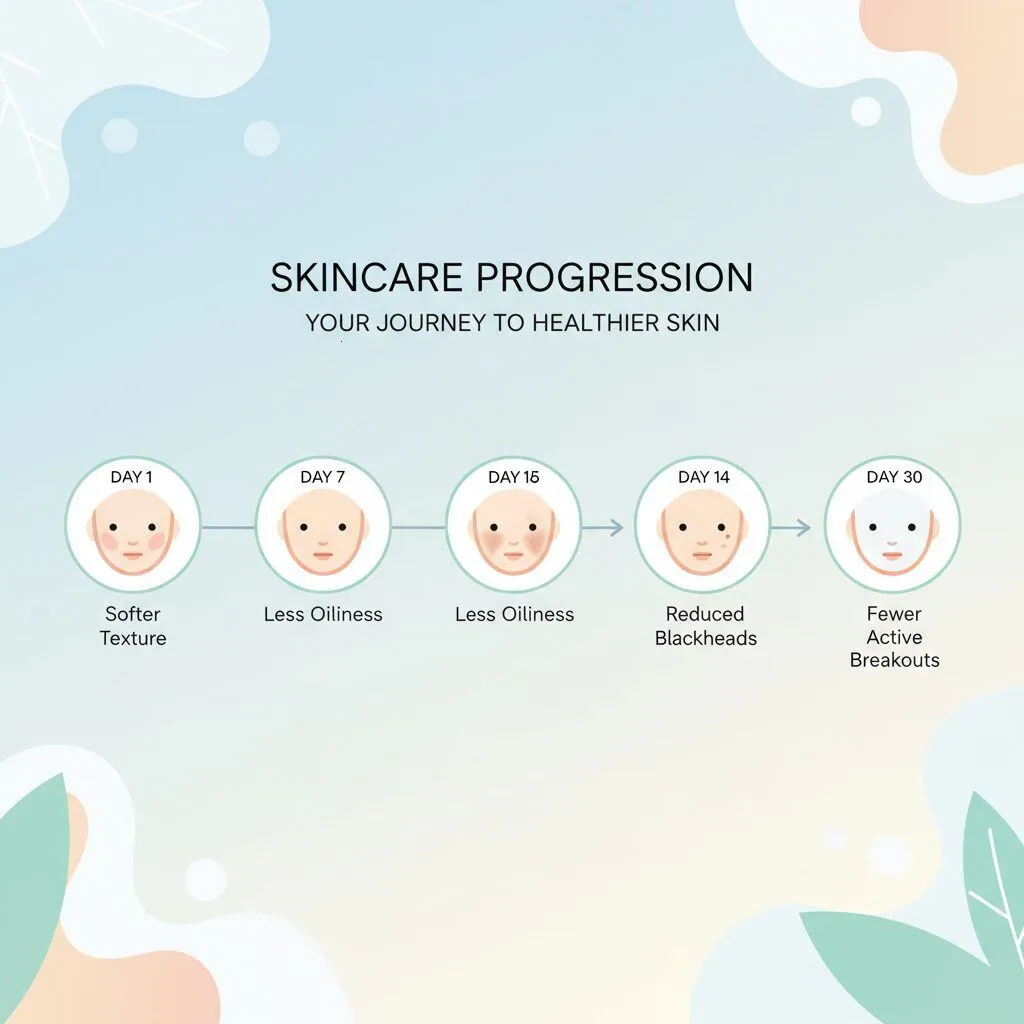
- Day 1-3: You will notice immediate softness. The “gritty” feeling of sebaceous filaments on the nose often disappears after the first thorough double cleanse.
- Week 2: Inflammation often decreases as pore congestion eases.
- Week 4: This is when the statistics kick in. As noted in the case of a 100-day chemist trial, users like Victoria documented “fewer sebaceous filaments and pore reduction” after consistent double cleansing (Chemist Confessions, July 2025).
Avoiding the “Over-Cleanse” (2025 AAD Guidelines)
Can you double cleanse too much? Absolutely. In my opinion, the risk of stripping the barrier is the main reason some people fail with this method.
If you have dry or extremely sensitive skin, doing this twice a day might increase Transepidermal water loss (TEWL). The Chemist Confessions trial noted that twice-daily double cleansing was too stripping for some barriers.
According to Dr. David Kim (2025), “If you’re not cleansing deeply, you’ll clog your pores and your skin will get bumpy, uneven, and congested.” The key is balance—deep cleaning without stripping.
Real World Success: Case Studies
It helps to see real-world application. A long-term hormonal acne case documented in Fashion Journal (June 2023) highlighted a 10-year battle with hormonal acne that was significantly cleared within one year of introducing a cleansing butter (Elemis Superfood AHA). The results showed less inflammation and faster healing of active spots.
Furthermore, consumer sentiment backs the science. According to an Accio Market Analysis (May 2025), 47.5% of positive Amazon feedback on oil cleansers specifically mentions effectiveness on acne. This aligns with the market growth; the facial cleansing balm market is estimated to hit USD 1.2 billion in 2024 (Market Research Intellect, Dec 2025).
FAQ: Common Doubts Cleared
Does double cleansing cause purging?
Generally, cleansing shouldn’t cause purging. Purging usually happens with actives that increase cell turnover (like Retinol). However, if you massage too vigorously or use an oil high in oleic acid (like olive oil), you might cause irritation that looks like purging.
Can I double cleanse if I have fungal acne?
You must be careful. Oil cleansing for fungal acne requires avoiding oils that feed the yeast (Malassezia). Stick to MCT oil or Squalane-based cleansers, which are generally safe.
How long should I massage the oil cleanser?
Aim for the “60-Second Rule.” Massage gently for one minute to allow the oil to bind with impurities. Any longer, and you risk re-depositing dirt or irritating the skin.
Should I double cleanse if I don’t wear makeup?
Yes. If you wear sunscreen (which you should!), you need to double cleanse. Modern SPFs are designed to grip the skin and require oil to break down effectively.
Final Thoughts
Double cleansing isn’t just a luxury step; for acne-prone skin in 2025, it is a therapeutic necessity. By respecting the “like dissolves like” principle, you can clear pore congestion and comedonal acne faster than with scrubbing alone. Start tonight with a quality squalane-based cleanser, and give your skin the clean slate it needs to heal.